
Published on
June 19, 2026

Image generated with Ai
China’s Dragon Boat Festival tourism is witnessing one of its strongest rebounds in recent years as the country welcomes a sharp rise in overseas visitors drawn by authentic cultural experiences rather than conventional sightseeing alone. During the three-day national holiday, destinations across Guangdong Province, particularly Guangzhou and Foshan, are experiencing exceptional demand as international travellers increasingly seek immersive festivals, heritage events and traditional sporting spectacles. The latest tourism momentum reflects a broader transformation in China inbound tourism, where centuries-old customs are becoming significant travel attractions capable of generating both visitor spending and longer holiday itineraries. The participation of a competitive dragon boat crew from New Zealand further illustrates how Chinese cultural festivals are attracting growing international attention while strengthening cross-border tourism exchanges.
The renewed enthusiasm arrives at an important time for China’s tourism economy. While domestic consumer spending has shown signs of moderation, inbound tourism continues to emerge as a resilient growth engine supported by progressively relaxed visa policies, expanding international air connectivity and increasing global curiosity about Chinese heritage. According to industry data, inbound bookings for the Dragon Boat Festival holiday have increased by more than 600 per cent year on year on one of China’s leading travel platforms. At the same time, demand for cross-province flight-and-hotel packages has climbed by more than 90 per cent month on month, highlighting how cultural events are now influencing travel decisions across the country. For tourism businesses, hotels, airlines and destination marketers, the festival represents more than a seasonal celebration—it demonstrates how cultural tourism is evolving into a powerful contributor to China’s long-term visitor economy.
How China Dragon Boat Festival Tourism Is Becoming a Powerful Driver of International Travel
China’s tourism recovery is increasingly being shaped by experiences that cannot easily be replicated elsewhere. Instead of relying solely on famous landmarks or major metropolitan attractions, destinations are successfully positioning traditional festivals as reasons for international travellers to extend their stays and explore regional cities.
The Dragon Boat Festival, celebrated annually on the fifth day of the fifth lunar month, commemorates the ancient poet Qu Yuan while showcasing one of China’s most recognisable cultural traditions. Today, however, the festival has expanded far beyond its historical origins. Local governments have transformed it into a comprehensive tourism product combining heritage, sporting competitions, gastronomy, shopping, cultural performances and community events.
Advertisement
Advertisement
This strategy aligns with wider global tourism trends. According to the World Travel & Tourism Council (WTTC), international visitor spending in China reached approximately US$135 billion in 2025, exceeding the previous year’s performance by more than ten per cent. Rising international expenditure demonstrates that overseas visitors are increasingly contributing to tourism recovery even as domestic consumption experiences greater uncertainty.
Rather than concentrating solely on Beijing or Shanghai, international tourists are showing growing interest in second-tier destinations where authentic traditions remain deeply rooted. Guangdong has emerged as one of the leading beneficiaries of this trend.
Advertisement
Advertisement
Tourism Snapshot
| Tourism Indicator | Latest Figure |
| Increase in inbound Dragon Boat Festival bookings | More than 600% year on year |
| Growth in cross-province flight and hotel packages | Over 90% month on month |
| Increase in hotel searches near major race venues | Approximately 210% |
| International visitor spending in China (2025) | Around US$135 billion |
| Duration of Dragon Boat Festival holiday | Three days |
Guangzhou and Foshan Are Emerging as Flagship Destinations for Experiential Tourism
Among China’s numerous Dragon Boat Festival destinations, Guangzhou and neighbouring Foshan have become standout examples of how local traditions can be transformed into globally attractive tourism products.
For years, Guangdong has preserved one of China’s strongest dragon boat racing cultures. Communities invest months preparing elaborate boats, practising synchronised racing techniques and organising festivals that blend sporting excellence with local identity. These celebrations now attract photographers, travel influencers, cultural enthusiasts and international tour groups looking for authentic experiences beyond standard sightseeing itineraries.
Advertisement
Advertisement
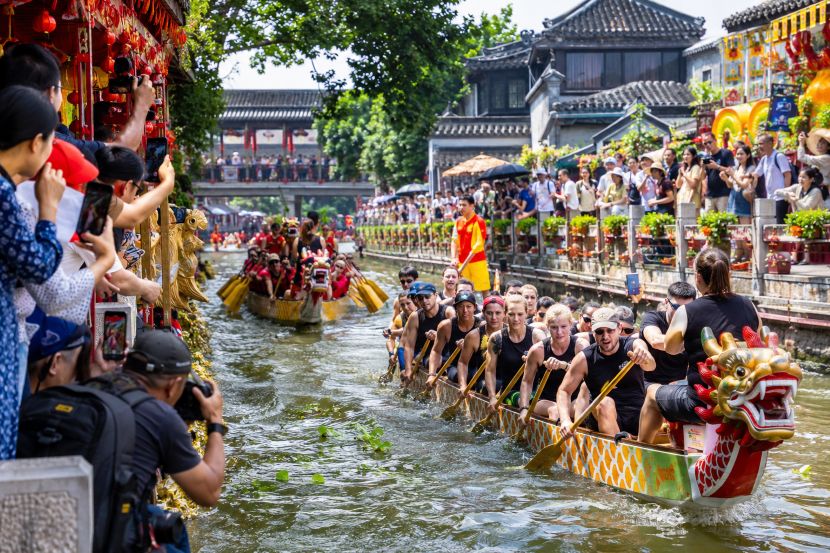
Particular attention this year has focused on Foshan’s historic Diejiao Dragon Boat Race, an event frequently compared with elite motorsport because of its remarkable speed and technical precision. Unlike conventional dragon boat competitions held on wide rivers, crews navigate exceptionally narrow waterways that demand outstanding teamwork, balance and tactical skill.
The event has also become increasingly international. A 37-member team from New Zealand is participating in this year’s competition, reinforcing the race’s growing reputation beyond Asia. Their participation reflects how cultural sporting events can simultaneously promote tourism, foster international exchange and generate global media attention.
For visitors, the appeal extends beyond the race itself. Local markets, Cantonese cuisine, riverside heritage districts and traditional neighbourhoods create a complete destination experience that encourages longer stays and higher visitor expenditure.
Major Festival Destinations
| Destination | Tourism Highlights |
| Guangzhou | Historic dragon boat traditions, riverside cultural districts, Cantonese food experiences |
| Foshan | Diejiao Dragon Boat Race, heritage villages, martial arts culture, traditional waterways |
| Guangdong Province | Festival events, cultural performances, retail experiences, regional gastronomy |
Festival Tourism Is Becoming a Strategic Economic Tool
China’s local governments increasingly recognise that festivals generate economic activity extending well beyond ticket sales or accommodation bookings.
Advertisement
Advertisement
Visitors attending cultural events typically spend across multiple sectors including hotels, restaurants, transportation, retail shopping, guided experiences and entertainment. Consequently, provinces have expanded Dragon Boat Festival programming to include family-friendly activities, sports competitions, cultural exhibitions and retail promotions designed to encourage visitors to remain in destinations for several days rather than making short day trips.
This integrated tourism model is particularly valuable because it distributes visitor expenditure across local economies instead of concentrating benefits within a limited number of attractions. Airlines, railway operators, travel agencies, destination management organisations and hospitality providers all benefit from increased travel demand generated by nationally recognised cultural festivals.
Moreover, international participation creates additional promotional value through social media exposure, travel content creation and destination marketing. Images of overseas competitors racing alongside Chinese teams help reinforce China’s image as an accessible cultural destination, encouraging future visitors to explore experiences beyond traditional itineraries.
As China continues strengthening its global tourism competitiveness, the Dragon Boat Festival increasingly represents more than a public holiday. It is becoming a showcase of how heritage preservation, international visitor engagement and destination marketing can work together to support sustainable tourism growth while highlighting the country’s rich cultural identity.
Why Festival-Led Tourism Is Strengthening China’s Inbound Travel Recovery
China’s tourism authorities have increasingly shifted their attention towards experience-led travel, recognising that international visitors are seeking meaningful cultural immersion alongside iconic attractions. The success of the Dragon Boat Festival illustrates how traditional celebrations can become year-round destination marketing assets rather than short-lived public holidays.
The growth in inbound bookings comes after China progressively expanded visa facilitation measures for many international markets, simplified transit policies and encouraged airlines to rebuild international capacity. These measures have improved accessibility while making it easier for overseas visitors to combine major cities with lesser-known regional destinations.
Advertisement
Advertisement
Industry observers also note that travellers are increasingly extending their itineraries beyond Beijing, Shanghai and Xi’an. Instead, they are adding destinations such as Guangzhou, Foshan, Shenzhen, Hangzhou and Chengdu to experience regional culture, cuisine and festivals that are unique to each province.
This evolution reflects a wider global tourism trend where experiential travel now commands higher visitor spending than traditional sightseeing alone. Cultural festivals encourage longer stays, generate repeat visitation and diversify tourism revenue across accommodation, transport, attractions, restaurants, retail businesses and local tour operators.
Tourism and Economic Indicators
| Indicator | Latest Data |
|---|---|
| Dragon Boat Festival holiday | Three days |
| Growth in inbound holiday bookings | More than 600% year on year |
| Increase in cross-province travel packages | Over 90% month on month |
| Hotel searches near race venues | Around 210% increase |
| International visitor spending in China (2025, WTTC) | Approximately US$135 billion |
What International Travellers Should Know Before Planning a Dragon Boat Festival Trip
For overseas visitors, the Dragon Boat Festival offers far more than watching boat races. It provides an opportunity to experience one of China’s most celebrated cultural traditions through local customs, food, heritage and community events.
Travellers planning to visit during future festivals should expect significantly higher demand for accommodation in major host cities, particularly Guangzhou and Foshan. Booking flights and hotels well in advance is advisable because race weekends often coincide with domestic holiday travel.
The festival is also renowned for its culinary traditions. Visitors can sample zongzi, the iconic sticky rice dumpling wrapped in bamboo leaves, alongside regional Cantonese specialities and seasonal delicacies available at local markets.
Photography enthusiasts will find exceptional opportunities along riverfronts where colourful dragon boats, traditional costumes and cultural performances create vibrant scenes throughout the celebrations.
Advertisement
Advertisement
Many destinations also organise handicraft workshops, heritage exhibitions, folk performances and evening cultural programmes, allowing visitors to gain a deeper understanding of local customs beyond the headline sporting events.
Practical Travel Guide
| Travel Tip | Why It Matters |
| Reserve accommodation early | Hotels near race venues fill quickly during the holiday. |
| Use high-speed rail where possible | Efficient connections make multi-city itineraries easier. |
| Arrive before race day | Popular viewing locations become crowded early. |
| Explore surrounding heritage districts | Local culture extends well beyond the race venues. |
| Try regional cuisine | Seasonal dishes form an important part of the festival experience. |
International Participation Is Expanding the Global Appeal of Chinese Cultural Tourism
One of the most significant developments this year has been the growing international profile of dragon boat racing itself.
The participation of a 37-member New Zealand crew in Foshan’s renowned Diejiao Dragon Boat Race demonstrates how traditional Chinese sporting events are increasingly attracting overseas competitors rather than simply spectators. Such participation strengthens cultural diplomacy while enhancing the international visibility of regional destinations.
Global sporting participation also generates extensive digital exposure. Competitors, travel creators and international media frequently share festival experiences across social media platforms, creating valuable destination marketing content that reaches prospective travellers worldwide.
For destination marketing organisations, this organic promotion can be as influential as traditional advertising campaigns because it presents authentic visitor experiences.
Meanwhile, airlines, hotels and inbound tour operators stand to benefit from stronger seasonal demand as festival-based itineraries become integrated into international travel packages.
Advertisement
Advertisement
China’s Festival Economy Continues to Shape Future Tourism Growth
Although broader consumer spending has shown signs of moderation in recent months, tourism remains one of China’s most resilient economic sectors.
Festival-led travel has become an increasingly important mechanism for stimulating visitor expenditure across accommodation, retail, transportation and hospitality. Local governments are therefore continuing to invest in cultural programming that encourages travellers to remain longer and spend more within regional economies.
For the travel industry, the Dragon Boat Festival offers a valuable case study in destination development. Rather than creating entirely new attractions, many cities have successfully transformed centuries-old traditions into globally marketable tourism experiences.
As international air connectivity continues to improve and overseas awareness of Chinese cultural heritage grows, events such as the Dragon Boat Festival are likely to play an even greater role in strengthening China inbound tourism. The combination of authentic traditions, modern tourism infrastructure and expanding international participation positions destinations such as Guangzhou and Foshan as leading examples of how heritage can successfully drive sustainable tourism growth.
The Bigger Picture for Global Travel
The rapid rise of China Dragon Boat Festival tourism highlights an important shift within international travel. Modern travellers increasingly value authentic cultural experiences that connect them with local communities, history and traditions rather than conventional sightseeing alone. As destinations continue investing in heritage-based tourism, China’s Dragon Boat Festival demonstrates how centuries-old customs can evolve into globally recognised travel experiences that support regional economies, encourage longer visitor stays and strengthen international cultural exchange. For travel professionals, tour operators and destination marketers alike, the festival represents an increasingly influential model for sustainable, experience-driven tourism development.

Advertisement
Advertisement
