
Published on
June 20, 2026

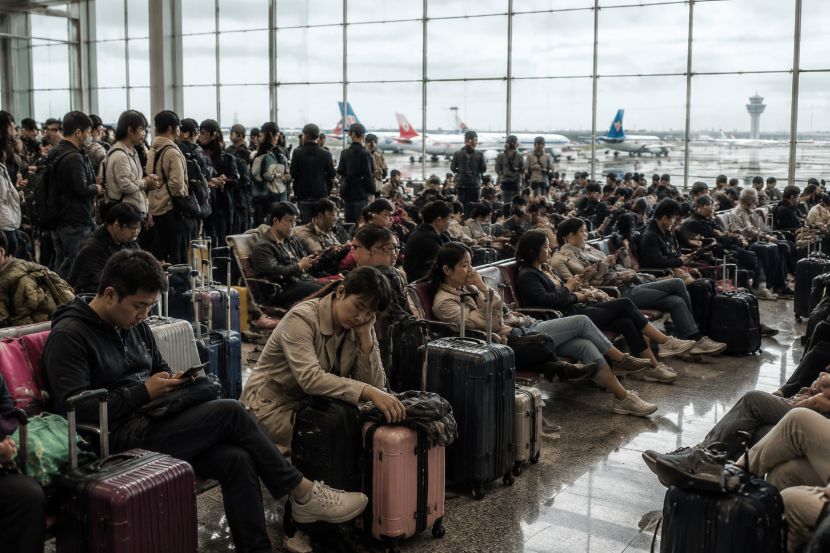
Multiple airports in China have reported significant flight delays and cancellations impacting travel both within and outside the country. Operational data from main hubs including Shanghai HongQiao International, Shanghai Pudong International, Beijing Capital International, Guangzhou Baiyun International, and Shenzhen Bao’an International have all shown a significant spike in delays and cancellations for the current operational cycle. Of the hubs, Shanghai Pudong International has the most delays with 123 cancellations, Guangzhou Baiyun International has 162 delays, and Shenzhen Bao’an International has 96 delays. Cancellations have also been reported among all listed airports. This has created a backlog of passengers at all hubs. This disruption has caused a breakdown in China’s aviation network across all primary and secondary hubs with significant impacts on scheduling and the efficiency of aircraft turnarounds and overall throughput.
Nationwide Operational Disruption Overview
Across the national aviation system, delays and cancellations have reached elevated levels, indicating a coordinated operational slowdown rather than isolated airport incidents. Combined, the listed airports report over 600 delays and more than 40 cancellations within the reporting period. Major metropolitan gateways are experiencing the heaviest load, with Shanghai, Beijing, Guangzhou, and Shenzhen collectively accounting for the majority of disrupted movements. Secondary airports such as Changsha, Xiamen, Zhengzhou, and Shenyang are also impacted, suggesting systemic scheduling bottlenecks. Aviation authorities typically attribute such widespread irregularities to a combination of air traffic congestion, weather variability, and flow control measures, although no single cause is confirmed within the dataset. The pattern suggests cascading effects across interconnected flight networks, where delays at hub airports propagate to dependent regional routes.
Major Hub Impact Breakdown: Shanghai, Beijing, Guangzhou and Shenzhen
Shanghai Pudong International Airport stands as the most affected hub with 123 delays and 4 cancellations, followed closely by Guangzhou Baiyun International with 162 delays and a single cancellation. Shenzhen Bao’an International reports 96 delays and 2 cancellations, highlighting significant pressure in southern China’s aviation corridor. Beijing Capital International Airport records 34 delays and 6 cancellations, indicating moderate but persistent disruption in the capital region.
Shanghai Hongqiao International shows 33 delays and 10 cancellations, suggesting higher cancellation ratios compared to its counterpart Pudong. These figures indicate operational imbalance across aircraft rotations and possible slot constraints. As these airports function as primary international gateways, even minor scheduling disturbances can generate ripple effects across inbound and outbound connectivity, particularly for long-haul and connecting services.
Regional Airports and Secondary Network Strain
Beyond major hubs, several regional airports are also reporting measurable disruption. Xi’an Xianyang International recorded 54 delays and 5 cancellations, making it one of the most impacted inland airports. Chongqing Jiangbei International reported 65 delays and 3 cancellations, reflecting strong regional traffic pressure in western China.
Changsha Huanghua International shows 23 delays and 2 cancellations, while Haikou Meilan International records 22 delays and 4 cancellations, indicating coastal and island connectivity stress. Zhengzhou Xinzheng International reports 13 delays and 3 cancellations, and Shenyang Taoxian International shows 12 delays with 2 cancellations.
Advertisement
Advertisement
Smaller but notable disruptions are also seen at Hohhot Baita International, Xiamen Gaoqi International, Harbin Taiping International, Nanchang Changbei International, and Aksu Airport. Even minor facilities such as Yueyang Sanhe Airport report cancellations despite zero delays, suggesting localized operational constraints.
Passengers Affected and Operational Consequences
The cumulative impact on passengers is significant, with thousands of travellers likely experiencing schedule adjustments, missed connections, and extended waiting times. High-delay hubs such as Guangzhou, Shanghai Pudong, and Shenzhen Bao’an are expected to account for the majority of affected passengers due to their high traffic volumes.
Advertisement
Advertisement
Operational consequences include aircraft rotation delays, crew scheduling disruptions, gate congestion, and increased pressure on ground handling services. Transfer passengers are particularly affected at hub airports, where cascading delays can result in missed international connections. The imbalance between arrivals and departures also places strain on baggage handling systems and terminal capacity, further compounding passenger inconvenience.
Impact on Tourism and Business Travel
The disruption carries direct implications for both domestic tourism and international travel flows. Major gateway airports such as Beijing, Shanghai, and Guangzhou serve as primary entry points for inbound tourism and outbound leisure travel. Delays at these hubs may reduce schedule reliability for short-haul weekend travel, business meetings, and long-haul tourism itineraries.
Business travel is particularly sensitive to such disruptions, especially in financial and manufacturing centres connected through Shanghai and Shenzhen. Missed connections and rescheduling may lead to productivity losses and increased travel costs. Tourism operators may also experience booking volatility, as uncertainty in flight punctuality influences traveller confidence and itinerary planning. Regional tourism destinations connected through secondary airports may face reduced footfall due to cascading connectivity delays.
Aviation Response and Outlook
While no specific operational directive has been cited in the dataset, airports in China typically respond to such disruption patterns through coordinated air traffic flow management, slot regulation adjustments, and ground operation optimisation. Airlines and airport authorities are likely to prioritise recovery of schedule integrity during subsequent operational cycles.
Advertisement
Advertisement
The current disruption level suggests short-term network stress rather than a structural collapse, although sustained delays at multiple hubs indicate the need for continued monitoring. If congestion persists, further schedule adjustments and passenger advisories may be implemented across major carriers and airport authorities.
Conclusion: Network Stability Under Pressure Across China’s Aviation System
When looking at the delays and cancellations all across the major airports in China, there is an overall problem involving the whole aviation network. There were over 600 delays and many cancellations. This shows that the system is overloaded with both inter and intra regional routes. At this time, the cause is still undetermined. This situation is showing that there are problems involving bottleneck congestion across the system and operational delays that are reaching the point of being out of control. This situation is impacting customers, airlines, and all sectors related to travel and tourism. Because of the service disruptions, there will be an impact on people’s travel plans and on the public’s level of buying and using travel services.
Authors Observation: All information is manually obtained from FlightAware’s official website, and all operations are subject to change based on real-time updates. In order to maintain safety, airlines actively modify schedules and itineraries. In order to get to their destinations safely, passengers are asked not to panic in such situations and to look for alternate travel choices. Relying on real-time updates, reviewing airline rebooking restrictions, and maintaining flexibility with travel plans are all highly recommended.
Source: Flightaware
Advertisement
Advertisement
