
The ongoing third phase of the 139th China Import and Export Fair, or Canton Fair, in Guangzhou has put the spotlight on the integration of foreign trade and domestic sales, as exporters bring high-quality products into the home market while local brands step onto the global stage.
The five-day segment of the world’s largest trade fair opened on Friday in Guangzhou, the provincial capital of Guangdong in the south, showing frontier achievements in fields such as smart healthcare, functional textiles, and green materials, with an exhibition area of 515,000 square meters and 25,000 booths.
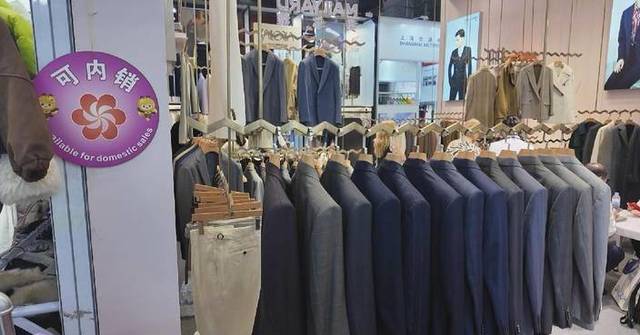
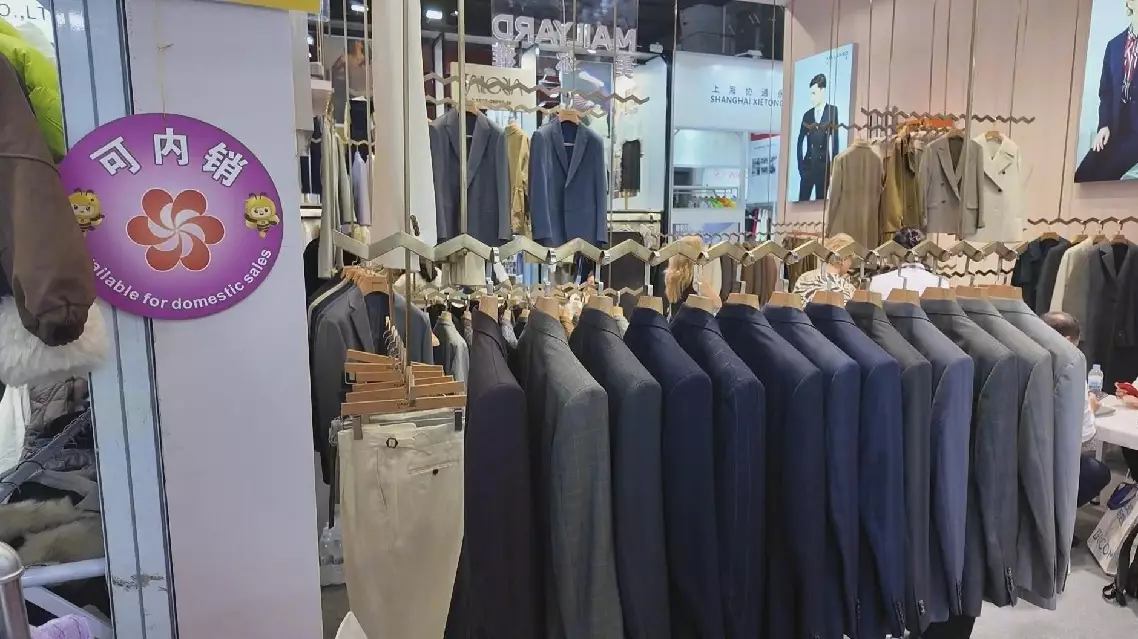
In the textile and apparel exhibition hall, many companies display “available for domestic sales” labels, signaling that export-grade products are now being offered to Chinese consumers. For firms long reliant on overseas sales, domestic channels are becoming a new growth engine.
“By adapting the styles and material standards we sell at international market to the domestic market, we receive many repeat and return orders every year,” said Zha Min, an exhibitor from Hubei Province.
“We have three operating teams focusing on products for domestic sales. Every day we shoot more videos in factories and on production lines to promote our products. Later, while attending overseas exhibitions, we will also pay more attention to livestream sales on domestic platforms,” said Chen Xing, another exhibitor from Guangdong Province.
Beyond sales, companies are also stepping up overseas investment to strengthen trade and investment integration.
“This year we have increased investment in North Macedonia in Europe by 60 percent from last year. This helps us better meet customer demand, expand our market share, and achieve integrated domestic and foreign trade,” said Xu Jianping, an exhibitor from Zhejiang Province.
According to analysts, Chinese exporters are shifting from contract manufacturing for a single market to comprehensive service providers that leverage both domestic and international resources.
They noted that aligning production lines, standards and quality allows export-grade products to directly enhance competitiveness at home, a move seen as essential to unlocking domestic demand.
Established in 1957, the Canton Fair is held twice a year in Guangzhou. It is the longest-running of several comprehensive international trade events in China, and has been hailed as the barometer of the country’s foreign trade.
The first phase of the 139th edition of the Canton Fair ran from April 15 to 19, followed by the second phase from April 23 to 27.
Canton Fair spotlights dual-market strategies of Chinese exhibitors
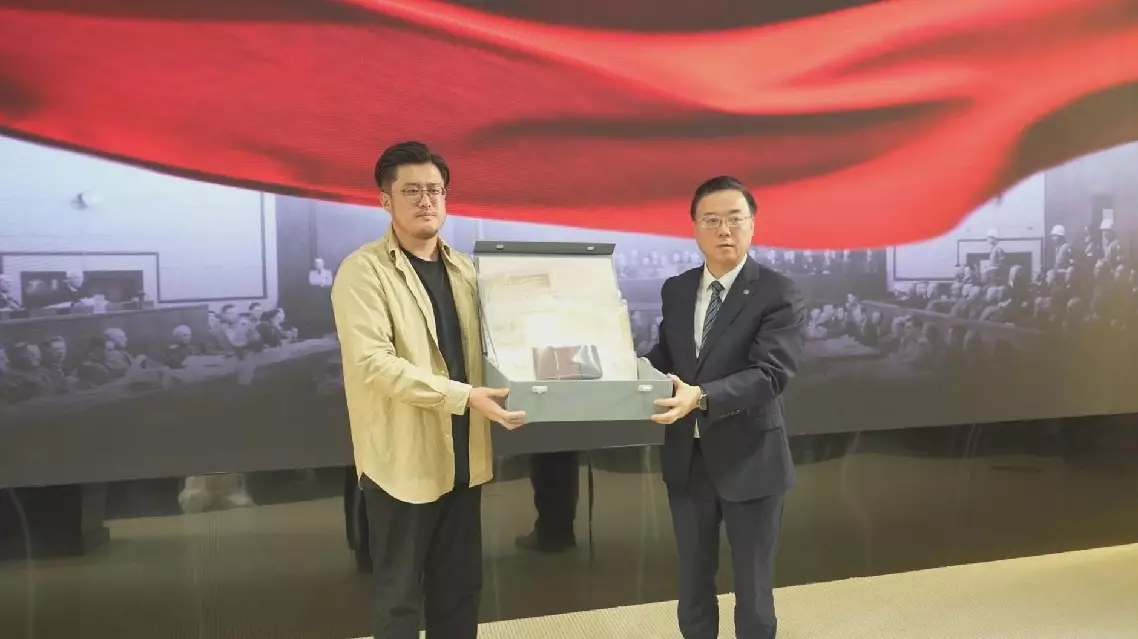
Eighteen sets of precious archival materials related to David Nelson Sutton, a U.S. assistant prosecutor at the Tokyo Trials and one of the earliest international prosecutors to investigate the Nanjing Massacre, were officially donated on Wednesday to the Memorial Hall of the Victims in Nanjing Massacre by Japanese Invaders.
Sunday marks the 80th anniversary of the opening of the International Military Tribunal for the Far East (IMTFE, also known as the Tokyo Trials). To commemorate the milestone, six diaries written by Sutton between 1946 and 1948, when he was conducting investigations for the tribunal, were donated together with a series of reports titled Reports from China.
“It is necessary to let more Chinese, even people all over the world, to see these archival materials. Let all the world know why the Tokyo Trials 80 years ago were described as a trial of justice, and how the Nanjing Massacre nearly 90 years ago was unprecedentedly brutal and tragic beyond compare,” said Zou Dehuai, the donor.
From May 3, 1946 to Nov 12, 1948, the International Military Tribunal for the Far East was held in Tokyo by 11 countries, including the United States, China, Britain and the Soviet Union, to try Japan’s Class-A war criminals after World War II.
“Why do we say the Tokyo Trials were a trial of justice? It was a trial witnessed by the world, with judges from 11 countries. Major war criminals, such as Iwane Matsui, a crime culprit for the Nanjing Massacre, and Hideki Tojo, all ultimately received the punishment they deserved. That is why the Tokyo Trials are called a trial of justice. These archives are of immense importance,” Zou said.
Sutton came to China with the International Prosecution Section in 1946 and was tasked with investigating Japanese war crimes in China, with a particular focus on collecting evidence related to the Nanjing Massacre.
The six diaries recorded many details of Sutton’s work during the Tokyo Trials. In one entry, dated March 9, he wrote that he had received formal orders to go to Shanghai, Nanking (Nanjing), Peiping (Beijing) and other sites in the China theater to investigate war crimes and gather evidence. Another entry recorded his arrival in Nanjing at 11:20 on April 2. On May 3, the day the trial opened, he described the defendants as looking like “insignificant beaten men.”
The donated materials also include Sutton’s “Reports from China,” which further exposed Japanese wartime atrocities in China, including mass killings, violence against civilians, germ warfare and the coercion of Chinese people into opium cultivation.
Zou is a collector born in the 1990s who has long searched for wartime historical evidence. He first found the Sutton materials in November 2025 on a U.S.-based auction website specialized in military artifacts. After confirming Sutton’s identity and reviewing preview images that indicated the items were original archival materials, Zou placed a bid for the collection and later, ultimately paying a price nearly 100,000 U.S. dollars, far more than his original budget. And he arranged for its return to China, with assistance from others.
At the donation ceremony, Zou received a donation certificate. He said the Sutton archives were the most expensive items he had acquired in a decade of collecting. “These archives, these ironclad evidences, expose the crimes committed by the invading Japanese army in China and serve as a warning to all humanity. When you look at these documents, you cannot imagine that a human army could commit such massive and horrible atrocities. I believe that any Japanese person with conscience, after reading the Sutton archives, would firmly recognize what kind of a massacre took place in Nanjing. For the young people of future China, Japan and the United States, we must tell them the truth of history, and why we must cherish the hard-won peace, and how heavy the cost of peace truly was,” Zou said.
Tokyo Trials prosecutor’s diaries donated to Nanjing Massacre memorial hall