
There was a time when the mere mention of a five-year plan in Hong Kong would have raised eyebrows. Beginning in the 1960s, when then-financial secretary John Cowperthwaite instituted a philosophy of minimal government intervention, later formalized by his successor Philip Haddon-Cave in the 1970s as “positive noninterventionism”, the city’s economic miracle was largely attributed to a laissez-faire ethos famously championed by economists like the late Milton Friedman. The government provided the infrastructure and the rule of law; the invisible hand of free enterprise, supplemented by Hong Kong people’s renowned enterprise and hard work, did the rest. Today, the storyline has shifted to account for new realities. As the city works at full speed to draft its inaugural five-year development blueprint, aligning with the national 15th Five-Year Plan (2026-30), that traditional success formula of Hong Kong is undergoing a profound evolution.
 While the legacy of positive noninterventionism continues to have its staunch defenders, the shift toward a more proactive economic posture reflects a pragmatic response to new global realities. In an era defined by technological disruption, geopolitical rivalry, and supply chain fragmentation, relying solely on free market forces may no longer be sufficient to secure a city’s competitive edge. One only needs to look at Singapore to see the dividends of proactive government intervention. Through its latest “Research, Innovation and Enterprise 2030” plan — a five-year strategy aimed at strengthening Singapore’s competitiveness and resilience — the city-state committed S$37 billion ($29 billion) to research and development, nurturing an innovation ecosystem that already hosts over 4,500 tech startups. This is what sustained, deliberate government planning and support produce — or positive government interventionism.
Hong Kong is waking up to this reality, but a structural imbalance remains. While the city rose to 15th globally in the 2025 Global Innovation Index, its commercial innovation output still lags behind its world-class research and financial inputs. Despite the city boasting five universities ranked among the world’s top 100, the journey from laboratory to market remains a struggle, particularly in bridging the funding gap between seed and Series B rounds. The establishment of the Hong Kong Investment Corp is a promising start, as it is already bearing fruit with its inaugural portfolio company, industrial artificial intelligence firm SmartMore, which has filed for a public listing on the Hong Kong stock exchange; however, injecting capital is only one piece of the puzzle.
This is where the five-year plan must step in, yet the hardest part will not be drafting the blueprint, but executing it. On the Chinese mainland, formulating a five-year plan is a mammoth three-year task involving dozens of think tanks, rigorous data modeling, and whole-of-society engagement. Hong Kong is attempting to compress this process into less than 12 months. The city’s civil service, while highly competent in administration and regulation, is still developing its overarching strategic planning muscle. Without clear key performance indicators and hardwired budgetary allocations, the blueprint risks becoming a compendium of departmental wish lists rather than a coherent, actionable strategy.
Alignment with national goals is a starting point, not a destination. The local plan must build on national alignment by exercising proactive agency and carving out roles that mainland powerhouses cannot easily replicate
Furthermore, alignment with national goals is a starting point, not a destination. The local plan must build on national alignment by exercising proactive agency and carving out roles that mainland powerhouses cannot easily replicate. Financial services remain a prime example. Hong Kong processes approximately 75 percent of global offshore renminbi settlements, with average daily RMB foreign exchange turnover reaching $315 billion as of April 2025. Beyond traditional finance, the city has a unique opportunity to become Asia’s premier hub for transition finance. With the government committing to an annual issuance of up to HK$195 billion ($25 billion) under its combined Government Sustainable Bond Program and Infrastructure Bond Program through 2030, the blueprint could pilot cross-border decarbonization funding across the Guangdong-Hong Kong-Macao Greater Bay Area, anchoring financial activities in tangible environmental outcomes.
In the realm of regional integration, physical infrastructure, such as the Northern Metropolis, must be matched by institutional connectivity. The real constraints on integration lie in fragmented systems governing professional qualifications and data flows. Operating under a common law system, Hong Kong could pioneer cross-border data flow frameworks, serving as a global data sandbox that bridges mainland enterprises with international markets. Similarly, the plan should lead the piloting of mutual recognition frameworks for engineers, financial risk managers, and medical professionals to ease talent circulation and alleviate chronic workforce shortages.
Ultimately, a five-year plan is a statement of priorities, and priorities demand hard choices. It requires the discipline to focus on specific strategic industries and the courage to discontinue weak initiatives with the same rigor used to launch new ones. With the current administration’s term set to conclude in 2027, the plan must also be built on a broad consensus to ensure it transcends any single administration’s tenure.
If executed with precision, this blueprint will do more than just align Hong Kong with national development. It will demonstrate that the city has successfully adapted its economic model toward purposeful engagement, forging a new, resilient economic engine capable of securing its prosperity for decades to come.
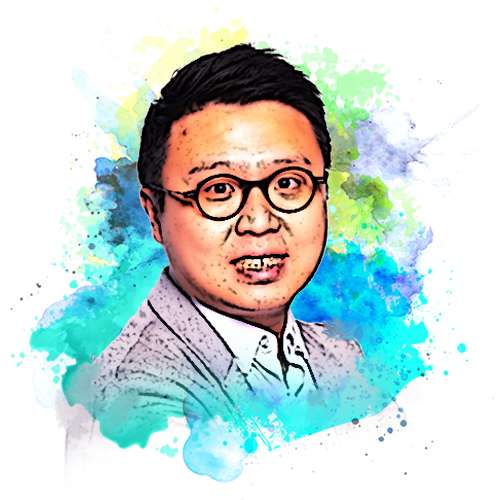
The author is a co-founder of Brandstorm Communications, a consultancy specializing in education, philanthropy, innovation and technology.
The views do not necessarily reflect those of China Daily.