
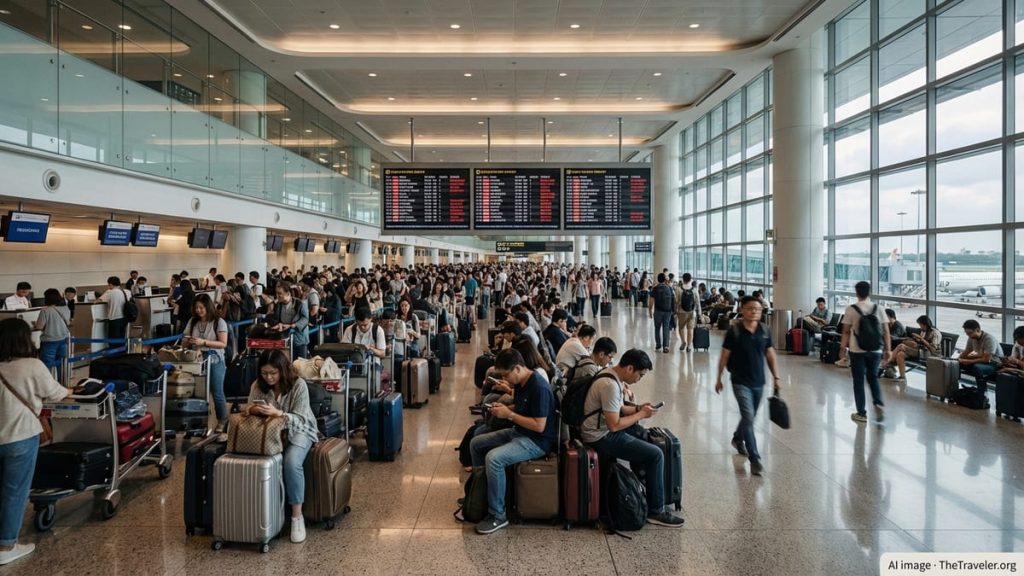
Thousands of travellers across China faced widespread disruption on April 12, 2026, as major airports including Shanghai, Beijing, Chengdu, Guangzhou, Shenzhen, Xi’an and Wuhan recorded 1,439 flight delays and 164 cancellations, significantly affecting operations for China Eastern, Air China, China Southern and several other carriers.
Get the latest news straight to your inbox!
Major Chinese Hubs Struggle With Wave of Disruptions
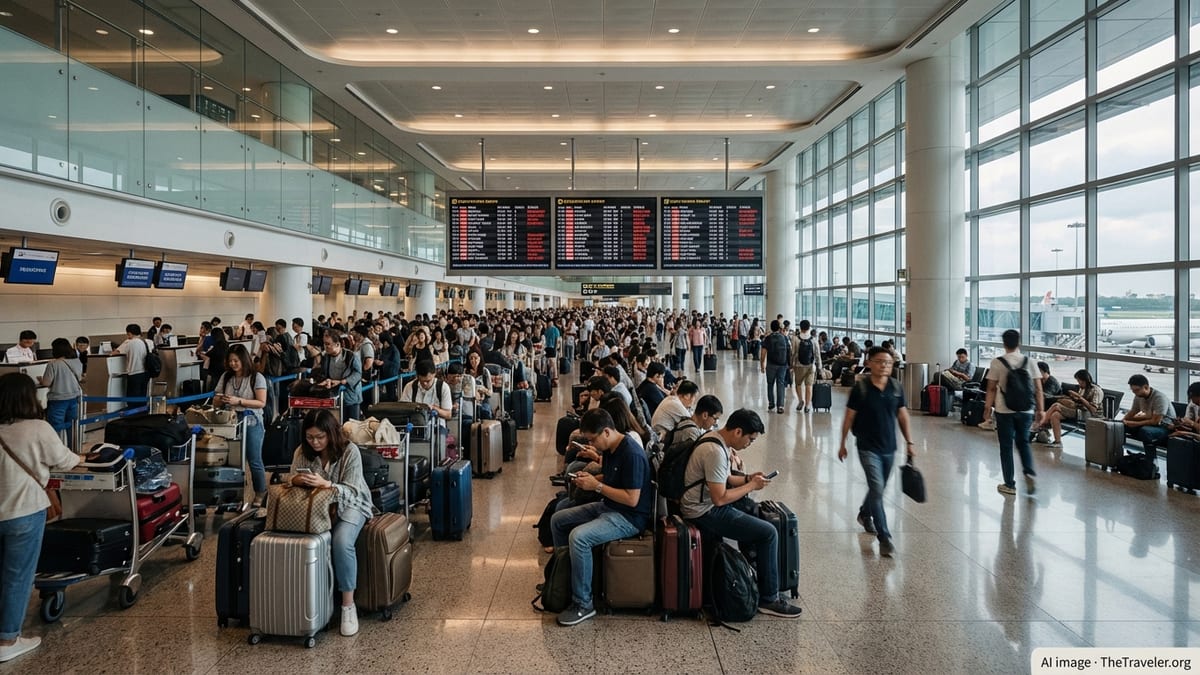
Publicly available data highlighted extensive disruption at some of China’s busiest aviation hubs, with Shanghai Pudong and Hongqiao, Beijing Capital and Daxing, Guangzhou Baiyun, Shenzhen Bao’an, Chengdu Tianfu, Xi’an Xianyang and Wuhan Tianhe among the airports reporting heavy delays and cancellations. Reports indicate that flight schedules were particularly strained during peak travel periods on April 12, creating long queues, extended waits at gates and crowded terminal areas as departure boards filled with delayed services.
Travel and aviation monitoring coverage described the impact in numerical terms as 1,439 delayed flights and 164 cancellations nationwide, a level of disruption that rippled across both trunk routes and secondary city connections. The figures underline the sensitivity of China’s highly interconnected domestic air network, where issues at one major hub can quickly reverberate across multiple cities.
China Eastern, Air China and China Southern, the country’s three largest state-linked airlines, were among the most affected operators, alongside a range of regional and private carriers. While many flights eventually departed late, others were removed from schedules entirely, forcing rebookings and missed onward connections for passengers traveling within China and beyond.
Coverage of the disruptions coincided with broader regional reports of aviation delays in Asia and other parts of the world, underscoring how dense traffic, localized constraints and adverse conditions can converge to strain airport and airline operations, even outside major holiday periods.
Possible Drivers: Weather, Congested Airspace and Operational Constraints
While a single overriding cause for the April 12 disruptions has not been clearly established in publicly available reports, several factors appear to have contributed. Seasonal weather patterns, including spring thunderstorms and reduced visibility in parts of eastern and central China, are regularly cited in operational updates as reasons for slowing arrivals and departures at busy hubs. Even short-lived storms can create knock-on effects when runways and taxiways are at or near capacity.
In parallel, recent traveller discussions and notices referenced temporary airspace constraints over parts of eastern China in late March and April, including areas affecting traffic to and from Shanghai and Beijing. Such restrictions can compel airlines and air traffic controllers to reroute flights, increase holding patterns and reduce the overall flow of arrivals and departures, leading to clusters of delays concentrated at peak times.
Operational adjustments by airlines also appear to play a role. Passenger accounts and industry commentary in recent months have pointed to schedule reshuffles on routes linking China with regional destinations such as Japan and Southeast Asia, as carriers fine-tune capacity and aircraft deployment. When these changes intersect with high-demand domestic corridors, they can limit flexibility to recover from weather or airspace disruptions.
Analysts note that China’s aviation system, although modern and extensive, operates with relatively tight margins at its largest airports. When runway slots, gate space and crew availability are heavily utilized, relatively modest shocks can cascade into widespread delays and cancellations, particularly across complex multi-leg itineraries.
Passenger Impact at Shanghai, Beijing, Guangzhou and Beyond
The immediate effects for travellers were felt in lengthy waits, missed connections and the need for last-minute itinerary changes. At Shanghai’s dual-airport system, where China Eastern maintains a major base, delayed departures and altered gate assignments contributed to congestion in departure halls and security screening areas, according to travel media reports and live tracking snapshots. Some passengers arriving on late inbound flights faced tight or missed connections to domestic destinations such as Wuhan, Xi’an and Chengdu.
Beijing’s two large international airports also saw significant schedule changes, with key trunk routes linking the capital to coastal and inland cities delayed well beyond their planned departure times. Similar patterns were reported at Guangzhou and Shenzhen, important hubs for China Southern and other carriers, where a mix of domestic flights and regional international services were affected.
Secondary hubs, including Chengdu, Wuhan and Xi’an, experienced disruptions both as origins and as connection points. Published flight history data on selected aircraft operating for China Eastern, China Southern and Air China around the same period showed a patchwork of extended delays on some city pairs, contrasted with relatively normal operations on others. This reflects how localized conditions can exacerbate or ease the impact of national-level disruption statistics.
For many passengers, particularly those on multi-leg itineraries involving international segments, the knock-on effects went beyond China’s borders. Recent traveller accounts on public forums describe how delays or cancellations on domestic feeder flights have forced rebookings on onward services to destinations such as Tokyo and other Asian cities, raising concerns among future travellers planning tight connections through Chinese hubs.
Airlines and Airports Work to Restore Normal Operations
In the wake of the April 12 disruption, airlines moved to stabilize schedules, with most major carriers indicating through their publicly accessible timetables that services on key routes would continue to operate in the following days. Live tracking data for flights operated by China Eastern, China Southern and Air China on April 13 showed a mix of on-time services and moderate delays rather than the concentrated pattern of disruption seen the previous day.
Airports and carriers typically respond to large-scale disruption by adjusting runway sequencing, reallocating gate assignments and repositioning aircraft and crew to where they are most needed. Although such measures are not always visible to passengers, they are essential for gradually reducing backlogs and preventing delays from cascading into subsequent days.
Passenger-facing measures, such as automated rebooking tools, self-service kiosks and mobile notifications, have also become more prominent in China’s major hubs. Recent traveller reports about cancellations on various Chinese airlines note the growing use of online portals for rebooking or requesting refunds, although experiences vary and some passengers continue to report challenges in securing timely alternatives during peak disruption events.
Industry observers suggest that the April 12 episode may prompt further scrutiny of schedule resilience at China’s busiest airports, especially during periods of known airspace restrictions or volatile weather. Incremental improvements in contingency planning, passenger communication and cross-airline coordination could help reduce the likelihood that similar levels of disruption will strand large numbers of travellers in the months ahead.
What Travellers Should Watch for on Upcoming China Trips
For travellers with upcoming itineraries through Chinese hubs, recent events serve as a reminder to build additional time into connections and to stay alert to schedule changes. Publicly available travel advisories and traveller discussions commonly recommend avoiding very short layovers when transiting through airports such as Shanghai, Beijing, Guangzhou and Chengdu, particularly in seasons prone to storms or when temporary airspace measures are in force.
Monitoring flight status through airline apps and independent tracking services can provide early warning of disruptions. In recent cases involving Chinese carriers, passengers who kept a close eye on schedule updates were sometimes able to secure earlier rebookings or alternative routings than those who waited until reaching the airport. Keeping contact details current in airline bookings is also important so that automated alerts can be delivered promptly.
Travel planners also suggest considering the broader network structure when selecting routes. Choosing flights with multiple daily frequencies on heavily served corridors may offer more fallback options in the event of a delay or cancellation than routes with only a single daily service. Given the scale and interconnectivity of China’s domestic aviation system, even significant disruption on one day can often be mitigated if passengers retain flexibility over their precise travel times.
Although the April 12 disruptions were severe in scale, they remain part of a broader pattern of intermittent but manageable challenges in a fast-growing aviation market. For now, travellers heading through Shanghai, Beijing, Guangzhou, Shenzhen, Chengdu, Xi’an, Wuhan and other major Chinese airports are likely to continue weighing the benefits of extensive connectivity against the occasional risk of large-scale schedule upheaval.