
For years, autonomous vehicles have been discussed as an inevitability. What has been less certain is how they would fit into the routines, expectations, and traffic realities of a modern city.
Dubai is among the first cities attempting to answer that question at scale. Through a partnership between Dubai Taxi Company and Apollo Go, driverless taxis are now entering the emirate’s transport network, raising questions about safety, trust, regulation, and adoption.
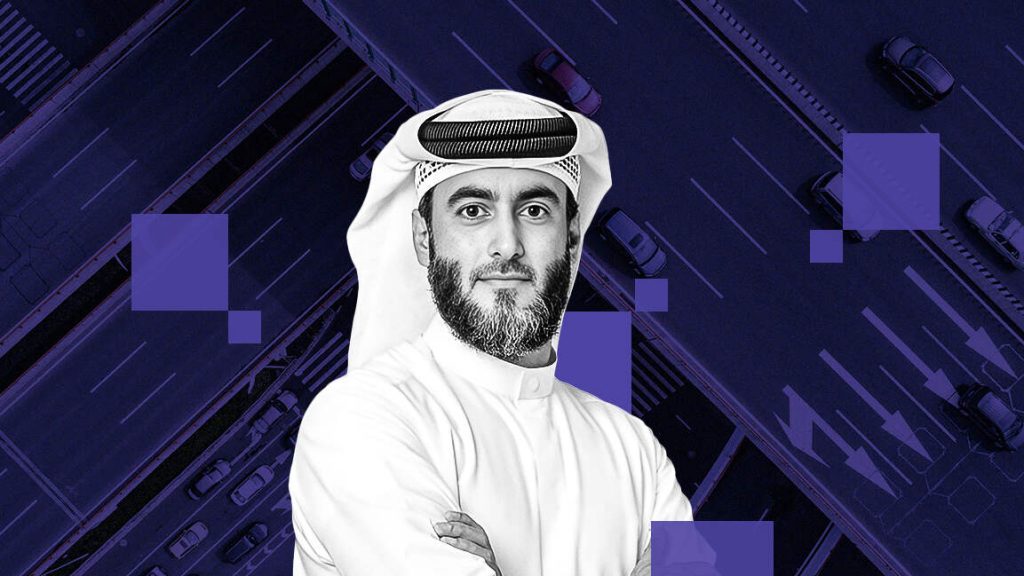
Mansoor Rahma Alfalasi, Group CEO of Dubai Taxi Company, discusses what it takes to move autonomous mobility from a technology milestone to a service people actually use every day.
MORE THAN A VEHICLE
Convincing a city known for premium service to embrace driverless rides begins with delivering the same standards that passengers already expect. For Alfalasi, that means ensuring autonomous mobility feels reliable from the very first trip.
“Our priority has been to ensure that autonomous transport meets those expectations from the very first journey, delivering a service that is safe, seamless, and dependable from booking to drop-off,” he says. DTC’s three decades of mobility experience, combined with advanced monitoring systems and data-driven operations, form the operational backbone of that promise.
Equally central is the track record of its technology partner.
As of February, Apollo Go has completed more than 20 million rides across 26 cities, accumulated over 300 million autonomous kilometers, including more than 190 million fully driverless kilometers, and recorded an airbag-deployment incident only once every 12 million kilometers driven. The groundwork in Dubai was equally rigorous.
Working closely with the Roads and Transport Authority, DTC conducted extensive trials on designated roads across the emirate to evaluate system performance and ensure the service was ready for Dubai’s specific traffic environment. “Dubai has always set the benchmark for service excellence,” Alfalasi says, “and autonomous mobility is no exception.”
But he argues that earning trust requires more than proving that the technology works.
Alfalasi argues that what sets Dubai apart is its understanding that autonomous mobility extends far beyond the vehicle itself. “It is not just about the vehicle, it is about the full ecosystem,” he says, explaining that regulation, infrastructure, customer experience, operating partners, digital platforms, and public trust must develop in parallel to ensure a successful rollout. In his view, autonomous transport works only when all of those elements move together.
That approach is reflected in Dubai’s target to transform 25% of all public transportation trips into smart, driverless journeys by 2030, a goal supported by close collaboration among regulators, operators, and technology providers. For DTC, Alfalasi says, autonomous vehicles are “not a technology showcase” but part of a broader effort to create smarter, safer, and more sustainable mobility services. The objective, he adds, is to integrate autonomous transport naturally into Dubai’s existing transport network rather than treat it as a standalone innovation.
SCALING WITHOUT SLIPPING
Reaching 25 percent autonomous journeys by 2030 will require solving two distinct problems simultaneously. On the operational side, Alfalasi is direct about where the pressure lies. “The biggest operational challenge is scaling with the same level of excellence we launched with,” he says. Autonomous mobility must perform reliably across different zones, peak periods, customer behaviors, and service demands, and do so consistently, backed by tight integration across booking platforms, fleet monitoring, and regulatory systems.
The behavioral challenge is different in nature but equally critical.
Early customer interest is already there, but interest is not the same as habit. “Our focus is on converting that into daily usage, driven by the quality of the experience, not novelty,” Alfalasi says. The two are connected. Operational reliability is what turns a first booking into a repeat one, and repeat bookings are what close the gap between where the service is today and where the 2030 target requires it to be. DTC’s phased expansion approach is built around maintaining that quality at every step rather than sacrificing it for speed.
That same logic governs how the fleet will grow.
Scaling the autonomous taxi fleet will be determined by readiness rather than numbers alone, according to Alfalasi. While the rollout begins with 50 vehicles and is expected to grow to more than 1,000 in the coming years, he says a series of operational milestones will guide expansion. The first is performance within the initial operating zones. “We will assess trip completion rates, customer feedback, system reliability, safety performance, service availability, and operational efficiency,” he explains, noting that consistent and reliable operations must be established before further growth.
Customer adoption will serve as the second benchmark. Rather than focusing on first-time users drawn to the novelty of driverless technology, DTC will measure success by repeat usage. The third milestone is ecosystem readiness, encompassing infrastructure development, regulatory alignment, route expansion, fleet oversight, and integration with booking platforms. “The plan is to operate with 50 vehicles initially and scale to more than 1,000 in the coming years, guided by safety, performance, and customer adoption,” says Alfalasi.
SAFETY BY DESIGN
The service’s safety framework was built before a single commercial ride was taken. Before launch, DTC and the Roads and Transport Authority completed numerous trial runs, culminating in a milestone that Alfalasi is careful not to understate. Apollo Go received Dubai’s first driverless trial permit for fully autonomous vehicles, a regulatory clearance that required the technology to be tested, certified, and approved against the highest standards set by Dubai’s regulators. “That is not a small achievement,” he says.
“It means this technology has been tested, certified, and approved to the highest standard Dubai’s regulators demand.” Maintaining that standard at scale is where DTC’s own operational layer comes in. Advanced monitoring systems, tech-enabled fleet management, and data-driven oversight are applied across every journey, ensuring that the rigor of the trial period carries forward into commercial operations rather than being treated as a one-time hurdle cleared at launch.
The question of who is responsible when a driverless vehicle faces a complex situation on the road is one the industry has not always answered cleanly. Alfalasi’s response is structured and deliberate. “Operational responsibility sits within a clearly defined ecosystem that has been designed and vetted by all parties,” he says. In practice, that means three distinct layers working under structured governance. Apollo Go provides the autonomous driving technology and platform. DTC handles local operations, service delivery, customer experience, and fleet oversight.
The Roads and Transport Authority provides the regulatory framework and infrastructure that enable safe deployment. Each party has a defined role, and accountability is distributed accordingly rather than left ambiguous.
From DTC’s position within that structure, Alfalasi is clear about what accountability means in operational terms. “It means ensuring the service we operate is safe, reliable, and compliant with Dubai’s mobility standards.” In any situation where the vehicle must make a complex decision, the governing priority remains unchanged. Passenger safety, road-user safety and regulatory compliance come first.
Ultimately, however, the strongest measure of confidence in the system may come not from regulators or operators, but from customers themselves.
Alfalasi has a clear definition of where novelty ends and habit begins. “A novelty is when someone books once to experience the technology,” he says. “A habit is when residents and visitors choose driverless taxis because they are convenient, reliable and fit naturally into daily journeys.”
The metrics DTC will use to track that shift are specific: repeated bookings, customer ratings, trip completion rates, service reliability and demand patterns across different times of day and journey types. The last point matters. A passenger booking an autonomous taxi for a commute, a business meeting, a hotel transfer, or a short trip around the city is behaving differently from someone booking one out of curiosity.
That spread of use cases across the ordinary rhythms of daily life, rather than being concentrated in a single type of journey, is what genuine adoption looks like. And the benchmark for success, when it comes, will not be measured in headlines or download numbers. “Success is when customers judge the service by safety, comfort, reliability, and convenience,” Alfalasi says, the same criteria they would apply to any other mode of transport in the city.
LOCALIZING AUTONOMY
The relationship between DTC and Baidu’s Apollo Go is a partnership, but Alfalasi is deliberate about what that word does and does not mean. “Our model is collaborative, but not passive,” he says. Baidu and Apollo bring autonomous driving technology and global operating experience from running the service across 26 cities.
DTC brings everything that cannot be imported: local knowledge, fleet operations, customer understanding, regulatory alignment, and more than three decades of experience moving people across Dubai. The two are complementary rather than interchangeable, and the long-term ambition is to build genuine operational capability in-house rather than remain dependent on the technology partner for every decision.
The structure of the arrangement also carries a financial logic. The partnership model with Apollo Go reduces upfront capital commitment, giving DTC a lower-risk entry point into a category that is still maturing globally. “The future of autonomous mobility will be built through partnership,” Alfalasi says, “but long-term success also requires strong local capability.” For DTC, the goal is to be an operator that grows into the technology, not one that simply hosts it.
That emphasis on local capability becomes especially important given the nature of the rollout itself.
Apollo Go has operated in 26 cities, all in China. Dubai is its first deployment outside that market, and the differences go beyond geography. “Each country is different, and Dubai offers a unique mobility market, so localization and adaptation are essential,” Alfalasi says.
The service has had to be calibrated to local road behavior, regulatory requirements, climate conditions, passenger expectations, and the specific demand patterns that emerge across Dubai’s mix of residential, commercial, tourism, and leisure districts.
That is where DTC’s role becomes most tangible. Apollo Go provides the autonomous technology. DTC provides local operating expertise, an understanding of where demand concentrates, what passengers expect, and what it takes to run mobility at city scale in this particular environment. The result, in Alfalasi’s framing, is a division of responsibility that plays to the strengths of both parties. “This partnership combines global innovation with Dubai’s pioneering spirit and operational discipline,” he says, a formula that only works if both sides are genuinely contributing what the other cannot replicate.
If the partnership is designed to build capability, the ultimate test is whether autonomous mobility becomes part of everyday life.
For Alfalasi, the rollout marks a true turning point when autonomous taxis are no longer seen as a technological milestone. Still, as an everyday transport option, people trust and use regularly. “That is the ambition; not a trial, but a service that residents and visitors rely on as naturally as any other mode of transport in the city,” he says. In his view, success will be measured not by the novelty of driverless technology, but by how seamlessly it becomes integrated into daily life across Dubai.
The initiative also reflects a broader transformation within DTC itself. What began as a traditional taxi operator has evolved into a technology-enabled mobility platform spanning taxis, limousines, buses, e-hailing, delivery services, and now autonomous vehicles. Alfalasi says expanding driverless taxis onto platforms such as Bolt and other e-hailing services is a key part of that strategy, ensuring the service is available through the channels customers already use to book their journeys.