
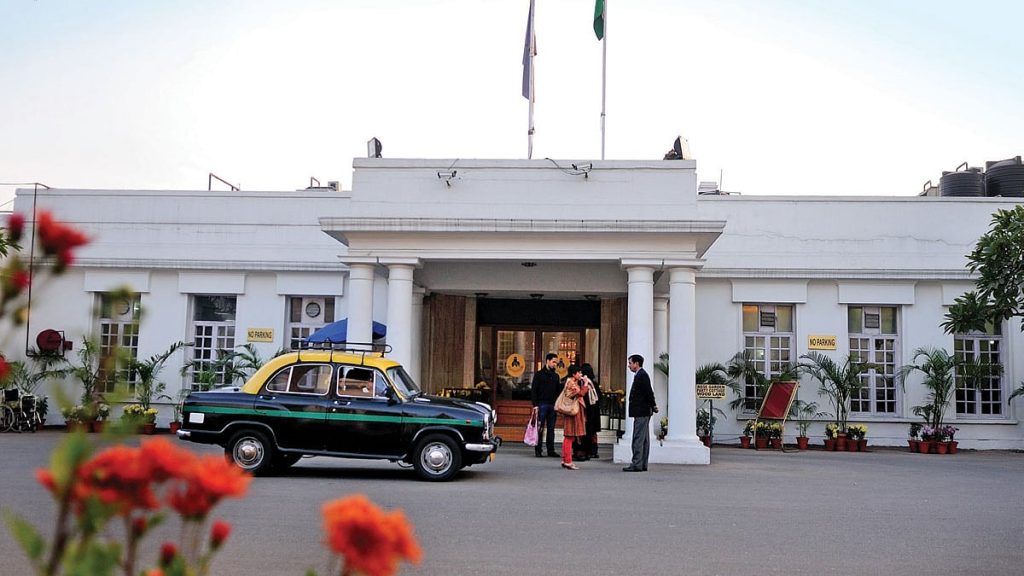
DGC, because it was in the capital and because of its prominent location within the capital, was always more prone to find itself in the headlines than similar institutions elsewhere in India. While all of them could be branded as bastions of colonial and elite privilege, the Kasauli Club, the Bangalore Club, the Madras Club, the Willingdon Sports Club, the Bombay Gymkhana, and many, many others, upholding many of the same customs, they were less in the public eye and therefore didn’t fail the nationalism test quite so visibly and quite so often. A few of them did not just bother about the criticism because they owned the land they stood on—the vast majority however had to keep an eye on public opinion since they were lessees on government land.
The Calcutta Club, founded in 1907, was an exception. Meant for Indians who were excluded from British establishments, dhotis and punjabis were allowed from the very beginning, as opposed to the other clubs in Calcutta, such as the Bengal Club or the Tollygunge Club which, after 1947, gradually opened their doors to Indian members but stuck to their guns where clothes were concerned. An exception to this Indianisation was the Calcutta Swimming Club which did not accept any Indian member till the mid-1960s—apparently there were enough British and European boxwallahs to sustain it without native Indians muddying its pools. US Ambassador Chester Bowles disapproved of its membership practices and directed US consular officials to stay away. However, the Soviets apparently refused to join the boycott. In 1964, one Indian, the Maharaja of Cooch Behar, was allowed in. In 1969, in protest against its still restrictive membership practices—and presumably its strict dress codes—Marxist Forward Bloc MLA Ram Chatterjee stormed the club with a large group of loincloth-clad Santhals, all carrying bows and arrows. All of whom proceeded to jump into the swimming pool as club officials watched helplessly. Appropriately, Ram Chatterjee later became sport minister in the Left Front government.