
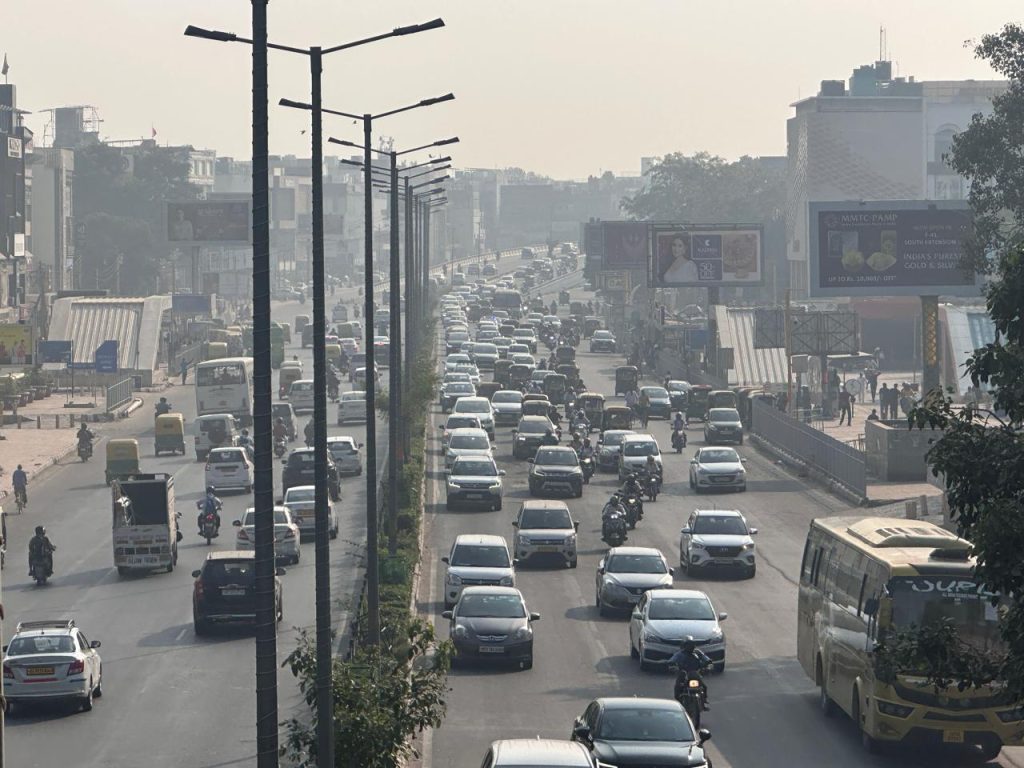
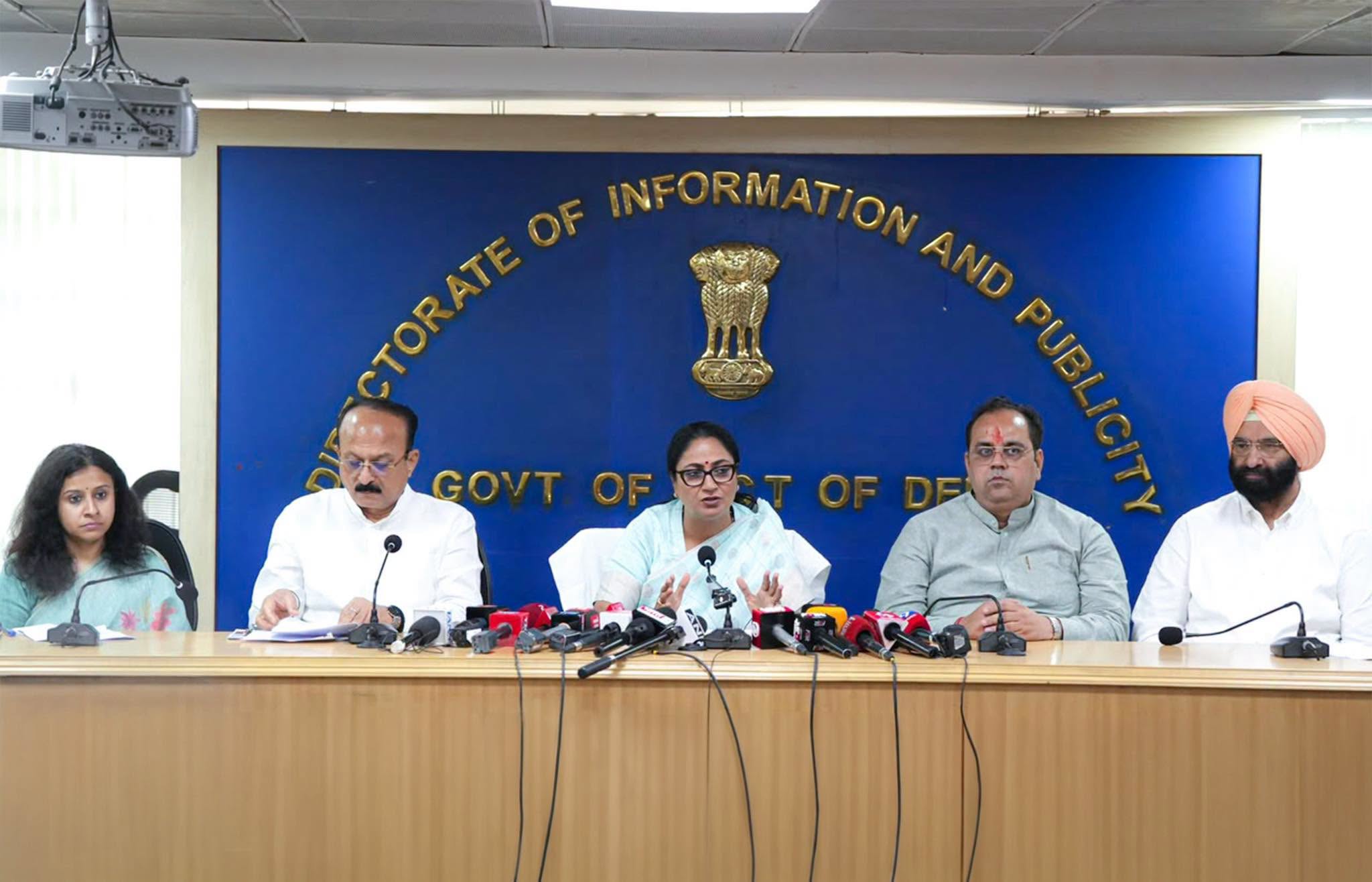
After years of stonewalling, the city is finally acknowledging the public health risks of air pollution – launching a series of radical moves aimed firstly at cleaning up vehicle emissions as well as stronger emission curbs on waste, construction and traffic during winter-time pollution peaks. The most radical measures include: banning new fossil fuel 2 & 3-wheelers and small trucks, ending support for hybrid cars in favor of “pure” electric only. Can the measures finally trigger real change?
NEW DELHI – Air pollution has made the headlines in Delhi unusually for the city’s summer season when air pollution is typically low. The government has announced a series of new policies worth approximately $2.5 billion to improve the quality of air in the world’s most polluted capital.
There have been three major announcements. These include a new $1.5 billion Delhi EV policy on July 1; a $1 billion plan to replace old, polluting trucks and buses in Delhi and its suburbs; and mandatory curbs on transport into Delhi, staggered office timings, 50% work-from-home mandate, and other measures between November 1 and February 28, which is the region’s peak pollution season.
While policy action is centred on Delhi, potentially any other state or city in India – where two-thirds of the world’s 100 most polluted places are located – could use this as a template for adopting similar emissions curbs. A common thread across the measures is the unequivocal acknowledgement by the government of the link between fossil fuel emissions, air pollution and health. As Rekha Gupta, Delhi’s Chief Minister, said in a social media post, “We want the policy to, step-by-step, help convert Delhi into a pollution-free city.”
Delhi’s new EV Policy will come into effect on 1 July 2026 and remain in force until 31 March 2030. It marks a decisive step towards reducing vehicular pollution and accelerating the transition to electric mobility.
Over the next four years, the Government will invest ₹7,000… pic.twitter.com/f8O5EuSheF
— CMO Delhi (@CMODelhi) June 29, 2026
EV policy: What’s in, what’s out
Delhi’s EV Policy 2.0 bans new fossil fuel three-wheelers and small trucks, which are the backbone of last-mile delivery of goods, from January 1, 2027. From April 2028, no new fossil fuel two-wheelers will be allowed. Only electric. Two-thirds of Delhi’s 8.7 million vehicles are two wheelers.
But in terms of a carrot, a series of new purchase subsidies for electric two- and three-wheelers, as well as other types of light goods vehicles has been established.
Financial incentives for hybrid gasoline and electric vehicles also are being terminated. Going forward, the focus, as one official put it, will be on “pure EVs”.
Substantial subsidies for the purchase of electric vehicles are being offered. These will be offered in a phased manner, ranging from about $1,000 to 10,000 per vehicle, depending on vehicle type and tapering off over time.
And vehicle owners who scrap older, more polluting cars and trucks will receive financial incentives of up to $50.
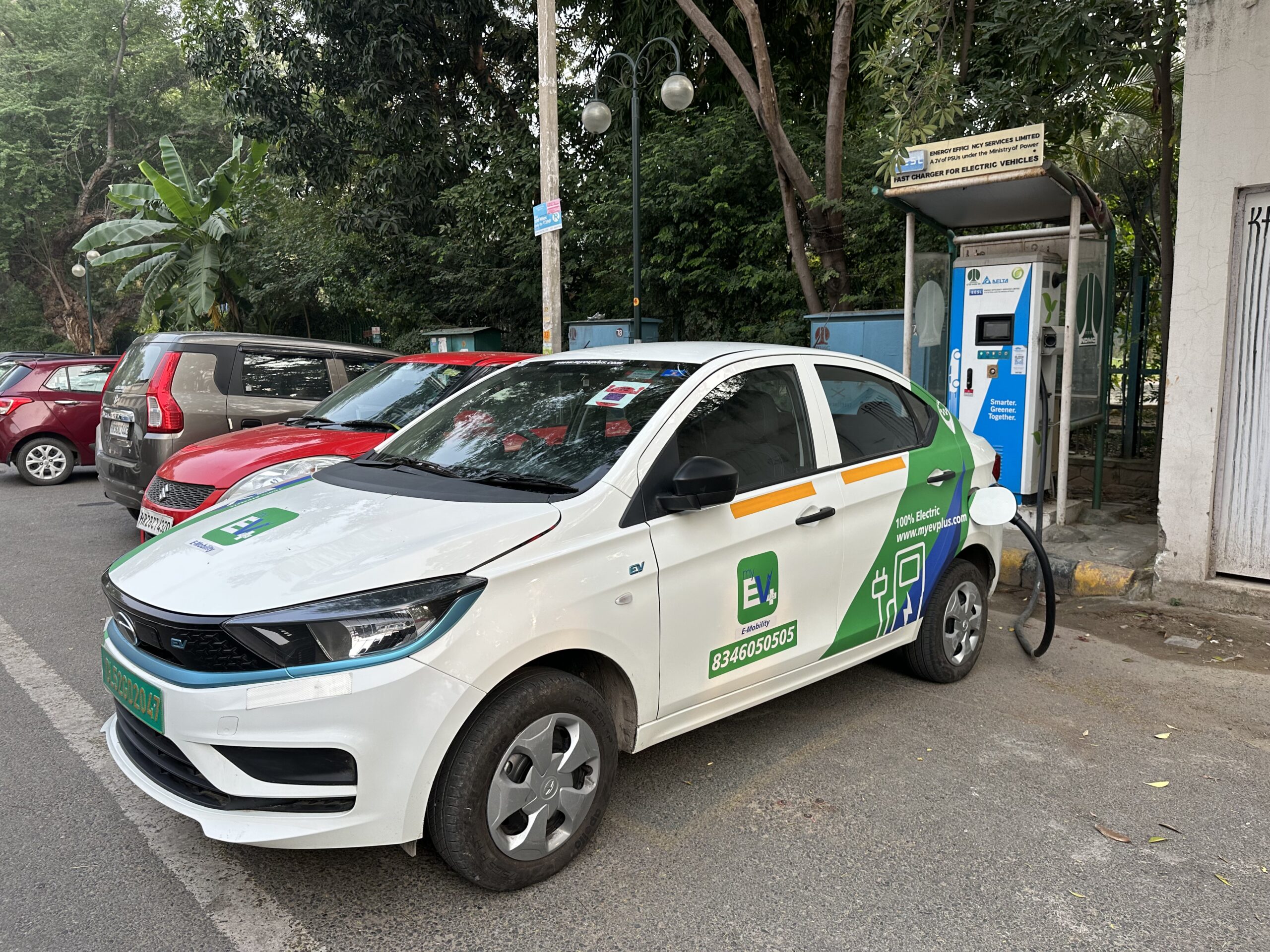
Other key highlights of Delhi’s new EV policy include a 100% exemption on road tax and registration fees for electric cars priced up to ₹30 lakh (about $30,000).
The government says the policy will cost about $1.5 billion, including subsidies and other tax breaks as well as the cost of new EV infrastructure. At the same time, however, there is no plan to actually ban conventional gasoline or diesel-powered trucks of four wheels or more, Gupta has stressed.
Rather, the government’s focus will be on incentivizing EVs by waiving their road tax and registration charges.
Over time, however, the government plans to introduce electrification mandates for four-wheelers as well as developing a framework to “discourage” the registration of polluting vehicles running on “inefficient fuels”.
Government acknowledges vehicle pollution’s contribution to health risks
The new policy aims to achieve at least 30% electrification of Delhi’s vehicles by 2030.
This followed a government statement in June that air pollution in Delhi-National Capital Region (NCR) remains a “severe public health challenge” particularly during winter months.
Transport is the single largest pollution source within the city. And vehicular emissions contribute around 23% of Delhi’s PM2.5 during the peak winter months of smog.
Two-wheelers, which represent two-thirds of Delhi’s vehicle fleet, contribute to about one third of vehicle emissions of PM2.5 (a fine pollutant) and PM10 (coarser pollutants, like dust), according to an IIT Kanpur study. This is more than three-wheelers.
Phase out of most polluting diesel trucks
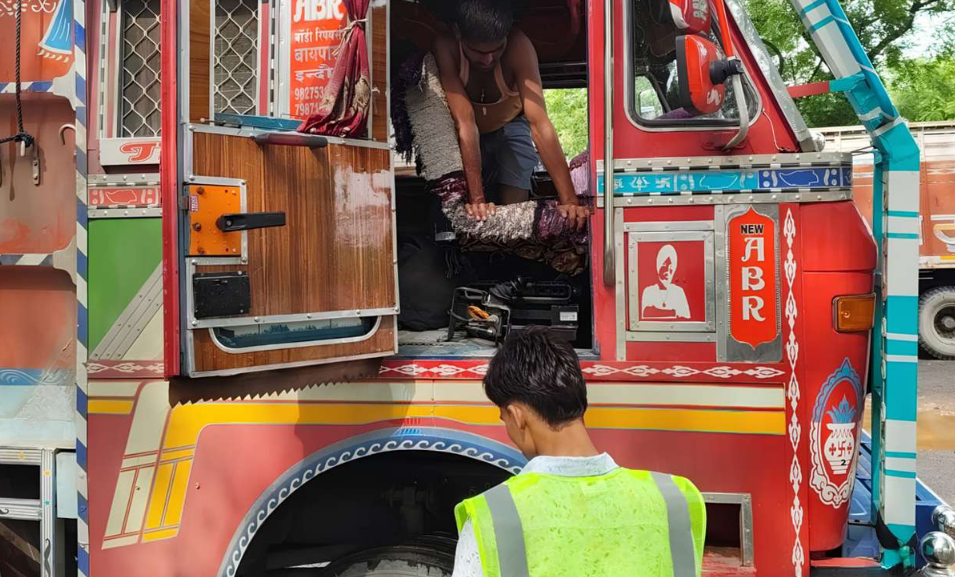
A few weeks before Delhi’s EV policy announcements, the central government also announced an INR 9,585 crore (almost $1 billion) scheme to replace 200,000 older, and highly-polluting diesel trucks over the next two years in the Delhi region, although it exempted government vehicles.
The key in this policy is replacing vehicles that fail to meet the newest emission standard of Bharat Stage 6, equivalent to Euro 6.
While electrification of Delhi’s bus fleet is already advancing apace, the Delhi policy stops short of mandating a switch to zero emission heavy duty freight vehicles.
But a brand-new report on truck pollution in the Delhi region by three prestigious think tanks calls for moving in that direction.
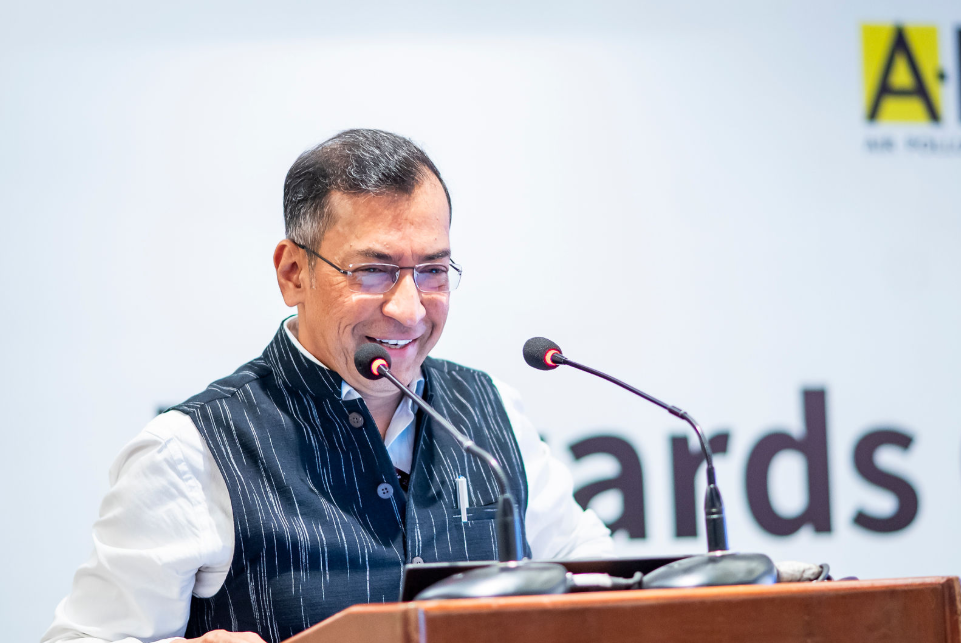
The report, ‘Towards Cleaner Freight in Delhi’ calls for 100% of freight trucks to be electrified by 2035. The report was produced by the Air Pollution Action Group (APAG), Indian Institute of Technology Delhi (IIT Delhi), and The Energy and Resources Institute (TERI). The report was publicly launched last month by a senior Ministry of Road and Transport official, Mahmood Ahmed – reflecting the attention the recommendations are getting in government circles.
Electrification of heavy duty vehicles remains a challenge
Delhi’s proposed EV measures are among the most ambitious state-level initiatives to improve air quality by accelerating the transition to zero-emission vehicles (ZEVs), Amit Bhatt, India Managing Director of the International Council on Clean Transportation told Health Policy Watch.
Electrification of the truck fleet, however, remains a significant gap that still needs to be addressed by the Indian government, he said.
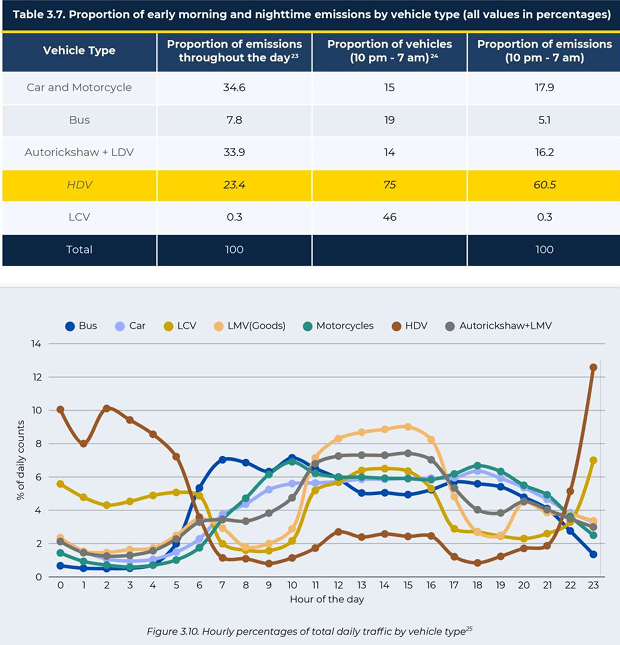
Heavy-duty vehicles contribute far disproportionately to harmful air pollutants despite being a small share of the vehicle fleet, Bhatt pointed out. In Delhi, trucks contribute nearly a quarter of vehicle pollution emissions throughout the day, but 75% at night.
At a national level, while medium-and heavy-duty vehicles account for only 3% of the total vehicle stock, they contribute up to 53% of particulate matter emissions from transport nationwide.
“These measures can significantly reduce emissions from the transport sector and set an important precedent for other states,” Bhatt said. “But Delhi alone cannot eliminate its air pollution; it needs a regional approach.
As part of that, freight emissions is “critical,” Bhatt added, saying that the ICCT which works with the government, supports a coordinated regional strategy, including accelerated electrification of interstate freight trucking asl be essential to deliver sustained improvements in air quality across Delhi and the wider region.
Government pledges tougher enforcement of emissions standards on older vehicles
Another looming challenge remains the enforcement of pollution control standards on fuel-powered vehicles that remain on the roads. Every fuel-powered vehicle on the road must obtain a Pollution Under Control Certificate (PUCC).
Currently, the system is plagued with problems -including lax monitoring, and related to that, allegations of corruption, as well as a lack of more advanced monitoring of key pollutants such as PM2.5 and oxides of nitrogen (NOx) that are the most lethal for health.
At the launch of the recent IIT-TERI truck report, Ahmed of the Transport Ministry announced that the PUC system would be reformed ahead of Delhi’s peak pollution season.
“We’ll definitely tighten up the processes. We’ll ensure that the gaming that is happening now, in terms of the vehicle not reaching the centre itself, in terms of the data being manipulated,” Ahmed told Health Policy Watch on the sidelines of the launch.
While he didn’t go into details, some of the changes under consideration include geo-tagging of vehicles at testing centres, end-to-end encryption of emissions data, mandatory insertion of the testing probe into the vehicle tailpipes and eliminating manual entry of emissions data to reduce manipulation.
However, the reforms do not include testing vehicles for the hazardous PM2.5 and NOx. While such tests are readily available in developed countries, in India the technology is currently more expensive, Ahmed said.
As Ahmed told Health Policy Watch. “There are technological challenges. As you must understand, these are fine particles. They can even go through the pores of the skin and skin and reach your lungs….More importantly, there’s a cost challenge to it. So [the question is] whether a simple device, located in a small PUC (test) centre, can be that advanced?”
‘Master plan’ to further curb Delhi’s emissions in peak season
The Delhi government has also announced a list of mandatory curbs and rules to be implemented between November 1 and February 28 of every year, starting this year. This is the peak pollution season.
Called the Winter Pollution Master Plan, the measures include:
- No fuel sale for vehicles without a valid Pollution Under Control (PUC) certificate around the year.
- No entry in winter of non-Delhi registered gasoline and diesel vehicles with emissions above BS/EURO 6 emission standards, except for CNG and electric vehicles, ambulances, fire services and other essential vehicles.
- Doubling of parking meter charges.
- Half the employees at government and private offices working from home on any given day of the week.
- Office hours will be staggered to reduce peak-hour traffic congestion.
- No demolition work and open dust-generating construction activities will be prohibited, except for essential public infrastructure projects.
- Installation of anti-smog guns (water sprinklers) at large commercial buildings and major construction sites.
- Stricter curbs on open burning of waste; institutions and neighbourhood welfare associations to be held accountable.
With the exception of some tweaks, these winter-time curbs are not new. Yet, Delhi’s pollution levels in the peak winter period have remained extremely hazardous. Data from Centre for Research on Energy and Clean Air (CREA) shows how the October to December PM 2.5 levels have remained at or above 170 micrograms/cubic metre, that is 34 times above WHO’s recommended safe levels, for nine of the past ten years.
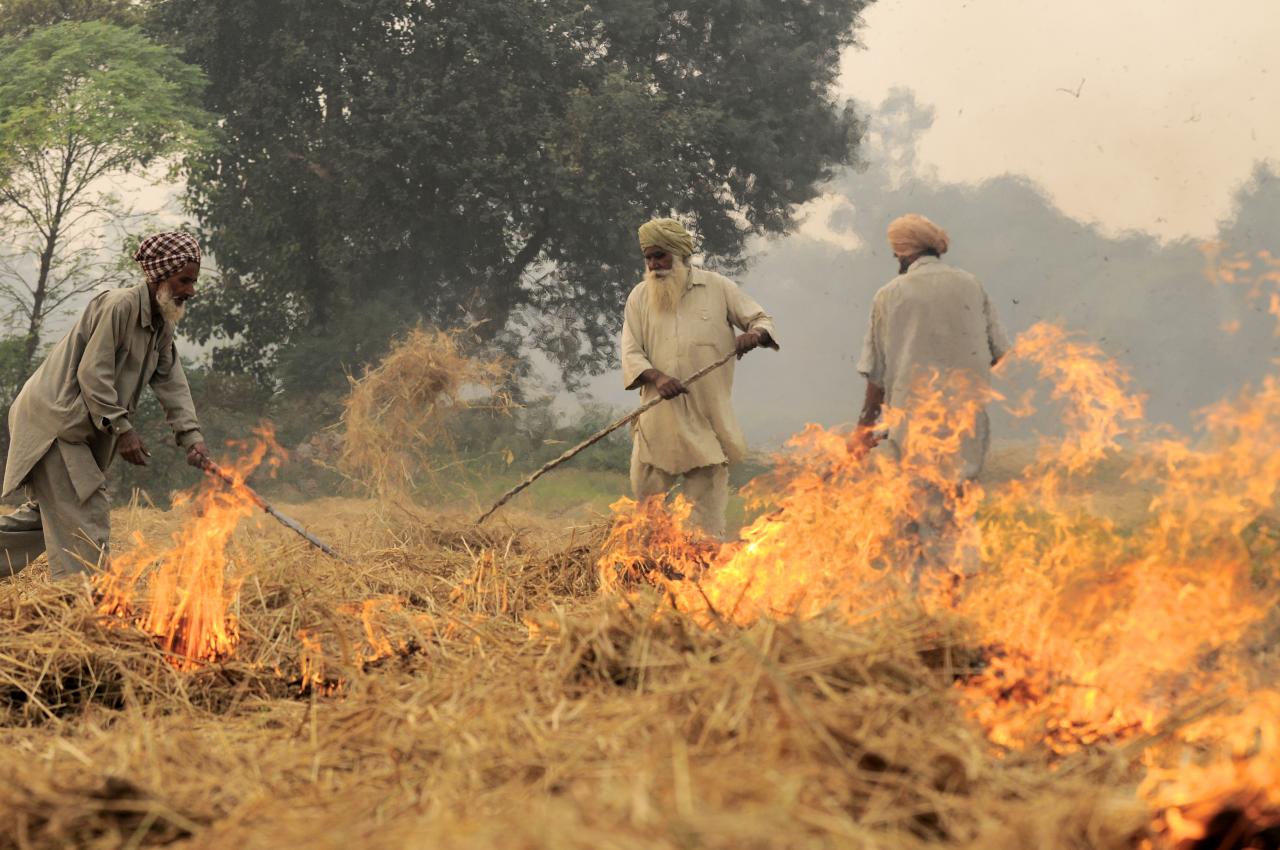
Moreover, multiple studies have revealed that almost two-thirds of Delhi’s peak winter time air pollution drifts into the city from surrounding states, well outside the small state’s own boundaries. A leading factor here, is crop waste burning in surrounding rural regions of Punjab and Haryana state – producing smoke that drifts to the city and then hovers over it for days, in the dry season.
On paper, the national government has adopted an airshed approach, that is, coordinated policy action across multiple state and district jurisdictions in a common geography where the air tends to get trapped. But this approach has clearly had limited success.
So, the crackdown on polluting vehicles is a radical move for Delhi; it is a benchmark for the rest of India.
But as one group of concerned parents quickly pointed out, the measure are unlikely to be sufficient if pollution isn’t reduced from other sources – including households, industries, waste and farm fires in surrounding rural regions. “Our response”, concluded the Parents group, is “not good enough.”
Our response to Delhi Govt’s notification on permanent Winter Pollution Master Plan: Post 1 of 4
1. Not good enough
2.Air quality will be hazarous again this year
3. Our children will not be able to play outdoors safely @PMOIndia@mygovindia @LtGovDelhi @CMODelhi@mssirsa— ParentsAndPeopleAgainstPollution (@PPAPIndia) July 3, 2026
Image Credits: Chetan Bhattacharji, Delhi State , Chetan Bhattacharji, A-PAG , A-PAG, A-PAG, Neil Palmer.
Combat the infodemic in health information and support health policy reporting from the global South. Our growing network of journalists in Africa, Asia, Geneva and New York connect the dots between regional realities and the big global debates, with evidence-based, open access news and analysis. To make a personal or organisational contribution click here.