

Close Menu
Simply Invest Asia
  • Home
  • About us
  • Explore industries/sectors
    • Automobile
    • Aviation
    • Banking
    • Biotechnology
    • Chemical & Fertilizer
    • Entertainment and Media
    • Food Processing
    • Healthcare
    • Iron and Steel
    • Leather
    • Mining
    • Oil and Gas
    • Pharmaceutical
  • Explore by countries
    • China
    • Dubai / UAE
    • Hong Kong
    • India
    • Indonesia
    • Japan
    • Malaysia
  • Explore cities
    • Bangkok
    • Beijing
    • Chongqing
    • Delhi
    • Dubai
    • Guangzhou
    • Jakarta
    • Kuala Lumpur
  • Why Asia
Facebook X (Twitter) Instagram Threads
Trending:
  • India stands out as an anti-AI trade as foreign capital returns
  • EPEX to attend Weibo Cultural Communication Night in Bangkok amid China expansion
  • Commercial Bank of Dubai upsizes and prices $550mln AT1
  • Behind “China overcapacity” hype lies Western overanxiety_英语频道_央视网(cctv.com)
  • Tata Steel: 1QFY2027 Production and Delivery Volumes (Provisional)
  • Vehicle Camera Market in Indonesia | Report – IndexBox
  • Anwar, Thai PM Anutin hold talks to deepen Malaysia-Thailand ties
  • Hang Seng Index rally has stalled: what next for Hong Kong stocks?
  • Comment: Why delivery discipline will make or break neighbourhood health
  • India looks to untapped graphite riches for slice of critical minerals boom India looks to tap graphite riches for slice of critical minerals boom
  • ZAWYA: Dubai strengthens its global position in the digital assets race as regulatory frameworks gain strategic importance — TradingView News
  • Germany Industry 4.0 Market Size, Share & Growth Statistics by 2034
  • Wiz founder Assaf Rappaport expands media ambitions with $27 million Israel Entertain
  • Japanese Yen bulls stay hesitant as US-Japan rate gap caps upside
  • Hong Kong top retirement choice for ultra-rich expats, St James’s Place says
  • Study finds dangerous chemicals in the breast milk of Seattle moms
  • Dubai Police just swapped their Lambos for a BYD
  • Lloyds Stock Leads 3 UK Dividend Ideas For Higher Income
Thursday, July 9
Facebook X (Twitter) Instagram
Simply Invest Asia
  • Home
  • About us
  • Explore industries/sectors
    • Automobile
    • Aviation
    • Banking
    • Biotechnology
    • Chemical & Fertilizer
    • Entertainment and Media
    • Food Processing
    • Healthcare
    • Iron and Steel
    • Leather
    • Mining
    • Oil and Gas
    • Pharmaceutical
  • Explore by countries
    • China
    • Dubai / UAE
    • Hong Kong
    • India
    • Indonesia
    • Japan
    • Malaysia
  • Explore cities
    • Bangkok
    • Beijing
    • Chongqing
    • Delhi
    • Dubai
    • Guangzhou
    • Jakarta
    • Kuala Lumpur
  • Why Asia
Simply Invest Asia
Home»Explore industries/sectors»Healthcare»Comment: Why delivery discipline will make or break neighbourhood health
Healthcare

Comment: Why delivery discipline will make or break neighbourhood health

By IslaJuly 9, 20265 Mins Read
Share
Facebook Twitter Pinterest Threads Bluesky Copy Link


Harpreet Sood, a practising GP in London and advisory member for The Access Group, discusses the factors that determine whether neighbourhood health succeeds or stalls.

Twelve months ago, neighbourhood health largely existed as a policy ambition in the 10 Health Year Plan. Today, the operating model is starting to take shape on the ground, and the expectation is that we deliver it at scale. I recently co-chaired a roundtable with Minal Bakhai, former NHS England national director of primary care and community, joined by senior leaders from across health and social care, local government and parliament. The conversation surfaced the delivery factors that, in my view, will determine whether neighbourhood health succeeds or stalls.

Rowan Sil, chief clinical information officer, Leicester, Leicestershire and Rutland Integrated Care Board, spoke about the health campus model in Leicestershire: a weekly, open-door neighbourhood hub where residents access support for health concerns, housing, debt, mental health pressures and wider family needs in a single place. It sounds straightforward. In reality, it has taken years of relationship building across general practice, local authorities and community organisations, with a local community interest company absorbing 350,000 contacts that would ordinarily have sat with primary care.

Flagship example

Minal shared a flagship example from her time as senior responsible officer for the Neighbourhood Health model at NHS England: Morecambe Bay. Barrow is one of the most deprived communities in the area, with a life expectancy roughly 20 years shorter than neighbouring towns and a long-standing burden of childhood ill health. 

Through community activation, encouraging neighbours to look out for one another, and supporting parents to take a more proactive approach to lifestyle and wellbeing, family outcomes have improved markedly. Suicide rates in the targeted cohort have fallen to zero, with very limited clinical intervention. That sustained focus has also reduced pressure on acute services, allowing Barrow to shift funding left, away from traditional secondary care.

These models are fragile. Their success is rooted in trusted relationships between professionals in primary care, community services and local government. Delivery at scale cannot be built on relationships alone. We need operational infrastructure that survives leadership changes, organisational churn and workforce pressures.

Technology is often described as the glue that allows health and care professionals to share information across very different environments. That is true, and with the pace of AI advancement, frontline staff are increasingly looking to these tools to solve workflow challenges in real time. As one guest put it: once you free up clinical time through workflow optimisation, teams can start looking for the people falling through the cracks. The question is whether the system creates the conditions for it to happen at scale.

The real risk sits in the gap between the pace of adoption and the maturity of governance. Clinicians reaching for consumer AI tools, without understanding what happens to the data or whether the model has been tested for clinical use, creates genuine exposure. A GP using AI carefully under organisational oversight, and a GP using shadow AI on their personal phone, are doing fundamentally different things.

Vendors have a critical role to play: providing governance layers, clinical guardrails and the accountability structures that make safe deployment possible. That means building on the infrastructure we already have, including shared care records, and making fuller use of the sovereign vendors we are entrusting with patient data.
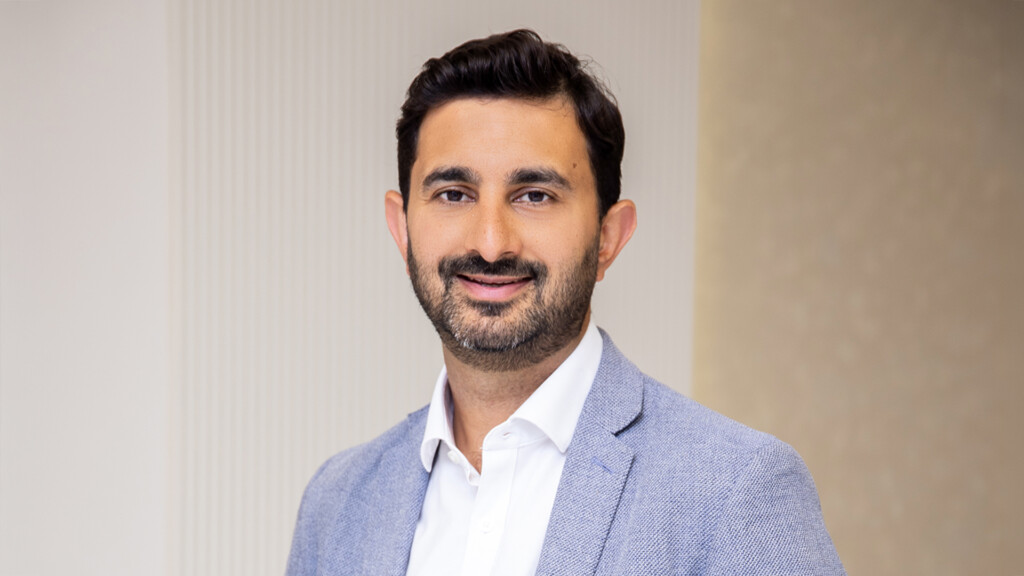
Harpreet Sood, advisory member for The Access Group.

Data is abundant: accountability is not

We are still operating with data locked in silos, sitting in multiple small boxes, which limits its ability to drive clinical and population impact. This fragmentation creates inefficiency, but it also creates ambiguity around ownership. When multiple organisations can each see part of the problem, but nobody clearly owns the response, responsibility drifts back towards general practice by default.

Social care remains one of the clearest examples. Domiciliary care providers collectively see huge numbers of vulnerable people every day and often spot deterioration long before a hospital admission occurs. Yet many remain largely excluded from the information flows shaping neighbourhood health delivery. The NHS often talks about interoperability as though it is purely a technology problem. In practice, accountability is frequently the bigger issue.

The NHS now risks entering a difficult middle phase on neighbourhood health: enough policy momentum to create expectation, but not yet enough operational change to translate that into impact. The danger is that the model becomes trapped between national frameworks and a handful of isolated local success stories.

The focus now needs to be on delivery discipline. That means making decisions earlier, devolving accountability locally, and accepting that some experimentation and iteration are unavoidable. It also means recognising that neighbourhood health cannot sit solely within NHS structures. Social care, voluntary organisations and community services are not adjacent to the model. They are central to whether it succeeds.

Ultimately, patients will not judge neighbourhood health by the quality of the framework documents or the number of pilot sites announced. They will judge it, as Minal so aptly put it at the roundtable, on whether they can “live gloriously ordinary lives”. On whether care and support feel easier to access, better connected, and more responsive to the reality of their daily lives.


Source link

Related Posts

Miriam Mutebi: Women in Healthcare Coming Together to Strengthen Communities and Health Systems

July 8, 2026

teiss – News – Lake Region Healthcare reports data breach exposing patient information

July 7, 2026

2 Dirt Cheap Healthcare Stocks to Buy in July

July 7, 2026
Add A Comment
Leave A Reply Cancel Reply

Top Posts

China Scraps 12,000 Degrees in Biggest Academic Overhaul in Years

June 14, 2026

Chinese Wall may stem India tech flows for electronics and automobile

June 1, 2026

Abandoned malls, whispers of nuclear war and young foreigners detained. This is what’s REALLY going on in Dubai… and the chilling warning one taxi driver gave to the Mail’s IAN BIRRELL

April 11, 2026
Don't Miss

India stands out as an anti-AI trade as foreign capital returns

By IslaJuly 9, 2026

ShareShare Article via FacebookShare Article via TwitterShare Article via LinkedInShare Article via EmailUTI International’s Praveen…

EPEX to attend Weibo Cultural Communication Night in Bangkok amid China expansion

July 9, 2026

Commercial Bank of Dubai upsizes and prices $550mln AT1

July 9, 2026

Behind “China overcapacity” hype lies Western overanxiety_英语频道_央视网(cctv.com)

July 9, 2026
SUBSCRIBE TO OUR NEWSLETTER

Get our latest downloads and information first. Complete the form below to subscribe to our weekly newsletter.


I consent to being contacted via telephone and/or email and I consent to my data being stored in accordance with European GDPR regulations and agree to the terms of use and privacy policy.

Stay In Touch
  • Facebook
  • YouTube
  • TikTok
  • WhatsApp
  • Twitter
  • Instagram
Top Trending

Wiz founder Assaf Rappaport expands media ambitions with $27 million Israel Entertain

By IslaJuly 9, 2026

Japanese Yen bulls stay hesitant as US-Japan rate gap caps upside

By IslaJuly 9, 2026

Hong Kong top retirement choice for ultra-rich expats, St James’s Place says

By IslaJuly 9, 2026
Most Popular

Gas Malaysia in Tokyo Gas, VTTI energy partnership

June 8, 2026

#legendgiveaway: Weekend dinner buffet for two at Cordis, Hong Kong

April 24, 2026

SheConnects Digital Accelerator Announced To Advance Women’s Digital Inclusion Across India And Sub-Saharan Africa

May 7, 2026
Our Picks

After heroin, pharmaceutical opioids emerge as dangerous trend in Punjab: NCB report

June 27, 2026

Cathay Cargo adds an Airbus A330 freighter from Air Hong Kong

June 18, 2026

Dubai residents take shelter as UAE intercepts Iranian missile and drone strike

May 4, 2026
SUBSCRIBE TO OUR NEWSLETTER

Get our latest downloads and information first. Complete the form below to subscribe to our weekly newsletter.


I consent to being contacted via telephone and/or email and I consent to my data being stored in accordance with European GDPR regulations and agree to the terms of use and privacy policy.

© 2026 Simply Invest Asia.
  • Get In Touch
  • Cookie Policy
  • Privacy policy
  • Terms & Conditions

Type above and press Enter to search. Press Esc to cancel.

SUBSCRIBE TO OUR NEWSLETTER

Get our latest downloads and information first.

Complete the form below to subscribe to our weekly newsletter.


I consent to being contacted via telephone and/or email and I consent to my data being stored in accordance with European GDPR regulations and agree to the terms of use and privacy policy.