
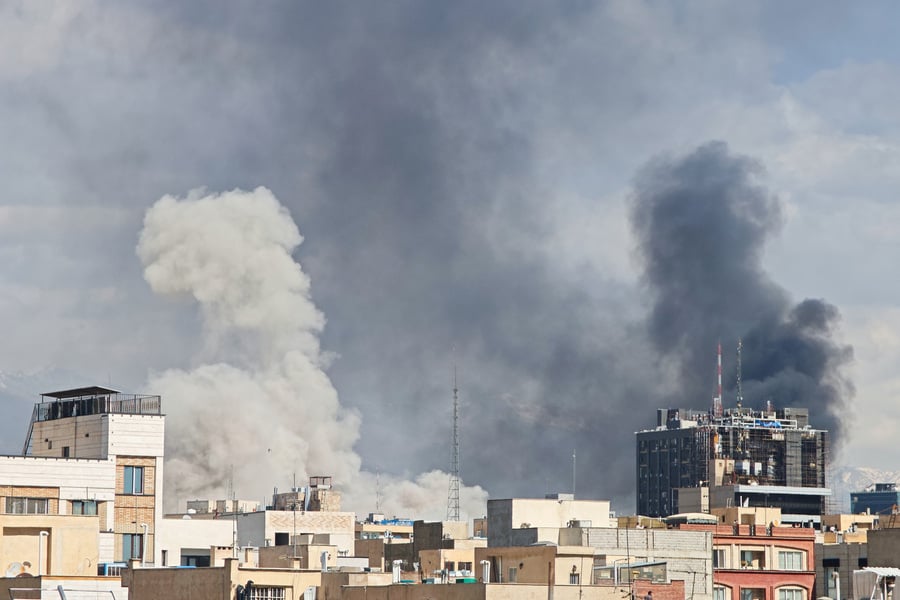
Xi Jinping’s government, which has long projected an image of strategic neutrality, is now being publicly discussed by Israeli readers as a potential supporter of the networks and states confronting Israel. The shift follows a U.S. intelligence assessment, first reported by CNN, indicating that Beijing may be preparing to transfer man-portable anti-aircraft missiles to Iran.
Public reaction in Israel, reflected in reader responses to English-language media coverage, suggests a reassessment of China’s role—from a distant economic partner to a more direct geopolitical actor. The discussion has also extended to Taiwan, with some Israeli commentators raising the possibility of closer alignment as part of a broader strategic response.
US intelligence report raises concerns over potential missile transfers to Iran
The report, first carried by CNN, cited U.S. intelligence assessments indicating that China may be preparing to supply Iran with man-portable air defense systems in the coming weeks. These shoulder-fired missiles are designed to target low-flying aircraft. Three sources familiar with the assessments confirmed the information.
Two of those sources said efforts may be underway to route shipments through third countries, a step that could obscure their origin. Some observers, citing separate information, have suggested that initial deliveries may already have taken place.
The developments come as Iran appears to be replenishing military stockpiles following recent conflict-related depletion. External partners are believed to be involved in these efforts.
Success
You are now signed up for our newsletter
Success
Check your email to complete sign up
The Jerusalem Post republished the CNN report. China’s embassy in Israel responded by rejecting the claims as “entirely fabricated,” stating that Beijing “never provides weapons to any party to the conflict” and criticizing what it described as misleading information. China’s embassy in Washington issued a similar statement.
Reader responses to the coverage indicated that the denials did not fully address concerns among segments of the Israeli public.

US signals potential economic response to arms support for Iran
U.S. President Donald Trump said that any country providing weapons to Iran could face tariffs of up to 50 percent, without exemptions. The statement followed the announcement of a two-week ceasefire with Tehran.
Trump has issued similar warnings in the past. More recently, U.S. Defense Secretary Pete Hegseth emphasized a firm response to threats against American personnel, stating that the United States would act decisively if Americans were targeted.
These developments coincided with a noticeable shift in public discussion within Israel.
Israeli commentary links Iran policy to broader concerns about China and Taiwan
Reader comments published under the Jerusalem Post article reflected a range of views, including economic and strategic interpretations of China’s reported involvement.
Some commenters argued that China’s long-standing purchases of discounted Iranian oil could influence its policy decisions. They suggested that a change in Iran’s political alignment might affect China’s energy access and economic considerations.
Others connected the issue to Taiwan, proposing that increased U.S. support for Taiwan could serve as a counterbalance. Suggested measures included expanded arms sales and additional economic pressure on Beijing.
Several commenters also raised questions about the potential military implications of advanced air defense systems being deployed in the Middle East. They noted that such deployments could provide operational data relevant to future conflicts, including scenarios involving Taiwan.
At the same time, some readers expressed skepticism about the effectiveness of such systems, citing past performance of similar technologies. These views did not eliminate broader concerns about future risks.
Economic considerations also appeared in the discussion, with some commenters calling for reduced reliance on Chinese manufacturing, citing product quality concerns and broader strategic considerations.

US diplomat in Taiwan calls for dialogue and reduced tensions
Separately, the Jerusalem Post published a Reuters report quoting Raymond Greene, director of the American Institute in Taiwan, who serves as the top U.S. representative on the island. Speaking on a Taiwanese political program, Greene called on Beijing to reduce military pressure and engage in dialogue with Taiwan’s elected leadership.
Greene said the United States supports maintaining communication channels with all of Taiwan’s political parties, including the current government, to reduce the risk of miscalculation. He also emphasized the importance of avoiding coercive measures in cross-strait relations.
His remarks followed a visit to Beijing by Cheng Li-wen, a legislator from Taiwan’s opposition Kuomintang party. China’s leadership met with Cheng during the visit, which took place amid ongoing military activity near Taiwan.
Greene outlined three possible trajectories for cross-strait relations: continued dialogue, increased coercion, or conflict. He said that maintaining credible deterrence could reduce the likelihood of escalation and create conditions more conducive to dialogue.
Israeli discussion frames broader concerns about authoritarian governance and regional stability
Comments regarding the Taiwan-related coverage also reflected broader concerns among some Israeli readers about governance systems and regional security.
Some commenters noted that Taiwan operates with many characteristics of an independent political system, including self-governance, a standing military, and an independent economy, despite its limited formal diplomatic recognition.
Others expressed concern that unresolved tensions in the Taiwan Strait could have wider regional implications, citing developments in the South China Sea and relations with neighboring countries.
Additional comments referenced the COVID-19 pandemic and ongoing debates about accountability and transparency, suggesting that these issues continue to shape public perceptions of China internationally.
The developments surrounding the reported arms transfers to Iran and ongoing tensions in the Taiwan Strait have prompted discussion among Israeli readers about China’s role in multiple regions. These discussions reflect broader questions about geopolitical alignment, economic interdependence, and the potential implications of policy decisions across interconnected conflicts.