
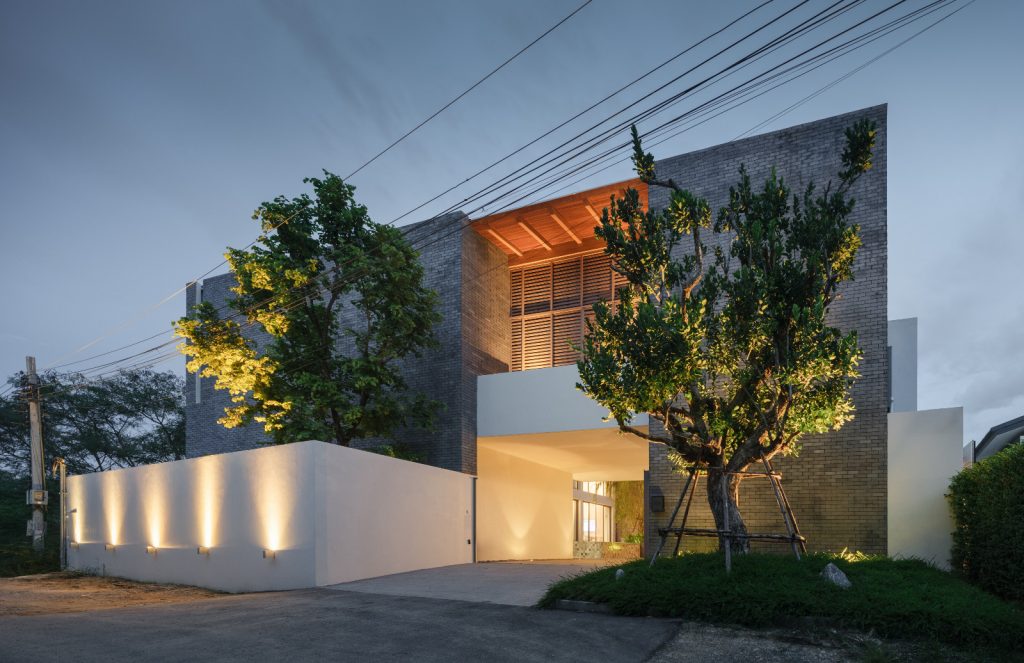
In a dynamic Thai neighbourhood, Greenbox Design Studio shapes this multi-generational Bangkok house with earthy textures, smart zoning, and an inviting central oasis.
“If you’re free this weekend, would you like to come over for dinner?”
This simple, caring question clearly reflects the context of modern families. Most living spaces today are designed for single living, couples, or nuclear families. With the fast-paced rhythm of life, spending time with extended family is often confined to weekend visits to grandparents.
The dream of having a house that can embrace multiple generations—the cheerful afternoon laughter of children mingling with the warm smiles of elders—has become a challenge fraught with limitations. However, for ‘Baan Banjob’ (The House of Convergence), a design by Greenbox Design Studio (GBDS), multi-generational living is not an impossible feat, provided the problem-solving begins with empathetic design.
Read more: Home tour: a Damansara bungalow in Malaysia reworked through warm minimalism
This house began with a challenging brief: the starkly different behaviours and lifestyles of people from various age groups. The homeowner, a third-generation entrepreneur, has a tight schedule and often returns home late, whereas the grandmother and parents tend to go to bed early and wake up at the crack of dawn. When bringing nine family members across four generations—from the grandmother, parents, and children, down to the grandchildren—to live under one roof, the differences in age, taste, and biological clocks became a major puzzle the architects had to solve.
“When we work, we don’t just build a building; we create architecture based on an understanding of people. We must believe that architecture can shape people in any direction we desire… We need to establish the rationale behind the functional layout to see how it meets the brief. At the same time, the architectural language must compromise with the feelings of the residents,” Surat Pongsupan, an architect from GBDS, explains the philosophy behind the design of ‘Baan Banjob’.
“We can design in a modern style, but the output must be something the grandmother likes too,” he adds with a smile. That was the starting point of designing architecture that acts as a ‘mediator’, blending the differences of each generation into a perfect balance.