
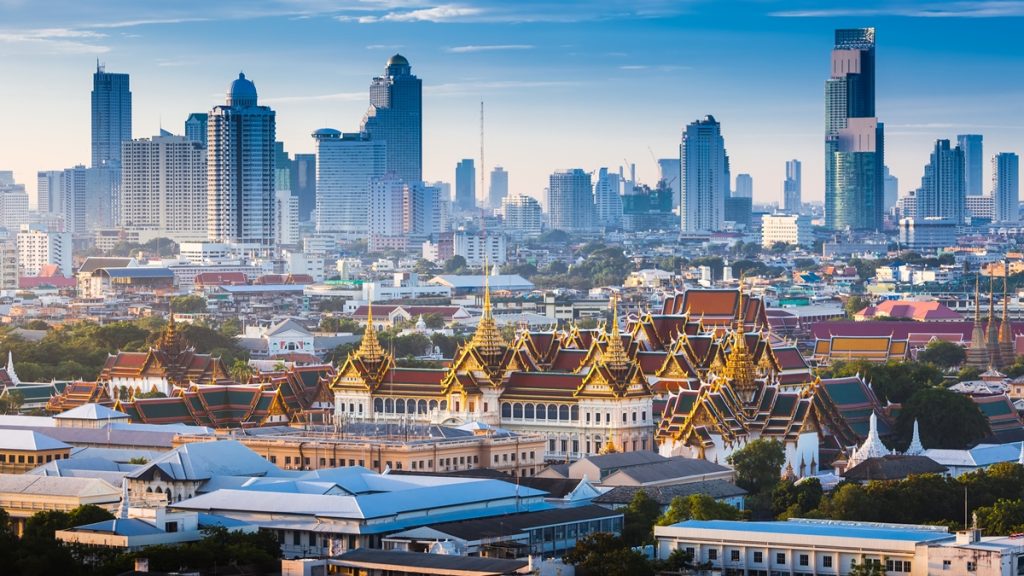
Bangkok marks its 244th anniversary on 21 April 2026, the date on which King Rama I, Phra Phutthayotfa Chulalok the Great, established the city as the capital of Thailand in 1782.
At 06:54 on 21 April 1782, the sacred main city pillar made of chaiyaphruek wood was installed on the eastern bank of the Chao Phraya River, symbolising the founding of the new capital, Krung Rattanakosin. The date has since been recognised as the official foundation day of Bangkok.
The name “Bangkok” is believed to have originated from “Bang Makok”, referring to an area abundant with olive-like trees (makok). The early settlement along a canal connected to the old river route became known as Bang Makok, with a local temple later called Wat Makok, today known as Wat Arun Ratchawararam Ratchaworamahawihan. Foreign visitors had referred to the city as “Bangkok” since the Ayutthaya period, when it served as a riverside community and strategic stopover for international trade routes between the Gulf of Thailand and the capital.
Historical estimates of Bangkok’s early population vary, but British diplomat Sir John Bowring, who visited during the reign of King Rama IV, suggested that the Siamese population was under five million nationwide, with Bangkok accounting for no more than 300,000 people. Based on earlier records by foreign observers such as Simon de la Loubère and Bishop Jean-Baptiste Pallegoix, historians estimate the early Bangkok population was likely closer to 100,000–200,000. The population later grew significantly through the relocation of war captives and migrants from Cambodia and Laos, as well as continuous waves of Chinese migration.
Over the past 244 years, Bangkok has developed into Thailand’s political, cultural and administrative centre, inheriting its foundations from Ayutthaya and Thonburi eras. Today, it stands as one of the world’s major cities, known for its tourism, cuisine and cultural heritage, and remains one of the most visited cities globally.