

I would like to begin by discussing the inbound side of Japanese tourism and hearing your perspective. Since the pandemic, we have observed a shift in how tourists come to Japan. Before COVID, the main driver was group tours from China, Korea, and Southeast Asia. Today we see many more FIT travelers and individual travelers visiting the country, planning their own itineraries and booking independently. This is changing how traditional travel agencies operate. It also aligns with what many call the second phase of Japan’s tourism strategy, where the country aims to attract more visitors to regional areas beyond the major cities. What is your honest view on this post COVID shift in Japan’s tourism industry, and how are FIT travelers influencing how experiential travel develops in Japan?
I believe the first factor to consider is price, because the Japanese yen is currently very weak. That has had a major impact on the travel market. Before COVID, the yen was relatively strong, and for many travelers from nearby countries such as Korea, Taiwan, and other parts of Asia, visiting Japan could be quite expensive. Today the situation has changed significantly. Traveling to Japan has become much more affordable. In fact, for many travelers the cost is now comparable to destinations such as Thailand, China, or Seoul. This price shift is extremely important because it lowers the barrier to entry and encourages people to visit.
The second factor relates to what happened during the pandemic itself. COVID became a turning point that helped raise global awareness of the uniqueness of Japanese culture. During the pandemic people had more free time, and many individuals in Japan began sharing content online about Japanese culture, traditions, food, and daily life. Social media played an enormous role in spreading that information. Through platforms such as social networking services, people around the world began discovering aspects of Japan they had not previously been exposed to. As a result, interest in Japan increased dramatically.
The third factor is safety. During the pandemic, many countries experienced social tension and instability. Japan, on the other hand, maintained a high level of stability and public safety. Even during the most difficult moments of COVID there were no major social incidents. For example, children continued to go to school independently, which is a normal part of everyday life in Japan. From an international perspective many people became curious about how Japan maintains such a safe and orderly society.
When you combine these three factors the favorable exchange rate, the global spread of information about Japanese culture through social media, and the strong reputation for safety you can see why interest in visiting Japan has increased. These elements together have made Japan a particularly attractive destination for international travelers.
I would now like to discuss your company. Interestingly, during COVID you founded Reiwa Travel with a very different mindset. Your company focuses primarily on outbound travel and introduced a fully digital and smart travel agency model, which is still relatively uncommon in Japan and perhaps even somewhat ahead of the market. Where did this business opportunity come from? Why did you believe Japan needed to digitalize its travel industry? And how do you see the situation today, considering that inbound tourism has recovered rapidly while outbound travel is still only around seventy percent of its 2019 level?
I had just exited my previous company, my first startup, shortly after the pandemic began. At that point I began thinking carefully about what my next business would be. I realized that the COVID period actually represented a unique opportunity.
Large travel companies such as JTB, Kinki Nippon Tourist, HIS, and global platforms such as Booking.com or Expedia were facing an extremely difficult environment. The first challenge they faced was the need to lay off a large number of employees because travel demand had disappeared almost overnight.
The second challenge was that they needed to rethink their business strategies. Because the travel market had collapsed temporarily, many companies had to consider shifting into other industries or exploring new business areas. In other words, their focus was no longer entirely on travel.
For me this situation created an opportunity. If I started a travel company at that moment, I could recruit talented professionals who had suddenly become available in the job market. Many highly skilled individuals were looking for new opportunities. From a recruitment standpoint it was an ideal time to build a strong team.
Another important factor is that starting a travel company in Japan requires several official licenses. Obtaining these licenses can take about one year or even longer. I realized that if we began the process during the pandemic, we could use that period to prepare the business infrastructure.
My assumption was that within three or four years the travel industry would inevitably recover. Both inbound and outbound travel would return. If we used the pandemic period to prepare our systems, build our technology, and assemble our team, then when the market rebounded we would already be in position to grow quickly.
In addition, many existing competitors were distracted because they were forced to rethink their businesses. That created a window of opportunity for a new company to enter the industry with a fresh and innovative approach.
What is interesting about your approach is that you used the pandemic period to prepare for the rebound. One of the outcomes was your application. I personally enjoy planning my own trips and consider myself an FIT traveler. Recently I prepared a trip to Vietnam and spent several weeks organizing and booking everything myself. I tried using your application to see what it offers from the perspective of a Japanese traveler. I searched for trips such as Vietnam and Seoul and was impressed by how fast and simple the booking process was. Within just a couple of clicks I could book a package at a price that seemed reasonable. However, as someone who likes to customize travel, I quickly started wondering whether I could modify certain aspects or personalize the itinerary further. I also wondered whether AI generated suggestions always provide the most optimized option or the best price. This leads me to ask you the following question. Do you think the current challenge for Newt is primarily technological, or is it more about whether people are ready to adopt this new way of booking travel? And which demographic groups or types of customers have you found to be the most receptive to using this type of platform?
That is a very important point. It is helpful to understand the specific characteristics of the Japanese outbound travel market because it is quite different from the perspective of travelers in other countries.
In Japan, only about twenty percent of the population holds a passport. That means international travel is still relatively uncommon compared with many Western countries. As a result, when Japanese travelers do go abroad they often prefer destinations that are very well known and easy to understand.
For example, when international visitors come to Japan they often follow the famous Golden Route visiting Tokyo, Mount Fuji, and Osaka. In a similar way, Japanese travelers abroad tend to choose the most familiar destinations. In Hawaii they typically stay in Waikiki. In Taiwan they focus mainly on Taipei. In Vietnam they might visit Hanoi. In Bangkok they tend to stay in central areas.
Because of this, our initial strategy was to simplify the travel experience by offering carefully designed packages focused on these Golden Route destinations. Our goal was to make international travel easy and accessible.
I often compare it to a supermarket. Imagine buying ingredients to cook a meal. Instead of selecting each ingredient individually, you can buy a prepared set that already includes everything you need. Our platform works in a similar way. We combine flights, hotels, and other elements into a single package so that travelers can book quickly and easily.
During the first three years our focus was on providing these Golden Route travel experiences. Now we are entering the next phase of our development. In this second phase we are beginning to offer more niche and unique travel options for customers who want more personalized experiences.
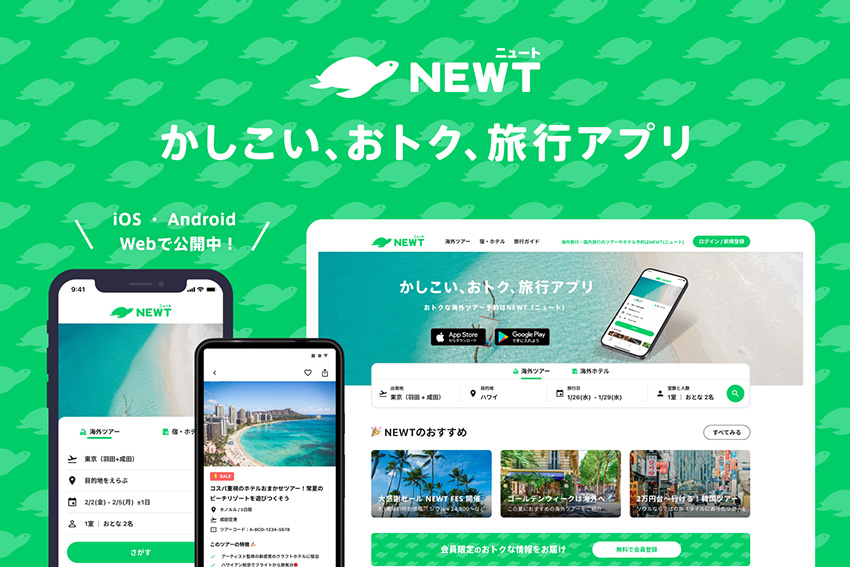
Since your platform has now been operating for about three years and is entering its fourth year, I am curious about customer loyalty. Because your company is fully digital and app based, does this create repeat usage among your customers? Or does an app based platform make customers more price sensitive and more likely to compare prices with services such as Skyscanner or other competitors?
The application is already creating significant repeat usage. Over the past two years our customers have used the service on average about 1.5 times. Compared with many other travel platforms, this is actually quite a strong repeat rate.
At the same time, price remains important because travel is essentially a commodity. If two places sell the same product, customers will compare the price. That is natural.
However, our main competitors are not necessarily platforms such as Skyscanner or Booking.com. Our business focuses on packaged travel. Therefore our real competitors are traditional travel agencies such as JTB, HIS, and Kinki Nippon Tourist.
Our goal is to provide strong overall value rather than competing only on price. We offer benefits such as the Newt points program, coupons, and various promotions that enhance the customer experience. Because of this combination of pricing and benefits we have achieved a strong repeat usage rate among our users.
You mentioned earlier that your company is now entering a second phase where you are refining your travel offerings and introducing more unique routes. Previously you relied on Expedia partnerships to access large hotel inventories. Recently you created a partner hub allowing direct connections with hotels and partners worldwide. How important is this for your next phase, and how will it improve your services and travel packages?
Direct partnerships offer several advantages. The first is pricing. When we have a direct contract with a hotel we can reduce intermediary costs and offer better prices to customers.
The second advantage is flexibility. With direct partnerships we can negotiate upgrades or additional benefits for travelers more easily.
Currently we have direct relationships mainly with hotels in Korea and Hawaii. We plan to expand this network to Taiwan, Thailand, and other destinations that are popular among Japanese travelers. We are also developing partnerships with domestic Japanese hotels, which will allow us to support inbound tourism more effectively.
Since you opened the platform for direct hotel partnerships, how successful has it been? Are you seeing hotels approach you to join the platform?
Yes, we are seeing increasing interest. It has only been about a year since we expanded partnerships in Korea, and already we have built a strong track record.
In Hawaii we acquired a company called Aloha7, which gave us long established relationships with hotels. Because of these successes we are now seeing more hotels in markets such as Taiwan, Thailand, and Vietnam express interest in joining the platform. As the network grows it creates a positive cycle.
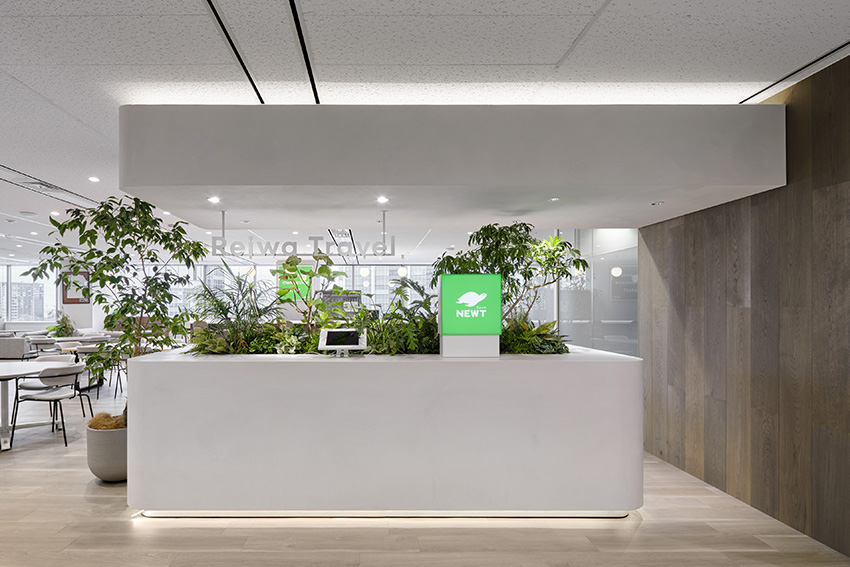
Are there additional regions you are focusing on, such as Europe where Japanese travelers often visit cities like Paris or London?
For outbound travel most Japanese travelers are not particularly focused on unique hotels. They mainly want to stay in the central areas of major cities such as Paris or London. Because of that it is relatively easy for us to secure hotel inventory there.
Artificial intelligence is clearly important in your platform. However many people worry about AI hallucinations. In travel this could lead to serious real world issues if incorrect information is provided. What systems do you have in place to prevent this? Do you rely on human oversight, and do you foresee a future where AI can operate fully without human intervention?
We use artificial intelligence extensively, but we also take the issue of hallucination very seriously. For that reason we have a process known as human in the loop. This means that important information generated by AI is checked by humans before it is finalized.
For example, when we create travel packages or booking related information, human staff verify the details before they are published.
There are cases where dynamic information such as restaurant recommendations can change quickly. If a restaurant closes unexpectedly we update the information after receiving feedback from customers. AI helps us generate and manage information efficiently, but human oversight remains essential for accuracy.
You mentioned earlier that direct connections with domestic hotels could support inbound tourism. In 2025 international visitors to Japan spent about 2.5 trillion yen, a major increase compared with previous years. How do you see your platform evolving to capture inbound tourism demand?
We have developed developing two main services for inbound travelers.
The first service is called Bespoke. “Bespoke” is a comprehensive travel service where a dedicated concierge handles everything from itinerary planning and reservations to on-site experience arrangements. Designed for busy individuals who cannot spare time for travel logistics, as well as those seeking unique experiences beyond the reach of standard tours, Bespoke delivers a truly one-of-a-kind journey.
The second service is an online booking platform through the Newt application. Many Japanese ryokan and smaller hotels are not listed on global platforms such as Expedia or Booking. Through our platform travelers will be able to access more than one thousand accommodations that are not widely available elsewhere.
What is the expected timeline for launching these inbound services?
This service is already available.

Your company has raised significant investment and is reportedly aiming for a potential IPO in Japan around 2028. How do you see the long term growth of the company, and what message would you like to share with investors?
Our core concept is very simple. Traditionally travelers book flights, hotels, activities, and restaurants on separate platforms. Our system brings everything together into a single platform.
This all in one approach saves time and simplifies travel planning. That is our main strength.
Although we started in Japan, our ambition is global expansion. Our first step is expansion within Asia, including markets such as Korea and Taiwan. Later we aim to expand further to the United States and Europe.
We are currently working on our next funding round and welcome international investors who share our vision.
Finally, looking ten years into the future, would you prefer Reiwa Travel to be known as a company that transformed the travel industry in Japan, or simply as a company that achieved strong growth within the existing industry structure?
Our goal is clearly to be recognized as a disruptor within the Japanese travel industry. Many traditional travel agencies have histories of thirty, fifty, or even more years. Very few new companies have been able to challenge them.
We want Reiwa Travel to be known as the company that introduced a new model and changed the industry. Growth is important, but our true ambition is to redefine how travel services operate in Japan and eventually around the world.
New Service Update
Reiwa Travel recently announced a major expansion of its travel platform NEWT, marking its full-scale entry into the global inbound market. Through newly introduced multilingual support—including English, Korean, and Chinese—the platform now enables international users to search and book accommodations in Japan and abroad, while accessing concierge services tailored to a global audience .
In parallel, the company has launched “Bespoke,” a premium travel concierge service designed for the global high-end segment. With dedicated concierges providing end-to-end itinerary planning and access to exclusive, hard-to-book experiences, the service reflects growing demand for deeply personalized and culturally immersive travel. Available in multiple languages, Bespoke further strengthens Reiwa Travel’s positioning as a borderless, experience-driven travel platform
For more information, visit their website at: https://www.reiwatravel.co.jp/en/home