
Close Menu
Simply Invest Asia
  • Home
  • About us
  • Explore industries/sectors
    • Automobile
    • Aviation
    • Banking
    • Biotechnology
    • Chemical & Fertilizer
    • Entertainment and Media
    • Food Processing
    • Healthcare
    • Iron and Steel
    • Leather
    • Mining
    • Oil and Gas
    • Pharmaceutical
  • Explore by countries
    • China
    • Dubai / UAE
    • Hong Kong
    • India
    • Indonesia
    • Japan
    • Malaysia
  • Explore cities
    • Bangkok
    • Beijing
    • Chongqing
    • Delhi
    • Dubai
    • Guangzhou
    • Jakarta
    • Kuala Lumpur
  • Why Asia
Facebook X (Twitter) Instagram Threads
Trending:
  • India, Japan Unveil Resilience Partnership To Boost Energy Security
  • Free and rules-based Indo-Pacific a shared priority for India and Japan: PM Modi
  • US pilot killed in Indonesia, plane burned on airstrip: Report
  • Alebund Makes Impressive Hong Kong Debut–Here’s Why
  • Plane Crashing Into Beijing’s Tallest Tower Blamed On “Personal Reasons”
  • Laser light controls molecular structures
  • Business News: Stock and Share Market News, Economy and Finance News, Sensex, Nifty, Global Market, NSE, BSE Live IPO News
  • Private sector firms asked to provide ethical projects worth Dh20bn-plus by 2031
  • Pastor in India Faces False Charge, Burned Church Building
  • Hong Kong bookseller Lam Wing-kee passes away, report says
  • Vitreous Enamel Glass Coating Market Forecast Points Higher Toward 2035 Amid Industrial Replacement Cycles – News and Statistics
  • Inside Vertiv’s Manufacturing Expansion in Johor, Malaysia
  • China-Pakistan friendship continuing to bear fruit – World
  • Dragons of Walton Street Opens Dubai Flagship for Luxury Kids’ Furniture
  • Trinasolar showcases 760W module at ASEW Bangkok
  • Luxury Cosmetics Pioneer Too Be Beauty Triumphs at Exclusive Kuala Lumpur Summit, Set to Redefine the Southeast Asia
  • What Will Happen If Indonesia Violates FATF Rule on Bond Transactions?
  • Halifax bank brand to be replaced by Lloyds – what it means for you
Thursday, July 2
Facebook X (Twitter) Instagram
Simply Invest Asia
  • Home
  • About us
  • Explore industries/sectors
    • Automobile
    • Aviation
    • Banking
    • Biotechnology
    • Chemical & Fertilizer
    • Entertainment and Media
    • Food Processing
    • Healthcare
    • Iron and Steel
    • Leather
    • Mining
    • Oil and Gas
    • Pharmaceutical
  • Explore by countries
    • China
    • Dubai / UAE
    • Hong Kong
    • India
    • Indonesia
    • Japan
    • Malaysia
  • Explore cities
    • Bangkok
    • Beijing
    • Chongqing
    • Delhi
    • Dubai
    • Guangzhou
    • Jakarta
    • Kuala Lumpur
  • Why Asia
Simply Invest Asia
Home»Explore by countries»Japan»How rare earths and semiconductors are driving Japan’s economic security strategy
Japan

How rare earths and semiconductors are driving Japan’s economic security strategy

By IslaJuly 2, 20264 Mins Read
Share
Facebook Twitter Pinterest Threads Bluesky Copy Link


Columns

Rare earths, semiconductors and long-term industrial policy are reshaping Japan’s revival and sharpening pressure on Korea to respond.
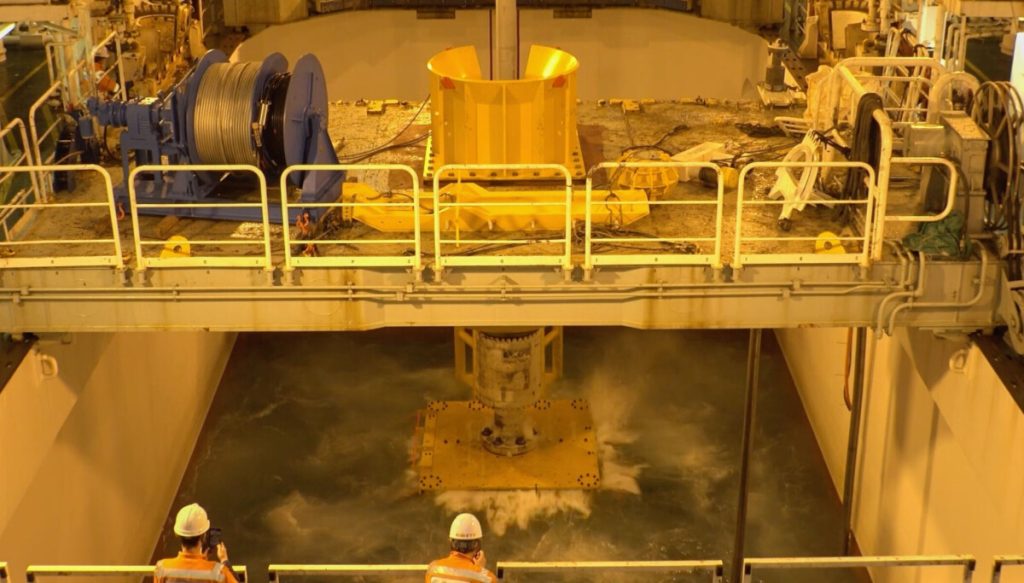
Workers lower a mining device from the deep-sea drilling vessel Chikyu to the seabed off Minamitorishima, south of Tokyo, on Jan. 18.
AP/YONHAP


Kim Dong-ho

The author is an editorial writer at the JoongAng Ilbo. 

Japan’s remote island of Minamitorishima lies about 1,850 kilometers (1,149.5 miles) from Tokyo. Though only about 6 kilometers in circumference, the tiny island has become central to Japan’s economic security strategy because of the rare earth deposits believed to lie beneath the surrounding seabed. The government aims to begin commercial mining in 2028, but formidable technical challenges remain. After a successful test this year, Japan plans to recover 350 tons of deep-sea mud per day next year to verify whether rare earth elements can be extracted for economic purposes. Minerals such as neodymium and dysprosium are essential for semiconductors, EVs, defense systems and robots.

The challenge extends beyond extraction. Refining rare earths produces wastewater and other pollutants, making large-scale production environmentally difficult. The United States possesses significant reserves at the Mountain Pass mine in California, but environmental regulations have long constrained production. China seized that opportunity. Since late Chinese politician Deng Xiaoping declared in 1992 that “the Middle East has oil [while] China has rare earths,” Beijing has developed the sector into a strategic industry and increasingly used export controls as geopolitical leverage.

Japan’s determination to secure its own supply reflects growing concern that dependence on Chinese rare earths could undermine both its advanced manufacturing sector and its national security. As the era of physical AI accelerates, demand for semiconductors, batteries, robots, EVs and defense equipment will continue to rise. A disruption in rare earth supplies would reverberate across entire industries. This explains why Japan has strengthened economic security legislation since 2022 while accelerating efforts to secure critical minerals, protect key technologies and reorganize supply chains.

Economic security has also become a catalyst for Japan’s broader revival. Since the launch of “Abenomics,” defined by a weak yen and expansive fiscal policy, in 2012, Japan has pursued monetary easing, fiscal stimulus and structural reform to escape decades of deflation. Real economic growth remains modest, hovering around 1 percent, but nominal growth has exceeded 4 percent for three consecutive years. Stock market reforms, rising wages and improvements in corporate governance all reflect a country no longer defined solely by its “lost three decades.”

The final piece of that transformation is Japan’s new growth strategy. Under its vision of building a “strong Japan,” the government plans to invest 3.5 quadrillion won ($2.3 trillion) by 2040 across 17 strategic sectors, including AI, semiconductors, information and communications, defense, aerospace, energy, critical minerals and quantum computing. Rather than relying on conventional stimuli such as infrastructure spending or cash handouts, Tokyo is linking industrial policy, technology, resources and national security into a single long-term strategy. Combined with Japan’s strengths in basic science, materials, parts and manufacturing equipment, sustained government support could have a significant impact.

The semiconductor industry is also regaining momentum. TSMC‘s plant in Kumamoto has become a cornerstone of efforts to rebuild Japan’s semiconductor ecosystem. Rapidus plans to begin mass production of 2-nanometer logic chips next year, and Kioxia has recently emerged as Japan’s most valuable listed company, symbolizing renewed confidence in the industry. Japan once surrendered semiconductor leadership to Korea and Taiwan and fell behind during the IT revolution. Today, however, economic security concerns are driving a new sense of national purpose focused on technological self-reliance.

The more pressing question is whether Korea, whose industrial strategy remains heavily centered on semiconductors, can keep pace with Japan’s determination and China’s technological rise. China sets national priorities and pushes companies to compete aggressively. Japan has translated 17 strategic sectors into 62 detailed investment programs with little political controversy.

Korea, by contrast, remains divided over its three megaprojects. Although the government has designated sites and Samsung Electronics and SK hynix have announced 895 trillion won in planned investment for the Honam semiconductor project, questions remain over electricity, water, land, skilled workers and regulatory support. Without those foundations, even ambitious investment plans may not materialize.

Japan’s target year is 2040. China pursued Made in China 2025. Japan now has its own long-term national strategy. Korea also hopes to complete its semiconductor cluster during the Lee Jae Myung administration, but achieving that goal will require institutional reforms and investment. In an era when rare earths, semiconductors, AI and quantum technology determine national power, Korea should place economic security at the center of its national strategy.

This article was originally written in Korean and translated by a bilingual reporter with the help of generative AI tools. It was then edited by a native English-speaking editor. All AI-assisted translations are reviewed and refined by our newsroom.


Source link

Related Posts

Free and rules-based Indo-Pacific a shared priority for India and Japan: PM Modi

July 2, 2026

GBP/JPY Price Forecast: Possible Japan intervention caps gains near 216.00

July 2, 2026

Japan ministry of finance declines to comment on sudden yen spike

July 2, 2026
Add A Comment
Leave A Reply Cancel Reply

Top Posts

China Scraps 12,000 Degrees in Biggest Academic Overhaul in Years

June 14, 2026

Chinese Wall may stem India tech flows for electronics and automobile

June 1, 2026

Abandoned malls, whispers of nuclear war and young foreigners detained. This is what’s REALLY going on in Dubai… and the chilling warning one taxi driver gave to the Mail’s IAN BIRRELL

April 11, 2026
Don't Miss

India, Japan Unveil Resilience Partnership To Boost Energy Security

By IslaJuly 2, 2026

India and Japan on Thursday agreed to deepen cooperation on energy security by launching a…

Free and rules-based Indo-Pacific a shared priority for India and Japan: PM Modi

July 2, 2026

US pilot killed in Indonesia, plane burned on airstrip: Report

July 2, 2026

Alebund Makes Impressive Hong Kong Debut–Here’s Why

July 2, 2026
SUBSCRIBE TO OUR NEWSLETTER

Get our latest downloads and information first. Complete the form below to subscribe to our weekly newsletter.


I consent to being contacted via telephone and/or email and I consent to my data being stored in accordance with European GDPR regulations and agree to the terms of use and privacy policy.

Stay In Touch
  • Facebook
  • YouTube
  • TikTok
  • WhatsApp
  • Twitter
  • Instagram
Top Trending

China-Pakistan friendship continuing to bear fruit – World

By IslaJuly 2, 2026

Dragons of Walton Street Opens Dubai Flagship for Luxury Kids’ Furniture

By IslaJuly 2, 2026

Trinasolar showcases 760W module at ASEW Bangkok

By IslaJuly 2, 2026
Most Popular

Teens Turn to Influencers and Social Media for News Insights

April 30, 2026

Hong Kong CE John Lee wraps up successful five-day Central Asia mission

June 8, 2026

Dubai Ruler calls on all residents to raise UAE flag above homes as symbol of unity

April 9, 2026
Our Picks

Chongqing Machinery & Electric Wins Strong Shareholder Backing at 2026 AGM

June 25, 2026

Opinion – Trump heads to Beijing with fewer cards to play

May 2, 2026

Three Bangkok flyers arrested with Rs 4.53 crore hydroponic ganja at BLR airport – Press Trust of India

May 7, 2026
SUBSCRIBE TO OUR NEWSLETTER

Get our latest downloads and information first. Complete the form below to subscribe to our weekly newsletter.


I consent to being contacted via telephone and/or email and I consent to my data being stored in accordance with European GDPR regulations and agree to the terms of use and privacy policy.

© 2026 Simply Invest Asia.
  • Get In Touch
  • Cookie Policy
  • Privacy policy
  • Terms & Conditions

Type above and press Enter to search. Press Esc to cancel.

SUBSCRIBE TO OUR NEWSLETTER

Get our latest downloads and information first.

Complete the form below to subscribe to our weekly newsletter.


I consent to being contacted via telephone and/or email and I consent to my data being stored in accordance with European GDPR regulations and agree to the terms of use and privacy policy.