
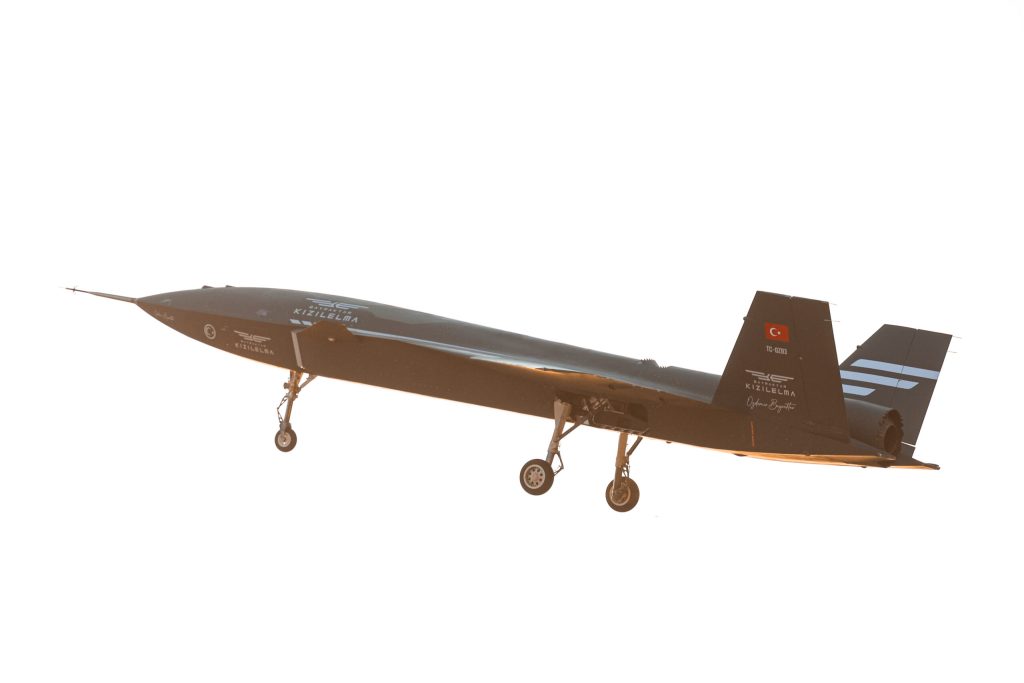
 Indonesia has recently signed an agreement to acquire 12 Turkish Bayraktar Kizilelma unmanned combat aerial vehicles (UCAVs). With options to procure an additional forty-eight vehicles, the move marks a transformative leap in the country’s defense strategy, strengthening its aerial warfare capabilities, according to GlobalData.
GlobalData’s latest report, “The Global Military Unmanned Aerial Vehicles (UAV) Market Forecast 2026-2036”, reveals that Indonesia is projected to invest approximately $2.7 billion in UAV procurement over the next decade. Notably, about 70% of this investment will be directed toward Turkish-origin platforms, underscoring the country’s confidence in Turkish defence technology.
Venkatesh Kandlikar, Aerospace and Defence Analyst at GlobalData, comments: “Indonesia has significantly ramped up its aerial warfare capabilities by procuring several next-generation military platforms in recent years. The deepening of defence ties between Indonesia and Türkiye has contributed significantly to the former’s ambition to modernise its armed forces.”
Beyond simple acquisition, the framework between Indonesia and Türkiye mandates technology transfer, local production, and maintenance infrastructure, propelling the expansion of domestic aerospace manufacturing while reinforcing Indonesia’s defence posture in the Indo-Pacific through the deployment of next-generation aerial warfare capabilities.
Republikorp, an Indonesian defence company, will establish local capacity for airframe assembly, avionics integration, weapons system certification, and comprehensive maintenance, repair, and overhaul (MRO) services. This industrial progression builds upon earlier collaborative production initiatives with Türkiye involving the Bayraktar TB2, TB3, and Akinci platforms, with each successive program incrementally transferring manufacturing expertise, quality assurance protocols, and supply chain management capabilities.
Kandlikar adds: “This phased approach to vertical integration creates sustainable indigenous competencies, reduces long-term procurement costs, and positions Indonesia as a regional aerospace hub capable of supporting allied nations.”
The procurement of Kizilelma UCAVs needs to be viewed in conjunction with last year’s deal to procure the Kaan fifth-generation fighter aircraft from Türkiye, which indicates Indonesia’s intent to invest in the Turkish aerial defence ecosystem rather than procuring individual platforms. The Kaan and Kizilelma can be operated in manned-unmanned teaming (MUM-T) formation, which will provide a significant operational and technological edge to the Indonesian Air Force.
Kandlikar concludes: “Geographically, Indonesia is located near a key maritime choke point, the Strait of Malacca. In the event of any future conflict involving Asian powers, especially China, the Strait of Malacca could become another flashpoint capable of crippling the global economy, with repercussions far worse than what we are currently witnessing with the blockade of the Strait of Hormuz. By modernising its military capabilities, Indonesia is preparing for such an eventuality and is future-proofing its ability to protect its interests in the region.”

For Editorial Inquiries Contact:
Editor Kym Bergmann at [email protected]
For Advertising Inquiries Contact:
Group Sales Director Simon Hadfield at [email protected]
