
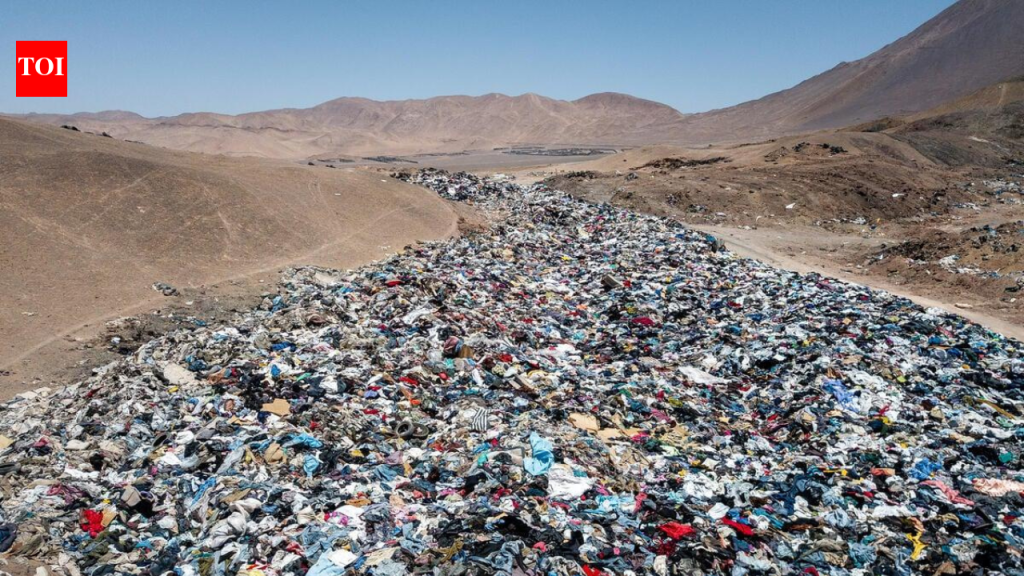
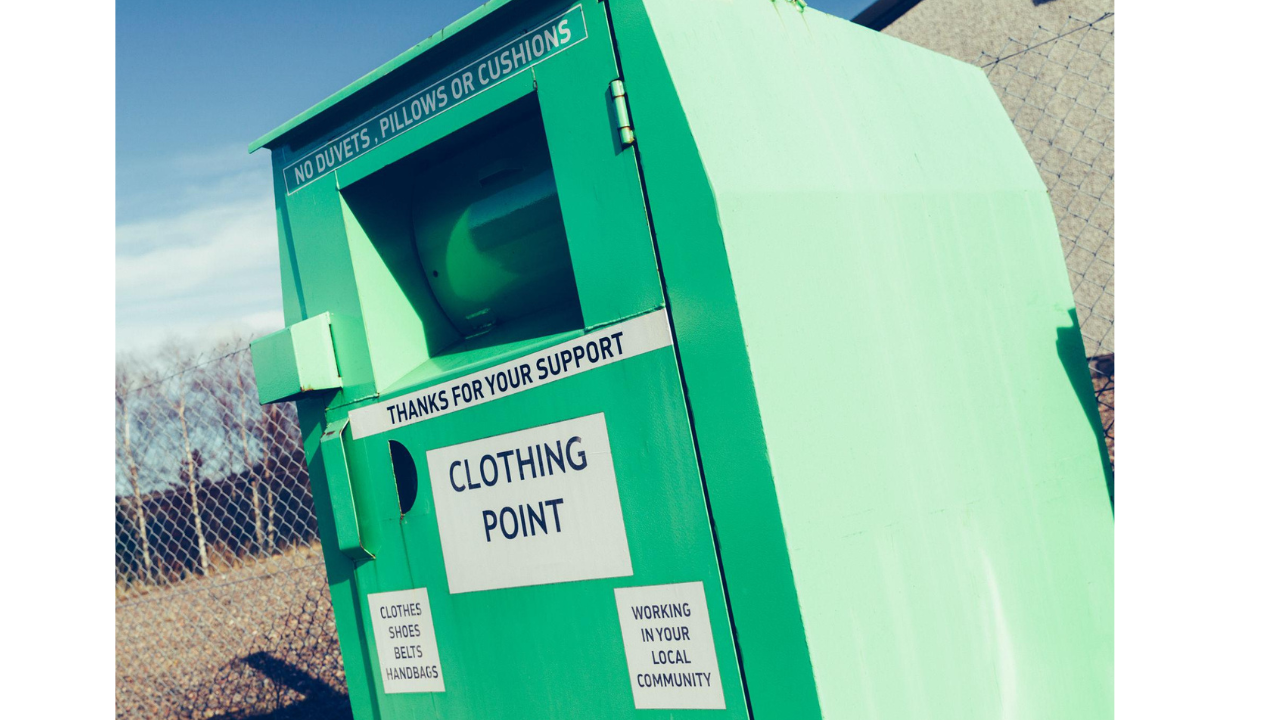
Dropping unwanted clothes into a donation bank often feels like one of the easiest environmental choices a person can make. It suggests reuse instead of waste, and generosity instead of landfill. In many cases, that instinct is worthwhile. Good-quality garments are resold, reused, repaired or redistributed, helping extend the life of clothing and reduce demand for new production. The global second-hand market also supports livelihoods for traders, tailors, sorters and recyclers in many countries.Yet there is another side to the story. When huge volumes of low-value, damaged or poor-quality clothing enter donation streams, not all of it can be sold or recycled efficiently. Some garments are shipped across continents and eventually discarded in deserts, drains, beaches, open dumps or informal waste sites. From northern Chile to parts of Southeast Asia and Africa, unwanted textiles have become one of the clearest symbols of fast fashion’s hidden afterlife.
The global journey of donated clothes
Once clothes are donated in countries such as the UK, US or Canada, they are usually collected by charities, councils, retailers or private textile operators. They are then sorted into categories based on condition, brand value, material quality and resale potential.Higher-quality garments may remain in domestic charity shops or online resale channels. Others are compressed into bales and exported to international markets where demand for affordable clothing is strong.The challenge emerges at the lower end of the quality chain. If garments are stained, damaged, poor quality, outdated or made from difficult mixed fibres, they may become waste soon after arrival.
Why Chile became a warning sign
Chile became globally associated with textile dumping because of the visibility of clothing waste in the north, especially around the Atacama Desert. Reports have stated that roughly 123,000 tonnes of used clothing enter Chile annually, much of it through the Iquique free trade zone. Unsold stock has historically been abandoned in surrounding desert areas.The Atacama is one of the driest places on Earth. Because rainfall is minimal, garments can remain exposed for long periods rather than decomposing quickly. This created striking images of mountains of clothes scattered across barren landscapes.Even remote dry land is not an empty dumping zone. Textile waste can release microplastics from synthetic fibres, contaminate soil through dyes and finishes, and create fire risks when garments are burned. Wind can also spread waste across fragile habitats.
The Waste in Indonesia’s shorelines
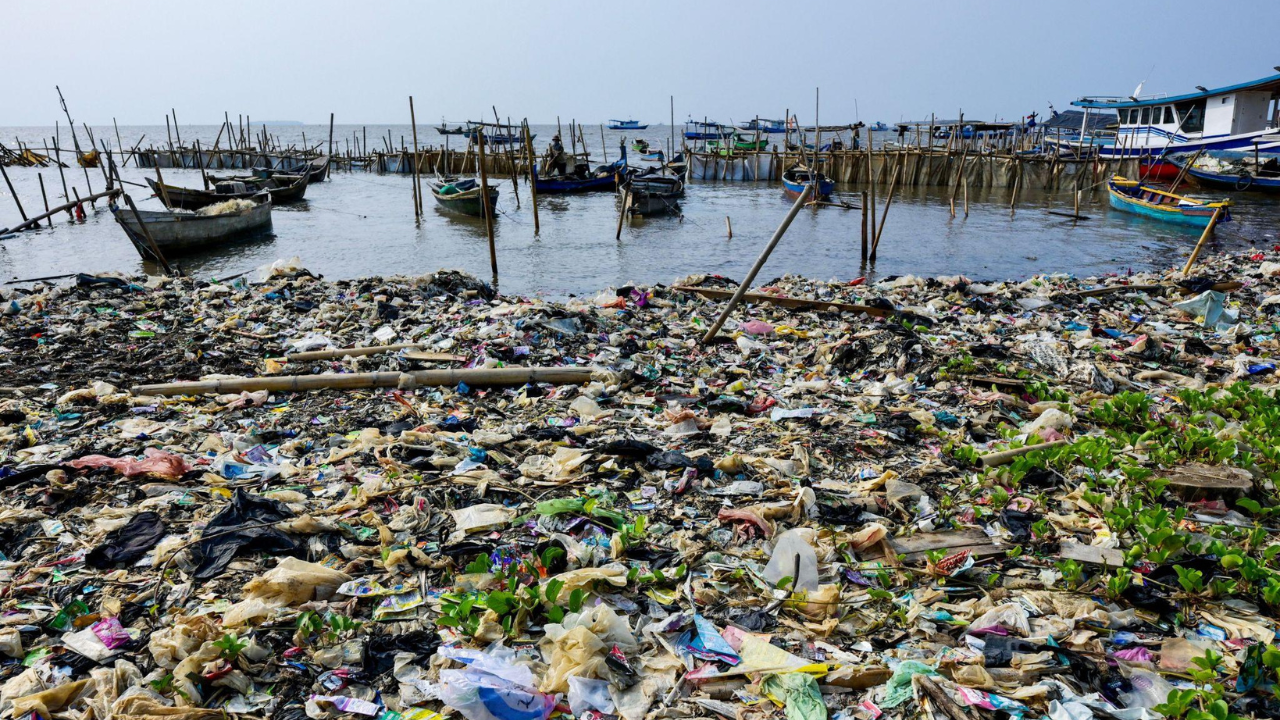
Indonesia represents a different side of the same problem. Waste often accumulates not in deserts, but in rivers, drainage channels, coastal zones and overloaded landfills.Indonesia has faced controversies over imported waste shipments that reportedly contained unusable mixed materials. Alongside domestic waste pressures, textiles and synthetic clothing can contribute to clogged waterways and marine litter when waste systems are overwhelmed.When garments break down in wet tropical environments, synthetic fibres may enter rivers and seas more easily than in dry desert climates.
Africa’s clothing paradox: Benefit and burden
In countries such as Ghana, Kenya and others, second-hand clothing is economically important.Affordable garments help consumers manage rising living costs. Markets create jobs for traders, tailors, transport workers and repair businesses. Entire local economies have developed around reuse.At the same time, investigations have documented large volumes of low-grade fast-fashion clothing that arrive unsellable or quickly become waste.Ghana’s Kantamanto Market in Accra is one of the world’s largest second-hand clothing hubs. Traders often report receiving bales containing damaged or low-value items, meaning they absorb financial losses while cities absorb waste burdens.
Why are donation systems under pressure
Donation systems were built in an era when people bought fewer garments and wore them longer. Fast fashion has changed that equation.Many modern garments are cheaper to replace than repair. They may be trend-driven, lower in durability and produced in volumes beyond what resale markets can absorb. Some are made from blended fibres that are difficult to recycle.As a result, charities and textile collectors often receive more clothing than reuse systems can realistically handle.
The recycling myth around clothing
Many people assume old clothes are recycled as easily as glass bottles or aluminium cans. In reality, textile recycling is more complex.Some garments can be mechanically shredded into fibres for insulation, stuffing or industrial felt, but material quality often drops during the process.Advanced chemical recycling can separate certain blended fibres, but the technology remains expensive and limited in scale.Garments containing elastane, sequins, coatings, multiple fabrics or decorative trims are particularly difficult to process.This means a large share of unwanted clothing still lacks an efficient recycling route.
Who is responsible?
Experts increasingly argue that responsibility should not fall only on consumers.Brands and retailers play a major role when they produce vast volumes of low-cost disposable clothing. Governments influence outcomes through waste rules, import controls and producer responsibility laws. Waste companies need stronger sorting systems and transparent reporting.Consumers also matter. Buying fewer garments, choosing better quality and wearing items longer can significantly reduce waste pressure.
Chile’s legal response
Chile has moved textiles into its Extended Producer Responsibility framework. This aims to make producers, importers and sellers more responsible for what happens to garments at the end of their useful life.Projects in northern Chile are also exploring ways to turn textile waste into fibres, insulation products and industrial materials.
Europe and North America are changing the rules, too
The European Union has introduced stronger circular economy policies and separate textile collection requirements. Several brands in Europe and North America now run take-back programmes, though critics argue these remain small compared with total production volumes.The bigger challenge is whether the industry reduces output rather than simply increasing collection bins.
What actually helps consumers most
For people wanting to reduce clothing waste, the most effective action is usually to buy less and use items longer.Repairing basics, reselling wearable clothing directly, donating only clean usable garments and avoiding impulse purchases can all have more impact than frequent disposal into collection bins.Donation works best when it is a route for useful garments, not a guilt-free exit for overconsumption.
The hidden economics of waste exports
Shipping unwanted clothing abroad can sometimes be cheaper than processing it domestically. This creates a system where richer countries export disposal pressure while lower-income regions manage the environmental and social consequences.For that reason, many researchers see textile waste not only as an environmental problem, but also as a fairness issue.The donation bin itself is not the villain. Reuse is usually better than immediate disposal. But bins cannot solve overproduction.A shirt dropped into a collection point may be worn again by someone who values it. Or it may travel thousands of miles and end up in Chile’s desert, an African dumpsite or on an Indonesian shoreline.The real solution begins earlier by making fewer clothes, making better clothes and keeping them in use far longer.