
Work is changing in ways that few economies can ignore. Technology is altering how companies operate, even as education systems adjust to demand for new skills, and career paths become less predictable due to digital disruption. These shifts are unfolding at a rapid pace, prompting governments and businesses to intensify their efforts to rethink how they attract, develop and retain talent.
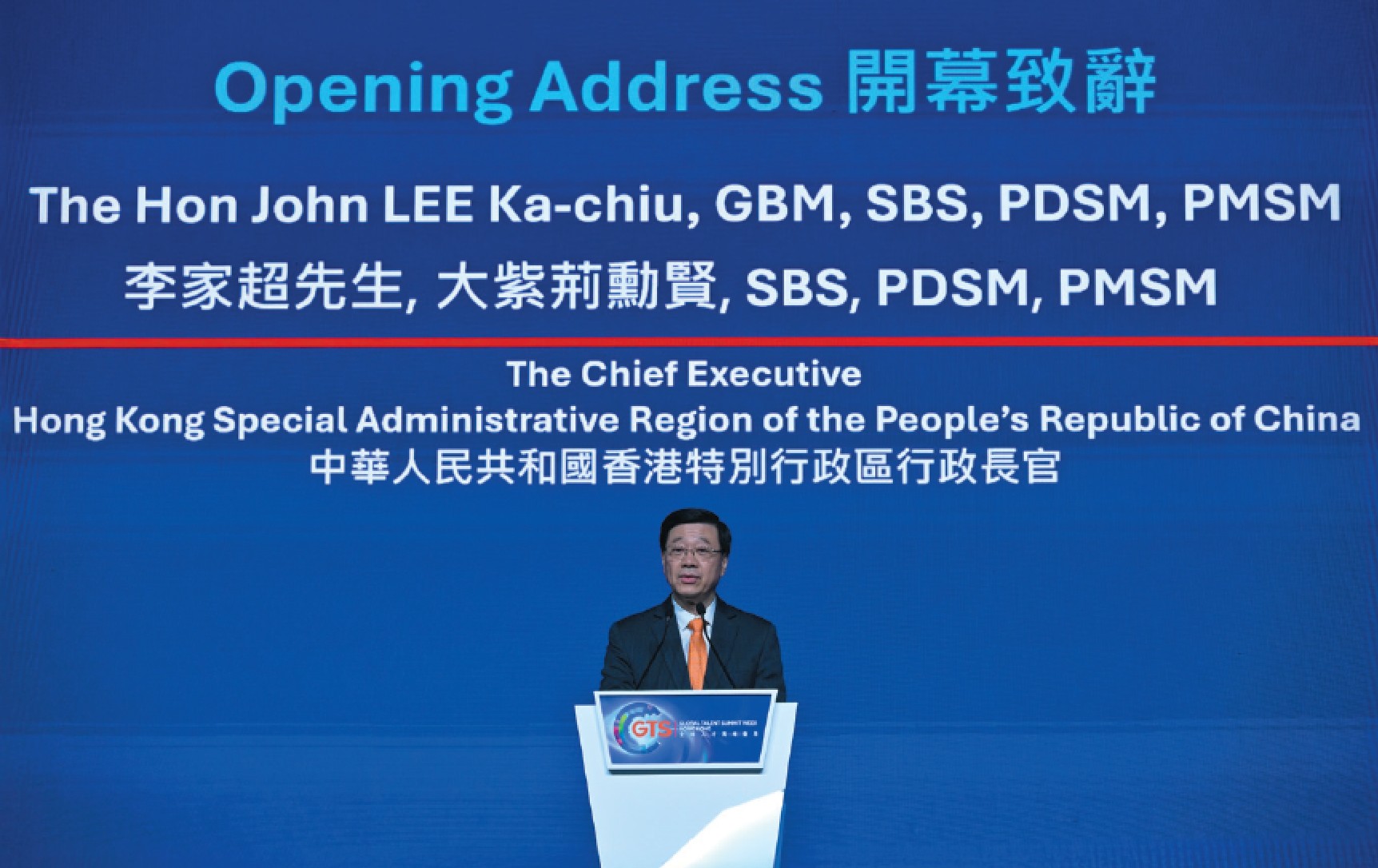
Addressing these challenges head-on, Hong Kong has reaffirmed its commitment to reinforcing itself at the forefront of talent attraction. In his remarks at the International Talent Forum, the anchor event of the Global Talent Summit Week, John Lee, Chief Executive of the Hong Kong Special Administrative Region, underscored the government’s ambition to build a long-term impetus for the city’s development by welcoming the world’s best.
Lee said that Hong Kong is rising quickly as an international talent hub, driven by a comprehensive and forward-looking strategy that integrates talent development with economic transformation, technological advancement and regional cooperation. Such efforts have been widely recognised, with Hong Kong surging to fourth globally and first in Asia in the International Institute for Management Development’s World Talent Ranking 2025.
He added that Hong Kong will continue to uphold openness, deepen international engagement and align closely with national development strategies. Policies in education, innovation and infrastructure will be further refined to ensure Hong Kong remains a fertile ground for ideas and enterprises, where global talent feels welcomed, valued and supported.
The forum also featured a keynote from Nobel laureate Sir Christopher Pissarides. Drawing on his expertise in the global manpower ecosystem, he examined the skills, institutions and policy frameworks that will define the future of work, exploring how technology and global mobility are fundamentally reshaping the talent ecosystem. “AI has been augmenting manpower. The biggest challenge today with these technologies is not the destruction of old jobs—it’s more the transformation of practically every job that we have in society. Workers are upskilling more now than in any other industrial revolution of the past,” he stated.
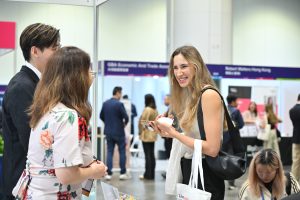
The second edition of the summit evolved into a week-long programme. The International Talent Forum and CareerConnect Expo, held on March 18 and 19, were complemented by nine satellite events across the city running through March 29.
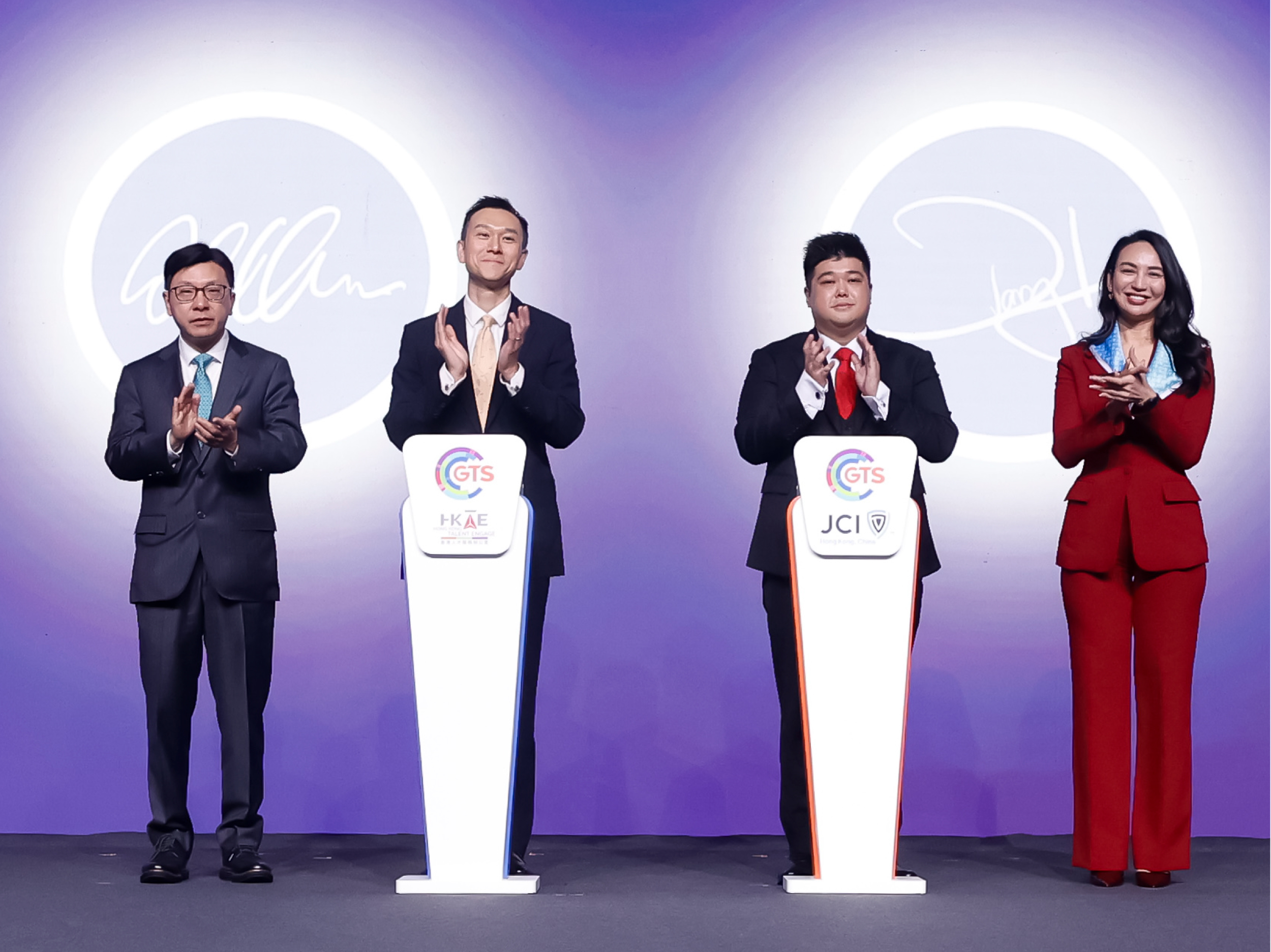
Hosted by the Labour and Welfare Bureau and Hong Kong Talent Engage, the summit brought together government officials, global industry leaders, renowned scholars, entrepreneurs and professionals in one place—reinforcing Hong Kong’s role as both an international talent hub and a gateway to opportunities in the region.
Participation reflected the global interest in Hong Kong’s talent initiatives, with figures surpassing the inaugural summit. In total, more than 10,000 on-site visits and over 170,000 views over the two-day event were recorded, representing the power of the hybrid format in connecting talent far and wide. Chris Sun, Hong Kong’s Secretary for Labour and Welfare, said, “Through the activities of this year’s summit, the government believes that stakeholders can gain deeper insights into future development trends. At the same time, a clear message is being sent to global talent that with the strong support of the motherland and its own unique advantages, Hong Kong is the best place for career development.”
Global competition for talent has intensified, with cities such as Singapore, London and New York vying for the same professionals. Hong Kong’s edge lies in a combination of advantages that few cities can match. Beyond economic performance and liveability, the city serves as a gateway to the vast Chinese mainland market. Under the “One Country, Two Systems” principle, Hong Kong operates legal, financial and education systems aligned with international standards, while offering direct access to the Chinese mainland.
“By coming to Hong Kong, you tap into both the world and the Chinese mainland market. That dual access remains difficult to replicate elsewhere,” explained Sun.
Opening the Doors Wider
While Hong Kong’s strengths draw global talent, demographic realities have made it necessary to act. The city faces an ageing population and shrinking local manpower.
To address this, the government launched a suite of talent admission measures in late 2022, including the Top Talent Pass Scheme (TTPS), targeting high-income professionals and graduates from the world’s top 100 universities. Hong Kong Talent Engage, an office under the Labour and Welfare Bureau, was established in 2023 to handle promotion, recruitment and post-arrival support.
“We need young, vibrant professionals to come to Hong Kong to fill the gap and keep the economy growing,” said Sun.
The response has been encouraging. As of end-February 2026, the government received almost 600,000 applications across various schemes, with close to 280,000 professionals arriving in the city. The TTPS alone received nearly 160,000 applications, with over 110,000 arrivals. The government estimates TTPS-entrants could add around 1.2% to GDP—approximately HK$34 billion (US$4.4 billion). Over 70% of incoming top talent is under 40, strengthening the workforce at a time of rising demographic pressure.
Ideas That Inform Action
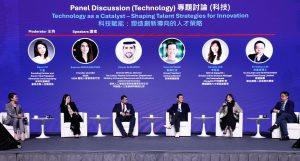
Through engaging speeches, fireside chats and panel discussions, the summit explored the integration of education, technology and talent.
The International Talent Forum examined how economies can strengthen manpower planning, refresh education models and align skills development with industry needs—followed by sessions on how AI is reshaping corporate talent strategies and cross-border collaboration in building adaptable, innovation-driven teams.
A closed-door meeting also brought together government representatives and university leaders to explore frameworks for deeper cooperation on talent mobility, skills development and workforce readiness.
While the forum concentrated on ideas, the CareerConnect Expo translated them into engagement. Drawing together about 70 enterprises and institutions spanning education, technology and government, the expo served as a one-stop platform showcasing opportunities for professionals looking to build careers and settle in Hong Kong and the Greater Bay Area. Nine satellite events hosted across different districts created further networking and job-seeking opportunities citywide.
Sustaining the Momentum
Attracting talent is only half the equation. Retaining it depends on whether professionals can build careers and lives in the city. Hong Kong is home to five universities ranked among the global top 100. Hong Kong Talent Engage connects incoming talent with job opportunities, handles enquiries within 48 hours and works with more than 90 partners on accommodation, education and daily life support.
Felix Chan, Director of Hong Kong Talent Engage, outlined the vision ahead. “The Global Talent Summit Week is more than an event—it is a powerful statement of Hong Kong’s ambition and readiness to welcome the world’s top talent, setting a benchmark for international talent events in Asia. Our priority remains clear: to ensure that every talent who chooses Hong Kong finds not just opportunity, but a place to live and thrive.”
Sessions from the summit are available online at: https://gts.hkengage.gov.hk/en/
For global professionals considering their next move, Hong Kong offers international standards, regional access and comprehensive support—all in one place. Sun said: “Hong Kong is a global talent hub. And what we’re seeing now is only the beginning of our journey.”
