
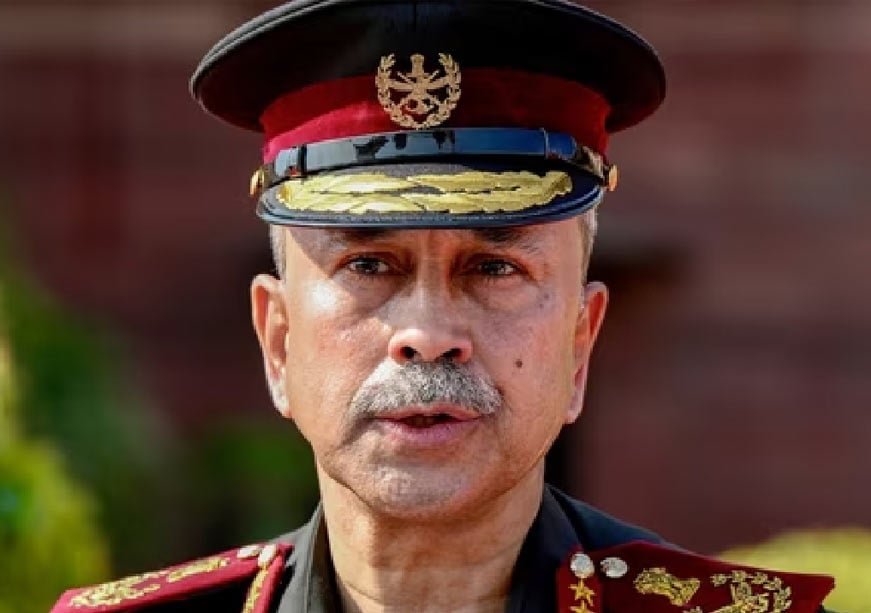

India’s new Chief of Defence Staff (CDS) takes charge in a chaotic global and regional security environment where the armed forces face a host of challenges, ranging from an unfinished integration agenda plagued by turf wars to a lack of adequate clarity on force structures and how future wars will play out. Added to this basket are sub-optimal outcomes with little accountability emerging from the inescapable indigenisation agenda, an example of which is the delayed induction of the LCA Tejas MK1A. In such a milieu, the CDS will have to prioritise his tasks at a time when a resource crunch looms, given the economic impact of the war in the Middle East.
At the strategic level, a reassessment of threats is imminent. After almost a decade of hectic infrastructure and capability development along the Line of Actual Control with the People’s Republic of China, a degree of operational equilibrium currently exists. Sustaining that equilibrium is critical. Concurrently, there appears to be a flurry of acquisitions, restructuring, and realignment among hostile forces on India’s western front, given the strategic partnerships that Pakistan has forged with nations such as Saudi Arabia and Turkey. India can no longer afford the comfort zone of asymmetry that had developed over the last decade vis-à-vis Pakistan, and will have to think innovatively to retain the coercive edge over its principal western adversary that was visible during Operation Sindoor.
On the issue of integration, notwithstanding public displays of bonhomie and some media leaks, there is little to suggest that the three services are on the same page.
On the issue of integration, notwithstanding public displays of bonhomie and some media leaks, there is little to suggest that the three services are on the same page. Social media has emerged as the new battleground for rallying around single-service agendas, and if there has indeed been some consensus on the way forward, the first model of integration must be rolled out sooner rather than later. This will give the CDS adequate time to monitor its effectiveness, tweak its infirmities, and pave the way for the second round of integration.
The wars in Ukraine and Gaza have sparked a debate within some segments of India’s military establishment, suggesting an urgent migration to a missile- and drone-centric military strategy, with ideas such as the creation of a Rocket and Drone Force at the top of the agenda. Creating structures with scanty assets is unviable, both economically and operationally. One need only look back a few decades to when the proposal to create a Space Command fell by the wayside because there were too few assets to create a large organisation.
Missiles and drones are certainly low-cost options compared to expensive platforms such as large warships, towed howitzers, multi-barrel rocket launchers, or the favourite target of the missile and drone lobby — manned offensive aerial platforms. However, their utility as decisive instruments of war capable of delivering speedy outcomes is far from proven. What has been proven, though, is that they are excellent enablers of area destruction and continuous harassment in a battlefield milieu that has no compunction about collateral damage. This, however, calls for large numbers, and India must bolster its industrial capacity toward this end.
The priority must be to embrace multi-domain operations that are India-centric in character, and to tailor force structures accordingly with a mix of the latest conventional capabilities and an increased complement of missiles and drones.
To address this, the priority must be to embrace multi-domain operations that are India-centric in character, and to tailor force structures accordingly with a mix of the latest conventional capabilities and an increased complement of missiles and drones. Future military operations in the Indian context, as in the past, will be concentrated primarily in high-altitude terrain, with some spill-over into the desert and maritime domains should limited conflicts spiral and extend across wider geographies.
Drones and missiles will contribute significantly to shaping the battlefield and causing attrition, but cannot replace classical air-land operations that necessitate boots on the ground and air power in all its classical roles — limited strategic strikes, counter-air operations, interdiction, and Counter Surface Force Operations. The maritime domain presents the next major strategic challenge, given what is playing out in the Strait of Hormuz and around the ports of Iran. Protecting the flow of energy and India’s other strategic interests at sea may emerge as a major mission for the Indian Navy. War-fighting roles such as sea denial, sea control, and No-War-No-Peace missions such as blockades may gain as much importance as maritime diplomacy. In the maritime domain, drones and missiles cannot replace manned warships in influence operations, and can play only an enabling role in sea control and sea denial operations. Consequently, the CDS will have to tackle a recency bias and adopt a holistic approach to determining the best force structure balance during a resource-constrained period that will seldom see a defence allocation exceeding 2 percent of GDP.
The existing narrative on indigenisation and innovation is two-faced. On the one hand, low-hanging fruit are showcased as strides in indigenisation, while the heavy-lifters — the LCA Tejas Mk 1A, the Kaveri Engine project, the Unmanned Combat Aerial Vehicle, BrahMos production, Project 75(I) submarines, and QR SAM — face significant hurdles or delays.
The existing narrative on indigenisation and innovation is two-faced. On the one hand, low-hanging fruit are showcased as strides in indigenisation, while the heavy-lifters — the LCA Tejas Mk 1A, the Kaveri Engine project, the Unmanned Combat Aerial Vehicle, BrahMos production, Project 75(I) submarines, and QR SAM — face significant hurdles or delays. The CDS must push all stakeholders of these major programmes for greater accountability and prioritise them over the scores of projects that may not have the same operational impact. Much brouhaha is made over prototypes and technology demonstrators, but the moment platforms move into production, integration, and certification, delays creep in. It is time to shift gears.
While much is always made of structures and command and control, one lagging area of base-level integration that is bound to catch the attention of the CDS is the lack of tri-service commonality in communication networks and data links, which are essential to establishing effective ‘kill chains’ inside the adversary’s OODA (Observe, Orient, Decide, and Act) loop. Consequently, projects such as the IAF’s Operational Data Link (ODL) with Software Defined Radios across its fleets and comparable programmes in the Navy and the Army must be accelerated, with an emphasis on cross-pollination. Such projects offer greater bang for the buck and assume great importance in today’s networked battlefield. The excellent interoperability between the IAF’s Integrated Air Command and Control System (IACCS) and the Indian Army’s Akash Teer system during Operation Sindoor must be built upon.
Projects such as the IAF’s Operational Data Link (ODL) with Software Defined Radios across its fleets and comparable programmes in the Navy and the Army must be accelerated, with an emphasis on cross-pollination. Such projects offer greater bang for the buck and assume great importance in today’s networked battlefield.
Wargaming, visualising, and scenario building, anticipation of Black Swan and Grey Rhino events, and political sensitisation to national security issues in a rapidly changing global security environment will be important items on the CDS’s plate — and for this he will need significant intellectual capital drawn from all stakeholders of national security. The time is ripe for the next level of reform within the Professional Military Education (PME) ecosystem, one that will create a larger pool of “intellectual warriors”. For several years, there has been a proposal to conduct a comprehensive capsule for parliamentarians on the finer nuances of national security at the National Defence College in New Delhi. There is no better time than now to cement such initiatives, particularly when it is widely acknowledged that a whole-of-government approach to national security is what works in a chaotic global order.
The post of CDS has stabilised over the last few years, and it is hoped that the new office-bearer is given the opportunity to concentrate on transformation and integration, rather than balancing the aspirations of individual services and resolving turf wars.
Arjun Subramaniam is a retired Air Vice Marshal of the Indian Air Force and a strategic commentator.
The views expressed above belong to the author(s). ORF research and analyses now available on Telegram! Click here to access our curated content — blogs, longforms and interviews.