
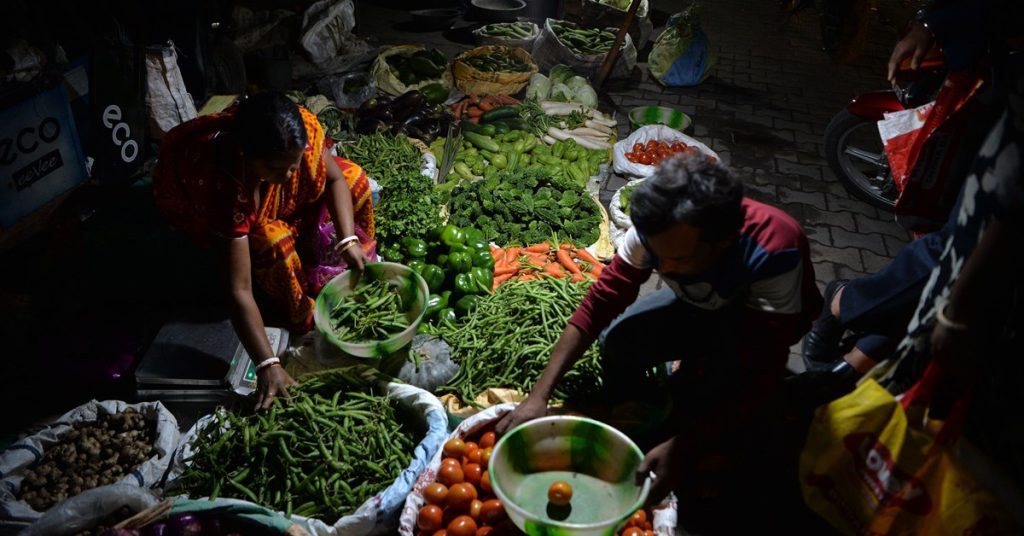
IN SEVERAL districts across Odisha, Jharkhand, and West Bengal, in eastern India, Christian street vendors are facing disruption to their livelihoods as the war involving the United States, Israel, and Iran begins to affect supplies of LPG (liquefied petroleum gas).
For many of these vendors, cooking gas is central to their daily work. Much of India’s LPG imports pass through the Strait of Hormuz, and tensions in the region have slowed supply chains, leading to delays at the local level.
In the Kandhamal district of Odisha, several Christian vendors said that they are waiting days to receive cylinders. “We run small food carts, and LPG is everything for us,” Daniel Lakra said. “Without it, we cannot open. We lose a day’s income each time supply is delayed.”
Vendors in the Simdega district of Jharkhand reported similar difficulties. Some said that they visited distribution points repeatedly without success. “We are told to come later because supply is limited,” Maria D’Souza, who runs a snack stall, said. “We cannot plan our work any more.”
The shortage is affecting already vulnerable communities. Many Christian vendors operate in informal markets with limited savings and no alternative sources of income. As LPG availability is uncertain, some have reduced their working hours, while others have temporarily shut their carts.
In parts of West Bengal, a few vendors said that they had tried switching to firewood, but the shift had increased costs and reduced efficiency. “It is not practical for street vending,” Rakesh Pradhan, a tea seller, said. “Gas is faster and cleaner. Without it, everything slows down.”
Local officials say that supply systems are under pressure from global conditions, but maintain that distribution continues.
Vendors say that commercial users are receiving fewer cylinders as priority is being given to domestic households. Community networks, including church groups, have started providing limited support in some areas, helping families to manage daily needs as income declines.
“We are trying to support each other,” a local volunteer in Kandhamal said. “But people need stable work, not just temporary help.”
For these vendors, the crisis is not abstract. It is measured in lost working hours, empty carts and uncertain income. “We are not part of the global conflict,” Lakra said. “But we are feeling its impact every day.”