
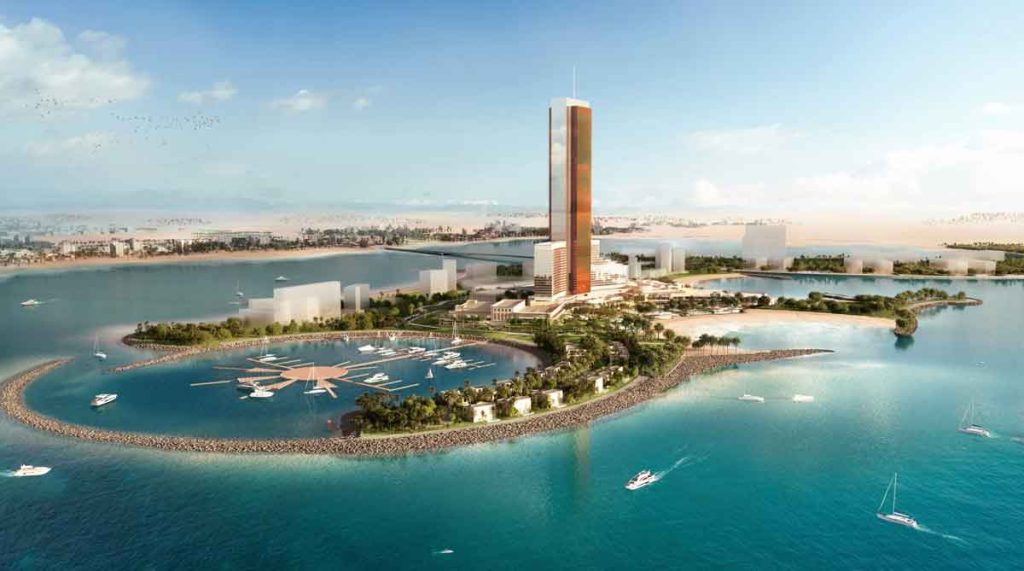

Max Tappeiner, the President of Wynn Resorts’ US$5.1 billion Wynn Al Marjan Island integrated resort development in the UAE, has described India as a “critically important market” for the property due to its close proximity and the nature of modern-day Indian travelers.
His comments formed part of an interview with luxury-lifestyle magazine Robb Report India, with Tappeiner adding, “Indian travelers are at an inflection point where their hierarchy of needs is driven by personalization, curation and experiential depth.
“The integrated resort experience resonates strongly with them because it delivers every dimension of escape, from entertainment, family, beach, dining, retail and wellness, all within one destination. Multi-generational travel is a major driver, and our accommodation mix, culinary depth and family-friendly infrastructure are designed with this in mind.”
Tappeiner explained that the Wynn Al Marjan Island team is “building relationships with travel advisors, wedding planners and airline partners across key metro cities as well as growing markets like Ahmedabad, Hyderabad and Jaipur” and described India’s proximity as making it a “natural fit.”
Asked what will set Wynn Al Marjan Island apart from other hotels in the UAE – particularly given its existing reputation for luxury – the property’s President said he viewed luxury as a collection of experiences rather than a label.
“It is the experience of being in a thoughtfully designed setting, where a guest room doesn’t feel like a hotel but rather an elevated version of their dream home,” he offered. “There is no ‘off the shelf.’ Every furnishing is bespoke. No request is too great, and certainly no detail too small.
“In this region, guests already expect the finest materials and the grandest spaces, so that is merely our starting point. What we add is the artistry, the obsession with craft and the layers that turn a stay into a memory.”
Wynn Al Marjan Island is expected to open in 2027 with the company recently revealing it would likely face only a “modest delay” due to the impact of the ongoing Middle East conflict.