
Published on
May 2, 2026

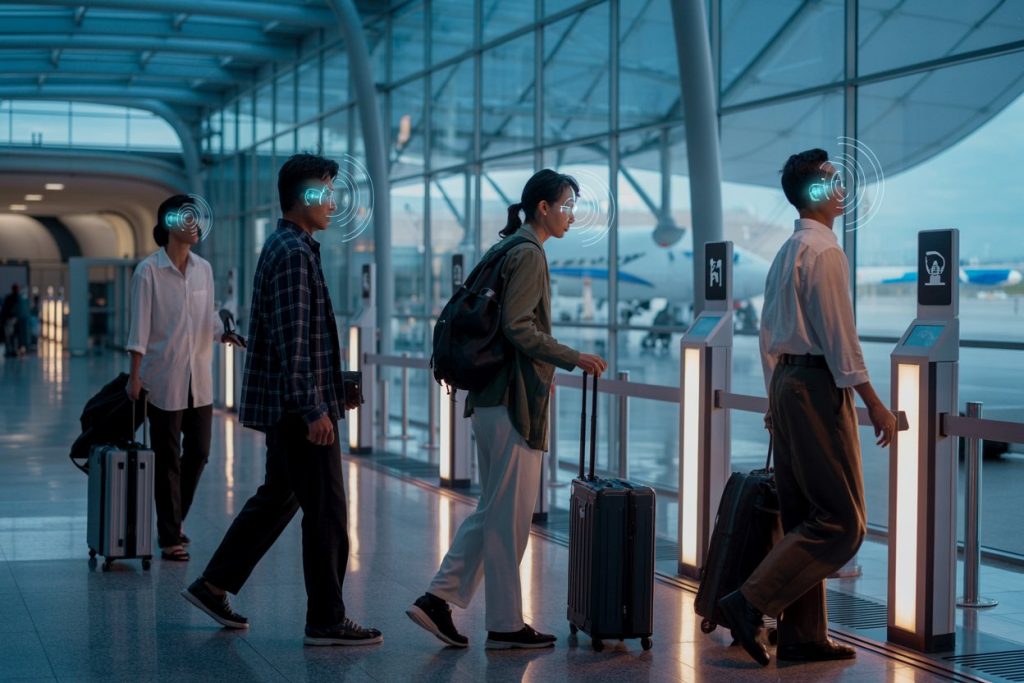
Image generated with Ai
Japan, the United Kingdom, Hong Kong, Pakistan and Sri Lanka are at the center of one of the biggest transformations the travel industry has seen in decades. From facial recognition and digital identity wallets to touchless airport processing and automated border control, these countries are helping shape the next chapter of global mobility. For international travelers, business flyers and holidaymakers alike, biometric travel is no longer a futuristic concept. It is becoming an everyday reality, changing the way people move across borders, check into flights and verify their identities.As airports become smarter and border systems more connected, travelers are entering an era where passports may no longer be the only key to international journeys. Instead, your face, fingerprints and digital identity could become your most important travel credentials.
The Rise of Biometric Travel Across the World
The global aviation and tourism industries are embracing biometric technology at an unprecedented pace. Governments, airlines and airport operators are investing heavily in systems that can verify travelers through facial recognition, fingerprint scans and digital identity platforms.The primary goal is simple. Make travel faster, safer and more efficient.Traditional airport processes often involve repeated identity checks, physical documents, long immigration queues and multiple security screenings. Biometric systems are designed to eliminate much of that friction by allowing travelers to verify their identities once and move seamlessly through multiple checkpoints.What once seemed like science fiction is now being integrated into major airports and border systems around the world.
Japan Leads the Push Toward Seamless Travel
Japan continues to position itself as one of the most technologically advanced travel destinations in the world. The country has been aggressively adopting biometric verification systems at airports to create smoother passenger experiences.Travelers arriving in or departing from Japan are increasingly experiencing automated facial recognition gates, contactless boarding procedures and faster immigration processing.This shift is particularly important as Japan continues to attract millions of international tourists, business travelers and event visitors. By reducing congestion at airports and minimizing manual verification, Japan is creating a model that other nations are watching closely.For travelers heading to Tokyo, Osaka or other major gateways, biometric processing could soon become the standard part of the journey.
The United Kingdom Expands Digital Border Technology
The United Kingdom is also accelerating its investment in digital border systems. British airports and immigration authorities are working toward more automated passenger verification through biometric identification.This means travelers entering or transiting through the UK may increasingly encounter facial recognition systems that can verify identities without requiring repeated passport presentations.For business travelers who regularly move between Europe, Asia and North America, this technology could significantly reduce waiting times.The United Kingdom’s adoption of advanced border technology also reflects a larger global trend where security and convenience are being developed side by side.
Advertisement
Advertisement
Hong Kong Emerges as a Key Biometric Transit Hub
Hong Kong has long been one of Asia’s most important international transit hubs, and biometric technology is helping strengthen that position.With thousands of passengers moving through its airport every day, efficient identity verification is essential. Hong Kong is increasingly integrating facial recognition and digital identity solutions into passenger processing systems.This creates faster transfers for transit passengers and smoother border procedures for international arrivals.For travelers connecting through Hong Kong on long-haul routes between Asia, Europe and North America, biometric verification could dramatically improve the transit experience by reducing manual document checks.
Pakistan Invests in Next Generation Airport Security
Pakistan is emerging as an important player in the biometric travel space. Airport modernization plans are increasingly focused on digital verification, smart screening systems and biometric e-gates.As international travel demand grows across South Asia, these investments could help Pakistan build more secure and efficient airport infrastructure.For travelers flying into major cities such as Islamabad, Karachi and Lahore, future airport experiences may involve facial scans, digital identity matching and automated immigration processing.These developments could also strengthen regional connectivity and improve confidence among international airlines and passengers.
Advertisement
Advertisement
Sri Lanka Builds a Secure Digital Identity Ecosystem
Sri Lanka is taking a slightly different but equally important approach to biometric travel. The country is focusing not only on biometric verification but also on the secure storage and protection of digital identity data.As biometric systems become more common, data security has become one of the biggest concerns for travelers.Sri Lanka’s efforts to develop secure digital identity architecture demonstrate that biometric travel is not only about convenience but also about trust.For tourists visiting the island nation for beaches, wildlife tourism or cultural experiences, future travel processes may combine quick biometric verification with stronger privacy protections.
How Digital Identity Wallets Are Changing Travel
One of the most exciting developments in biometric travel is the rise of digital identity wallets.These mobile-based systems allow travelers to store verified identity credentials on their smartphones. Instead of presenting physical passports, boarding passes or hotel confirmations at multiple checkpoints, travelers may soon use one secure digital identity throughout their journey.Imagine arriving at an airport, scanning your face at check-in, passing security without showing documents, boarding your flight without a paper pass and checking into your hotel using the same digital identity.That future is moving closer to reality.Major travel technology providers are working to make digital identity wallets compatible across multiple countries, airlines and airports.
Advertisement
Advertisement
The End of Repeated Document Checks
One of the biggest frustrations in international travel is the constant need to present documents.From check-in counters and security screening to immigration and boarding gates, travelers often repeat the same verification process several times.Biometric systems aim to solve this problem by creating a single trusted identity.Once a traveler’s identity is verified, that information can be securely shared across different checkpoints during the journey.This could save valuable time, reduce airport congestion and create a more comfortable experience for millions of passengers.
Privacy and Security Remain Critical
While biometric travel offers clear benefits, privacy remains one of the biggest concerns.Travelers want assurance that their facial scans, fingerprints and digital identities are being stored securely.This is why governments and technology providers are increasingly investing in encryption, secure storage systems and privacy-focused identity frameworks.Countries that can successfully balance convenience with security are likely to lead the next generation of international travel.For travelers, understanding how personal data is collected, stored and used will become an important part of trip planning.
What Travelers Should Expect in 2026
As biometric travel expands, travelers should prepare for major changes.Facial recognition may replace traditional boarding passes.Fingerprint verification may become standard at immigration.Digital identity wallets may become as important as passports.Airport queues may become shorter, but first-time registration could take longer.Most importantly, international travel will become increasingly connected, automated and personalized.The transition has already begun, and countries like Japan, the United Kingdom, Hong Kong, Pakistan and Sri Lanka are proving that the future of travel is not years away. It is already here.
Advertisement
Advertisement