
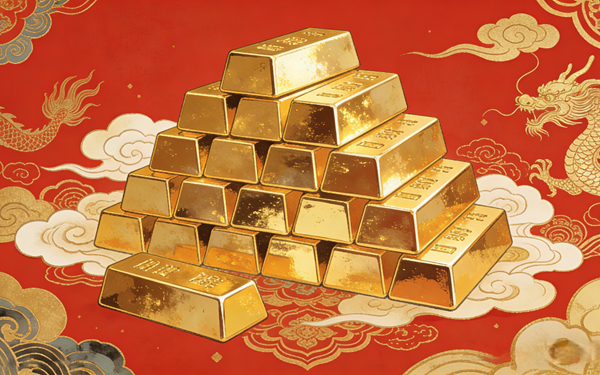
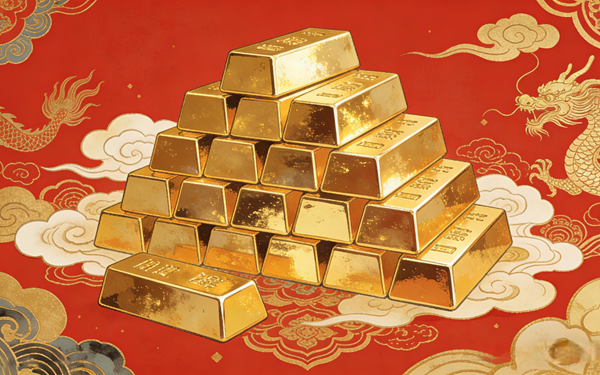
Hong Kong is set to fire the starting gun on a gold clearing mechanism this July, a move that deepens its lead over Singapore and sharpens its challenge to London’s centuries-old grip on the global bullion trade.
The clearing platform lies at the heart of Hong Kong’s push to set regional gold prices. By boosting liquidity and enabling a local benchmark, it marks the city’s most concrete step yet toward becoming a full-fledged international gold hub. Singapore, by contrast, has signalled similar ambitions but offered no timeline — leaving Hong Kong with a clear first-mover edge.
Powering that ambition is mainland China, the world’s largest gold consumer. Massive, steady cross-border bullion flows already anchor Hong Kong’s hub status. Now a wave of retail-friendly moves by mainland banks — slashing risk ratings on gold products, extending night trading hours, cutting fees and upgrading investment plans — is lowering the bar for investors and funnelling fresh demand straight into the Hong Kong pipeline.
On the ground, the city is rapidly stitching together a one-stop ecosystem spanning trading, refining and storage. A cluster of top-tier precious metals refiners already operates here. Mainland refiner Dianjin International is expanding its Hong Kong footprint with a new facility due online in 2026. That same year, logistics giant SF Holding plans to build a dedicated gold vault at Hong Kong International Airport, plugging a key storage gap. Singapore, with just a single London Good Delivery-accredited refinery, simply cannot match that industrial breadth.
The two rivals are betting on different strengths. Singapore leans on high-capacity, ultra-secure vaults to attract gold storage and haven flows. Hong Kong, leveraging its position as the gateway to mainland China and North Asia, is drilling into the core of the value chain — trading, refining and circulation — to capture the pricing action. Analysts flag the summer lull in gold markets as an ideal window for Hong Kong to build reserves and iron out the new clearing system with minimal friction.
Financial heavyweights are lining up behind the play. JPMorgan, UBS and Citigroup, alongside local Hong Kong banks, are actively building out their gold market presence, while Chinese banks continue to bulk up precious metals teams. Mainland securities houses, futures firms and fintech players are also streaming into the city, staffing trading desks and hiring talent — all chipping away at London’s historical lock on the global gold trade.
Underpinning it all is Hong Kong’s broader financial firepower. The city recently leapfrogged Switzerland to become the world’s largest cross-border wealth hub. Fuelled by mainland inflows, deep equity markets and two-way capital channels, it has the raw ingredients to nurture a mature gold futures market — one that could pool global capital, offer price-risk hedges and amplify the city’s voice in regional gold pricing.
The big picture is clear: the gold industry’s centre of gravity continues to tilt eastward. With unmatched mainland demand, a full-spectrum supply chain and deepening institutional muscle, Hong Kong is rapidly evolving from a regional trading post into an Asian nerve centre that combines trading, refining, distribution and pricing — bringing the vision of an Asian gold hub into sharp relief.