
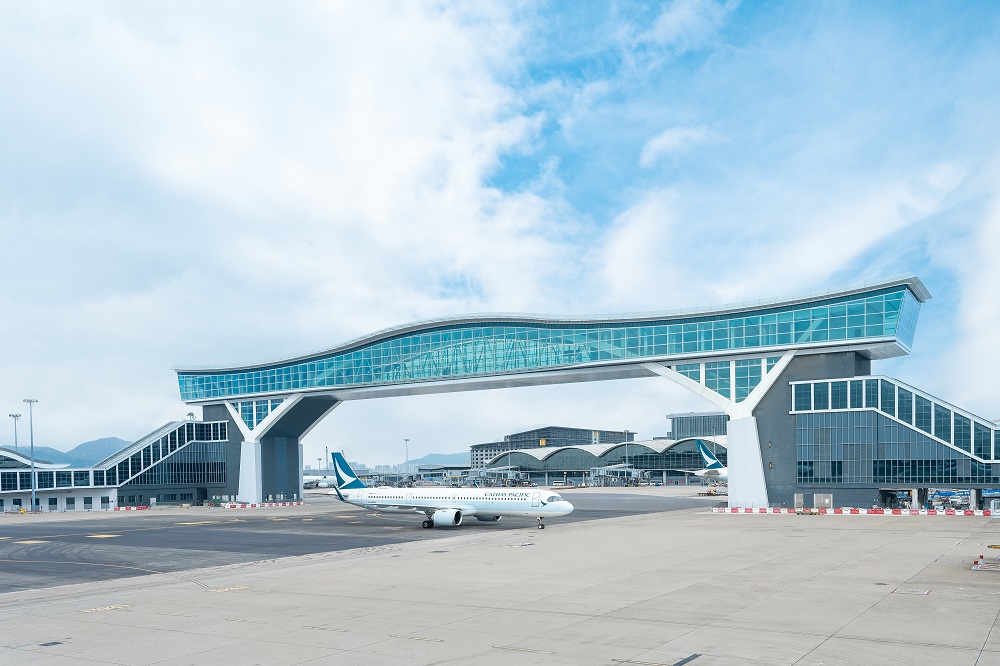
Hong Kong International Airport reported strong growth in passenger traffic in March, handling 5.74 million travellers—up nearly 20% year-on-year—as the airport continues its post-pandemic recovery.
Flight movements also rose modestly to 34,100, while growth was largely driven by a surge in transfer and transit passengers, alongside increased visitor numbers. Demand on European routes saw a noticeable boost, partly linked to shifting travel patterns amid tensions in the Middle East, while traffic to Southeast Asia and mainland China continued to build momentum.
In a further sign of its global importance, four routes connected to Hong Kong ranked among the world’s ten busiest international flight corridors, according to aviation data firm OAG. The Hong Kong–Taipei route topped the list, with links to Bangkok, Manila, and Seoul also making the top ten.
Cargo performance, however, showed mixed results. Total freight volumes fell 4.4% year-on-year to 430,000 tonnes, largely due to a sharp drop in exports—particularly to the Middle East. This decline was partially offset by growth in imports and transshipment traffic, as well as stronger cargo flows to Europe.
For the first quarter of 2026, passenger numbers reached 16.67 million, up 14.3%, while cargo volumes rose slightly to 1.21 million tonnes. Over a 12-month period, the airport handled more than 63 million passengers, confirming its steady recovery trajectory.
The airport also received a boost to its global reputation, being named “World’s Best Airport 2026” at the World Business Outlook Awards. Airport Authority Hong Kong says it plans to build on this momentum by leveraging its three-runway system to expand connectivity and reinforce its role as a leading aviation hub in Asia.