
HONG KONG – On her first night in family life after retirement, police dog Anna was invited by her handler Tsang Kit-ying to rest on the bed. But Anna paced back and forth beside it, reluctant to climb up.
“She must have felt strange. The bed was so soft, unlike the hard floor of the police kennel,” Tsang, a police constable from the police dog unit of the Hong Kong Police Force, recalled. Back then, she remembered Anna stretching out her paw to tentatively press the mattress, then pulling back with a puzzled head tilt.
At that moment, Tsang realized that after five years of fighting side by side, what Anna needed to learn in retirement was not attack or pursuit, but how to relax and live as an ordinary dog.
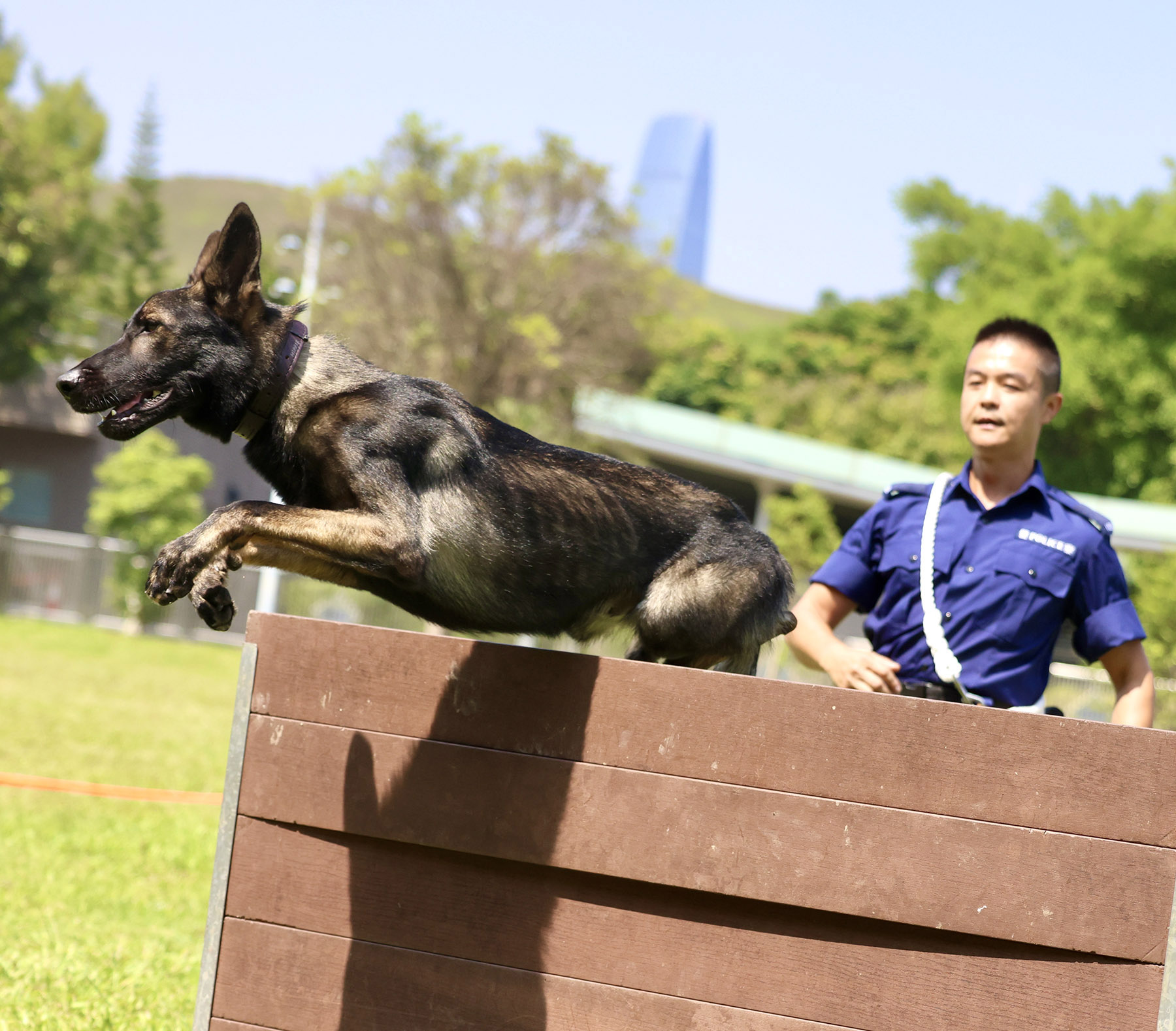
Hong Kong‘s police dog unit was established in 1949, initially with only four German Shepherds patrolling the border. Today, the unit has about 200 dogs, with more than 150 serving on the front line, undertaking patrol, search, tracking, anti-drug, gun search, bomb detection, and scent identification tasks.
Each police dog begins training at the age of one and generally serves until retirement at seven or eight. “We attach great importance to their life after retirement,” Erica Fan Chin-ting, chief inspector of the police dog unit of the Hong Kong Police Force, said.
The police dog adoption program has been in place for five to six decades, with strict and orderly procedures. Original handlers have priority to adopt.
Fan said that most handlers hoped to bring their partners home. “Some of them even rent apartments just to live with their retired dogs,” she said, adding that when handlers cannot adopt, members of the public may have the chance to adopt instead.
After submitting applications, families are first interviewed by phone, then invited to interact with the dogs at the unit’s headquarters. If suitable, a home visit follows before the dog is finally placed.
For dogs that have performed special tasks, integration into new families after retirement can be challenging. Fan noted that adopting families are briefed in detail by the medical team and original handlers about the dog’s character, habits, and precautions.
After adoption, the police follow up by phone. If the dog shows difficulties in adapting or refuses to eat, officers may visit in person. “We take responsibility for every police dog throughout its life,” Fan emphasized, adding that dogs that cannot be adopted remain at headquarters under medical care until the end of their lives.
Anna is a female Malinois, small in size but fierce in nature, with strong bite force and a loud bark. The unit paired her with Tsang, a petite female handler.
ALSO READ: Sentinels of the city
Tsang joined the police dog unit in 2021. Anna was only four months old when they first met. From caring for her as a pup, through the 17-week basic patrol dog training course, to their service in the New Territories, Tsang and Anna remained inseparable.
In the rural patrol team, the pair climbed mountains to prevent burglaries, walked remote paths to combat illegal immigration, and participated in rescues of lost citizens. They also handled violent incidents and mass brawls.
“When we arrived at a scene, Anna’s bark and imposing appearance immediately deterred people,” Tsang said, adding that Anna also assisted in guarding arrested suspects to prevent escape during investigations.
Anna’s training covered obedience, attack, and scent detection. Tsang worked ten hours daily, then continued after work to communicate, play, bathe, and care for Anna. “Through this process, we built strong trust,” she said.
After around four years of service, Anna was diagnosed with bone spurs growing continuously, making her unsuitable for frontline patrol. Upon hearing this, Tsang’s first thought was to bring Anna home and repay Anna’s loyalty with love.
READ MORE: Pet-friendly light rail trial extended in Hong Kong
Tsang took Anna for hydrotherapy, hiking, and low-intensity activities. Under Tsang’s attentive care, Anna remained in good condition.
At work, Anna was vigilant and fierce, intimidating in appearance. But at home after retirement, she revealed a completely different side.
On the first day of Anna’s new life at home, Tsang removed Anna’s police harness. Anna explored the new home on her own, quickly settling in, and showed no unease toward Tsang’s family.
“When we cook steak or meat, she waits outside the kitchen door,” Tsang said that Anna’s craving look was never seen during work.
Anna finally learned to climb onto the bed. With Tsang’s patient guidance, she gradually relaxed, curled up on the soft mattress, and closed her eyes. Now, Anna no longer needs to stay constantly alert. She can peacefully be an ordinary dog, deeply loved.