
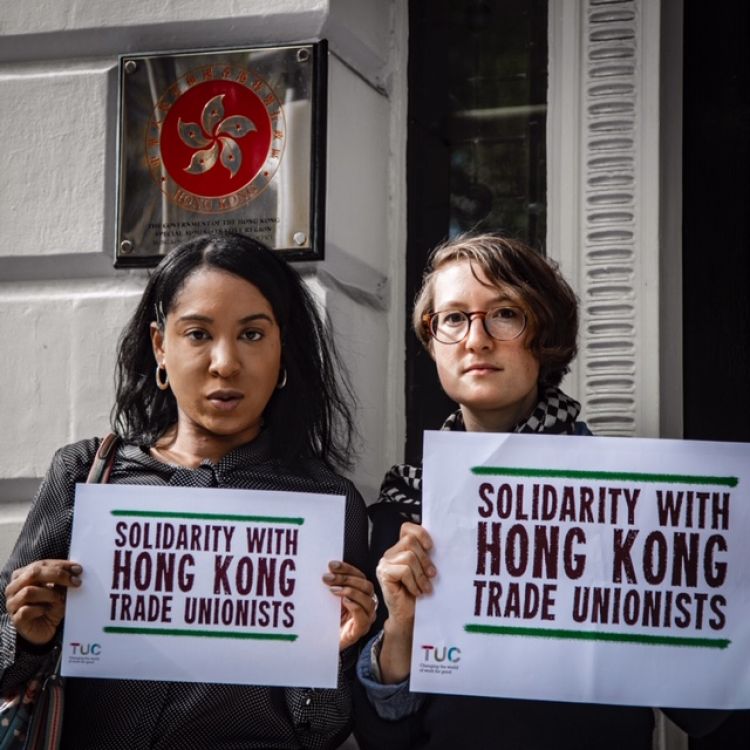
One of the earliest defining moments came during the 1925–26 Hong Kong General Strike, when tens of thousands of workers organised a year‑long stoppage in response to repression by the colonial authority and poor conditions. Research shows the British labour movement – including unions aligned with the TUC – expressed solidarity and pressured the UK Government to seek a fair resolution, marking the first recorded instance of TUC‑linked support for Hong Kong workers.
Throughout the latter half of the twentieth century, Hong Kong’s labour landscape remained divided between pro‑Beijing, pro‑Taiwan and emerging independent unions, but the movement was transformed from the 1970s onwards by new grassroots labour organisations such as the Hong Kong Christian Industrial Committee which supported workers’ organising free from political‑party control. This independent tradition culminated in the formation of the Hong Kong Confederation of Trade Unions (HKCTU) in 1990 – a democratic, ITUC‑affiliated centre representing 160,000 workers across 61 unions, committed to defending labour rights, collective bargaining and universal suffrage.
The HKCTU played a leading role in workplace struggles, social movements and legislative advocacy up to its forced dissolution in 2021 after a period of administrative and legal harassment under the National Security Law. In recent years, the TUC has again stood in solidarity with Hong Kong workers: opposing mass arrests during the 2019 protest movement, including the imprisonment of union leaders, condemning arrest warrants issued for exiled HKCTU leaders and urging the UK Government to uphold the rights guaranteed under the Sino‑British Joint Declaration.
Today, Hong Kong’s independent labour movement faces unprecedented repression, but its legacy – of worker‑led organisation, democratic values and international solidarity remains a vital part of global trade union history.