
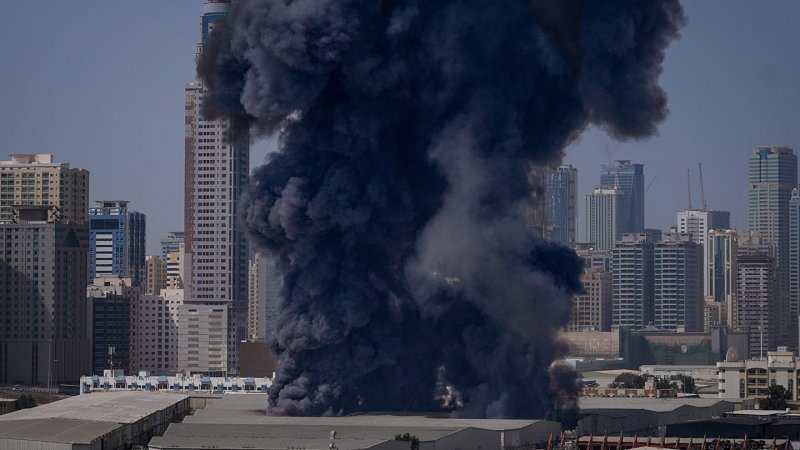
Iran has issued a public warning that major airports and ports in the United Arab Emirates could become targets if the United States launches new military strikes against Iranian civilian infrastructure.
The statement, attributed to an Iranian military representative, comes amid escalating tensions between Tehran and Washington and raises concerns that any further confrontation could spread beyond Iran and involve neighboring Gulf states hosting strategic infrastructure, News.Az reports.
At the time of the warning, neither the United States nor the UAE had publicly responded.
What warning did Iran issue?
An Iranian military representative warned that if the United States carries out strikes against Iran’s civilian infrastructure, Tehran could respond by targeting major transportation hubs in the United Arab Emirates. Specifically, the statement advised that Dubai International Airport, Abu Dhabi International Airport, the Port of Fujairah, and Jebel Ali Port should be evacuated to protect civilians in the event of Iranian retaliatory strikes.
According to the statement, the warning was presented as a precautionary measure rather than confirmation that an attack was imminent. Iranian officials argued that any U.S. military action against civilian facilities inside Iran would trigger a direct response against locations considered strategically important.
At the time the warning was issued, there was no indication that evacuations had begun, and neither U.S. nor Emirati authorities had confirmed any change to normal airport or port operations.
Military analysts note that such statements often serve both as deterrence and as strategic messaging during periods of heightened confrontation.
Why were Dubai, Abu Dhabi and the UAE’s ports mentioned?
The facilities named by Iran are among the Middle East’s most important transportation and logistics hubs. Dubai International Airport is one of the world’s busiest airports for international passengers, while Abu Dhabi International Airport serves as another major regional aviation gateway.
Similarly, Jebel Ali Port in Dubai is the largest container port in the Middle East and a critical center for global maritime trade. The Port of Fujairah, located outside the Strait of Hormuz on the Gulf of Oman, is one of the world’s leading oil storage and bunkering ports and plays an important role in international energy supply chains.
Although these facilities are civilian infrastructure, their strategic importance makes them significant to regional transportation, trade and logistics. Iran’s warning suggests that if it believes civilian infrastructure inside Iran is deliberately targeted, it could consider responding against similarly important infrastructure elsewhere in the region.
No evidence has been presented indicating that these UAE facilities are currently under immediate threat.
Why are tensions between Iran and the United States escalating?
The latest warning follows a period of intensified military exchanges between Tehran and Washington. Both governments have accused each other of escalating the conflict through military operations, while Iranian officials have repeatedly warned that continued U.S. strikes would broaden the confrontation.
In recent days, senior Iranian military and political figures have threatened expanded retaliation, including possible attacks on U.S. military facilities and other strategic targets across the region. Washington, meanwhile, has maintained military deployments throughout the Middle East while monitoring developments.
Iran has repeatedly stated that attacks on civilian infrastructure represent a red line and has warned that such actions would fundamentally change the nature of its military response. These statements are part of a broader series of warnings issued as both sides attempt to deter further escalation.
Although rhetoric has become increasingly severe, diplomatic channels have not completely disappeared, and regional governments continue to urge restraint.
How important are the UAE’s airports and ports to the region?
The infrastructure identified by Iran is central to the Middle East’s economy and international connectivity. Dubai International Airport handles tens of millions of passengers annually and serves as a major transit point linking Europe, Asia and Africa.
Jebel Ali Port is among the world’s busiest container terminals and functions as a key distribution center for goods moving throughout the Gulf region. The Port of Fujairah also plays a unique role because its location outside the Strait of Hormuz allows oil shipments to avoid one of the world’s most strategically sensitive waterways.
Any disruption to these facilities could have consequences extending far beyond the UAE, potentially affecting global trade, airline operations, shipping routes and energy markets.
Because of their international importance, governments closely monitor security developments involving these transportation hubs during periods of regional instability.
What could happen next?
At present, Iran’s statement remains a warning rather than confirmation of planned military action. There has been no public indication from U.S. or UAE authorities that they consider attacks on the named facilities to be imminent, nor have official evacuation measures been announced.
Whether the situation escalates further will largely depend on developments in the coming hours, particularly whether new U.S. military operations occur and how Iran chooses to respond.
Regional governments are expected to continue monitoring security conditions closely while reviewing contingency plans for critical infrastructure. Aviation authorities, shipping companies and international businesses operating in the Gulf routinely assess evolving security risks during periods of heightened tension.
For now, the warning highlights the possibility that any further military confrontation between Iran and the United States could extend beyond their own territories and place strategically important regional infrastructure at greater risk, even though no independent evidence currently indicates that an attack is imminent.