
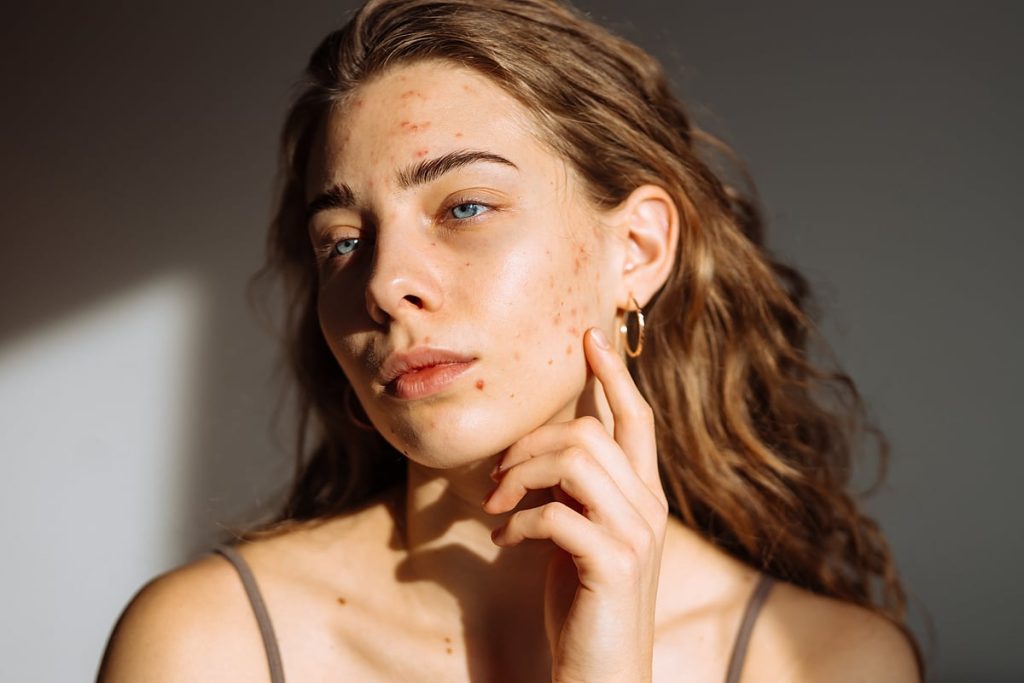
Why UAE summers trigger more acne, even indoors
Acne doesn’t take a summer break. According to Dr. Bara’a Saleh, Circadia skincare partner practitioner, breakouts often intensify in UAE summers due to multiple overlapping factors, and not just sun exposure. “Acne often worsens during UAE summers due to the heat, humidity, sweat and indoor lifestyle changes that affect the skin, even in teenagers who spend most of their time indoors.”
But one of the most overlooked triggers is what happens when the body constantly shifts between extremes. “Another contributing factor is the constant transition between the outdoor heat and air-conditioned indoor environments. This repeated change in temperature and humidity can cause increased skin dryness, which in turn triggers the skin to compensate by producing more oil, ultimately leading to more breakouts,” she explains.
Why teenage skin reacts more intensely than adult skin.
Teen skin is biologically more reactive. Dr. Saleh explains that hormones play a central role in why summer breakouts feel more severe in teenagers. As she says, they are already under the influence of elevated hormone levels. “These hormones cause the oil glands to become larger and more active compared to most adults, resulting in significantly higher oil production.”
When heat, humidity, and air-conditioning fluctuations are added to that baseline, breakouts become far more likely and often more persistent.
And so, hormones and sweat amplify each other.
Sweat, uniforms and the breakout triggers
Sweat is often blamed for acne, but dermatologists are quick to correct that assumption. The sweat itself, does not cause acne: The problem arises when sweat remains on the skin, mixes with oil, dead skin cells and friction. This creates the environment for breakouts. And this is compounded in summers, when sweat gets trapped under school uniforms, sports gear, helmets, caps or even masks.
Dr. Saleh also highlights a regional factor that often goes unnoticed: water quality. “An additional factor worth noting, particularly in this region, is hard water. The water here contains higher levels of calcium and magnesium, which can react with regular soaps to create what is known as ‘soap scum.’ This can lead to clogged pores and increased breakouts on both the face and body. Using a shower filter where possible can help minimise this effect.”
To reduce irritation, she recommends switching to gentler cleansing habits and advises avoiding harsh-scrubbing and over-exfoliation as these can lead to further dryness and irritation.
Over-washing versus the moisturiser
Summer skincare is often driven by panic: Wash more, scrub harder, use stronger acids. But that approach usually worsens the problem. As Dr Saleh explains, acne-prone skin needs balance, not aggression.” She adds that stripping the skin barrier can actually increase oil production and irritation.
As a result, when you keep washing with harsh cleansers, skip moisturisers and pile on treatments like AHAs (Alpha-Hydroxy Acids) such as Glycolic Acid, or BHAs (Beta-Hydroxy Acids) such as Salicylic Acid, it worsens the breakouts. In order to avoid this, you need to cleanse gently, moisturise lightly, protect with sunscreen and stay consistent.
Acids like Glycolic Acid, or gentler options like Mandelic Acid, can be incorporated into the routine but should not be used more than 2 to 3 times per week,” she advises.
Seasonal skin stress
However, summer breakouts are rarely caused by one factor alone. Some teenagers notice their acne gets worse with change of environment and diet. During the summer we tend to sweat more, and this can exacerbate acne. Moreover, lifestyle changes, such as increased sugar intake during school breaks can play a role, explains Dr. Victoria Scott-Lang.
Moreover, summer doesn’t affect everyone the same way “Some teenagers find the opposite however – their acne may improve in the summer with less stress and a change of scenery with fresh air and less pollution.”
She also highlights a lesser-known summer condition: “Heat and humidity, along with pollution, are known triggers for acne. I do however also see adult acne triggered by heat and sweat. We need to always think of the alternative diagnosis of “fungal acne” – caused by a yeast on the skin called Malassezia furfur. This is super common in the summer months in the UAE. This appears on the chest, back and hairline.”
When it’s not acne at all
Heat rash appears suddenly, as Dr Scott-Lang explains. It will appear under clothing, especially on the torso, and tend to look like lots of tiny bumps, which are itchy.
This distinction matters because heat rash usually resolves with cooling and breathable clothing, while acne requires a structured skincare approach.
What to follow: a simple, dermatologist-approved summer routine
-
Keep cleansing minimal, water alone is often enough, especially for dry or sensitive skin
-
Apply a light sunscreen SPF 30+ to SPF 50 daily
-
For oily and acne-prone skin, sunscreen alone may be sufficient without adding moisturiser
-
Use a gentle salicylic acid cleanser once daily (or up to twice if needed)
-
Choose a cleanser based on skin type—gel-based for oily skin, gentler formulas for dry or sensitive skin
-
Follow with a lightweight moisturiser to support the skin barrier overnight
Hydration options (night)
-
A light moisturiser such as Aqua-Biotic Balancing Moisturiser
-
For more hydration needs, Daytime Control Lotion can be used to support skin comfort and reduce excess shine
Lakshana is an entertainment and lifestyle journalist with over a decade of experience. She covers a wide range of stories—from community and health to mental health and inspiring people features.
A passionate K-pop enthusiast, she also enjoys exploring the cultural impact of music and fandoms through her writing.