
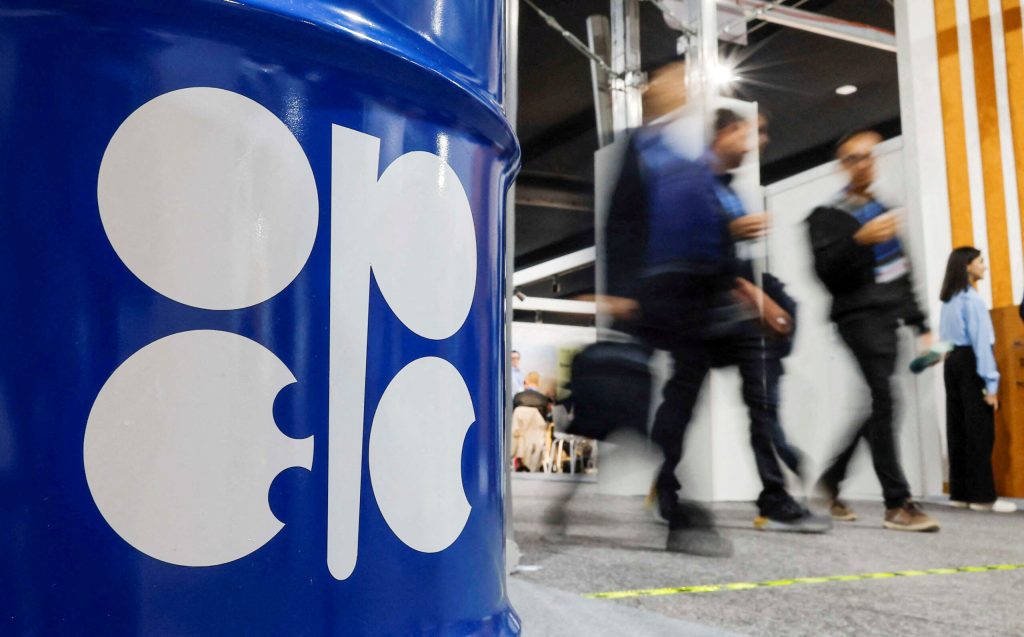
WASHINGTON—“A long time coming.” That’s how one senior Emirati official described to me today’s announcement by the United Arab Emirates (UAE) that it will exit the OPEC oil cartel on May 1. It’s a move that has been discussed behind closed doors for several years, both within the UAE and between Emirati and US officials. From Abu Dhabi’s perspective, its national interests have diverged and are likely to increasingly conflict with those of the other members of OPEC and the wider OPEC+ group, which notably includes Russia.
From an economic perspective, given the size of the UAE’s sovereign wealth funds, the country’s finances in recent years have been more tied to global economic growth than to the global price of oil. Therefore, while in the past some other OPEC members may have preferred higher oil prices, the UAE has been more concerned with risks to the foreign economic engines that drive its investment returns. Furthermore, its increased policy independence outside the cartel will allow the UAE to exceed OPEC production caps. That could provide second-order benefits for its relationships with important partners such as China, even at the risk of driving down global prices on the margin. Given the UAE’s near-term economic needs, the prospect of maximizing its own energy revenues is undoubtedly attractive.
And looking at the longer term, the UAE wants to monetize its reserves before oil demand peaks and begins a generational decline. In the past, some in the UAE may have been wary of breaking from OPEC because they could remember what Saudi Arabia did back in April 2020, when Russia refused to go along with production cuts. In response, Riyadh increased its own production, which collapsed global prices, betting that Saudi Arabia could withstand the financial hit longer than Russia. In the end, oil prices briefly fell below zero, and Moscow was forced to fall in line. But today, given Saudi economic challenges, Abu Dhabi likely assesses that Riyadh’s response cannot be as dramatic.
From a geopolitical perspective, the announcement comes in the context of the growing rivalry between the UAE and Saudi Arabia. The differences between the two countries, which have grown over time despite the large investments each makes in the other, burst into the open in late December, when the Saudi Air Force struck Southern Transitional Council (STC) forces in Yemen, which are partnered with the Emiratis. Saudi forces reversed an STC offensive, forced Emirati forces to withdraw, and later routed the Southern Transitional Council entirely. This sparked a very public quarrel, which extended to differing policies on Sudan and dominated regional social media. It quickly became too personal to be easily forgotten. Indeed, in the two months immediately before the outbreak of war with Iran, this rivalry was the most significant issue affecting the geopolitics of the Gulf region. It would not be surprising if we later learn that Abu Dhabi internally made the final decision to leave OPEC during this period. And if the UAE finds that it enjoys its enhanced independence, it might next reconsider whether to remain in other multilateral groupings such as the Arab League or even the Gulf Cooperation Council.
Looking ahead, it is difficult to imagine circumstances that would entice the UAE to return to the cartel.
From a security perspective, the war with Iran has changed everything for the Emiratis. Iran has targeted the UAE more than any other country, including Israel, and Emirati leaders have been increasingly vocal in their criticism of their Gulf partners’ “weak” response. The fact that Iran, an OPEC member state, has decided to block oil shipments through the Strait of Hormuz, and it is demanding a new tolling mechanism to blackmail revenues from shippers, helps explain why policymakers in the UAE are no longer interested in remaining a part of the cartel—especially if the UAE decides to freeze Iranian assets in the country.
Moreover, Russia has proven to be a steadfast partner for Iran, thus threatening Emirati security and raising the question in Abu Dhabi of why the UAE would want to cooperate with OPEC+ to Moscow’s benefit. Ukraine’s counter-drone expertise is invaluable to the UAE today, and the two countries recently signed a defense agreement, signaling a reversal from the UAE’s previously perceived tilt toward Moscow in that war. Indeed, the many Russians who have dodged military service in Ukraine by living in Dubai might have reason to be concerned about their future welcome, let alone the billionaire oligarchs who have comfortably used the UAE to evade sanctions. It is perhaps not entirely coincidental that one of the few ships to make it through the Strait of Hormuz recently was a Russian luxury superyacht with a sanctioned owner.
Looking ahead, it is difficult to imagine circumstances that would entice the UAE to return to the cartel. Qatar left OPEC in 2019, in the context of the diplomatic crisis between the country and its GCC neighbors, taking the opportunity to act on its longstanding desire to have more independent energy policies and focus on natural gas. Notably, even though that rift was eventually resolved and diplomatic relations restored, Qatar has not rejoined OPEC. Less significantly, Angola left the cartel in 2023. Ecuador and Indonesia also are lapsed members. But the UAE is a much larger oil producer, and its absence may, over time, pose a risk to the cartel’s long-term viability. Any weakening of the cartel’s power to define global oil markets would likely result in lower global oil prices overall, which is largely in the US interest. But those prices would probably be more volatile over time, which is not in the US interest.
This is not likely to be the end of the story, however. Tehran already views the UAE as its enemy, but unless the war with Iran restarts and escalates to destroy energy and water infrastructure, the Iranian regime can do little more to damage the UAE beyond what it has already done. The UAE’s exit from OPEC should be a wake-up call for Moscow, which should correctly see the step as contrary to its interests. While Russia is unlikely to limit its support for Iran, expect the Kremlin to redouble its efforts to solicit Emirati goodwill. Saudi Arabia will understandably view this action as a new direct threat both to its economy during a period of stress and its perceived position as the leader of the Gulf region. Just as Riyadh took almost a month to respond to the STC’s military offensive in Yemen before acting, Saudi leadership is likely to take time to consider how best to respond. But in contrast to Yemen, the response to the threat will presumably be economic rather than military.
In the immediate future, US diplomacy should seek to prevent this Emirati announcement from triggering a harmful cycle of responses and counterresponses between the UAE and Saudi Arabia, though US influence may be limited. At the very least, Washington should seek to “do no harm” and not repeat the mistake made last November, when a call between the US and UAE presidents reportedly helped ignite the latest Saudi-UAE feud.