
Close Menu
Simply Invest Asia
  • Home
  • About us
  • Explore industries/sectors
    • Automobile
    • Aviation
    • Banking
    • Biotechnology
    • Chemical & Fertilizer
    • Entertainment and Media
    • Food Processing
    • Healthcare
    • Iron and Steel
    • Leather
    • Mining
    • Oil and Gas
    • Pharmaceutical
  • Explore by countries
    • China
    • Dubai / UAE
    • Hong Kong
    • India
    • Indonesia
    • Japan
    • Malaysia
  • Explore cities
    • Bangkok
    • Beijing
    • Chongqing
    • Delhi
    • Dubai
    • Guangzhou
    • Jakarta
    • Kuala Lumpur
  • Why Asia
Facebook X (Twitter) Instagram Threads
Trending:
  • HK sustainable beverage startup tackles food waste problem with govt support
  • Air India Selects New JFK Terminal 6 For Future Operations
  • UAE Expands Regulatory Oversight of Drone Communications with New TDRA Framework
  • EU lawmakers arrive in China for high-stakes talks to manage mounting tensions
  • HK book fair wraps up with bargains
  • Inside Leeds United’s pre-season tour with Japan decision, Brazil stress test and Under 21 group
  • NHS partnership sees Fairlie Healthcare launch UK’s first haemodialysis service in care home
  • KamelPay partners with Paymentology to scale corporate payments in the UAE
  • 15 super-rare pygmy hogs released into Indian grasslands – the footage of them running free is adorable
  • Lifebuoy’s ‘Tiba Tiba Fans’ Highlights Fluid Fan Loyalties in Indonesia – Branding in Asia
  • The Biggest Order of the Day Had No Aircraft | Afterburner
  • China Eastern Plans Direct Astana-Shanghai Flights, FlyArystan Adds Chongqing Route
  • PTT Station powers people, not just vehicles, via this new Hakuhodo Bangkok campaign – Campaign Brief Asia
  • Guangzhou Tinci Materials Technology's Controlling Shareholder Proposes Interim Cash Dividend Plan – TradingView
  • Ant International Bags $1.2 Billion Ahead of Potential Hong Kong IPO
  • Ground Handling – Dubai Airports CEO Paul Griffiths reaffirms growth plans amid aviation challenges
  • Coway Never Compromises: Marking 20 Years with the Launch of Its First Refrigerator Series in Malaysia
  • UAE provides solar-powered health centres to help more than 200,000 people in India
Tuesday, July 21
Facebook X (Twitter) Instagram
Simply Invest Asia
  • Home
  • About us
  • Explore industries/sectors
    • Automobile
    • Aviation
    • Banking
    • Biotechnology
    • Chemical & Fertilizer
    • Entertainment and Media
    • Food Processing
    • Healthcare
    • Iron and Steel
    • Leather
    • Mining
    • Oil and Gas
    • Pharmaceutical
  • Explore by countries
    • China
    • Dubai / UAE
    • Hong Kong
    • India
    • Indonesia
    • Japan
    • Malaysia
  • Explore cities
    • Bangkok
    • Beijing
    • Chongqing
    • Delhi
    • Dubai
    • Guangzhou
    • Jakarta
    • Kuala Lumpur
  • Why Asia
Simply Invest Asia
Home»Explore industries/sectors»Chemical & Fertilizer»How Brain Chemistry Changes What We Taste
Chemical & Fertilizer

How Brain Chemistry Changes What We Taste

By IslaJuly 20, 20265 Mins Read
Share
Facebook Twitter Pinterest Threads Bluesky Copy Link


NIH R01 grant awarded to assistant professor Natale Sciolino to explore the neuroscience of taste

The National Institutes of Health (NIH) has awarded an R01 research grant to the lab of assistant professor of physiology and neurobiology Natale Sciolino, Ph.D., to study how the brain chemical norepinephrine influences taste perception – work that could deepen understanding of why taste changes with behavioral state, age, illness, and neurological disease.

Our sense of taste changes over the course of our lives. It’s why kids tend to turn up their noses at vegetables, while adults can find appreciation for the bitter notes of leafy greens. Taste can also shift with age, during temporary illnesses such as a cold, or as a result of chronic neurological conditions such as Parkinson’s disease or Alzheimer’s disease.
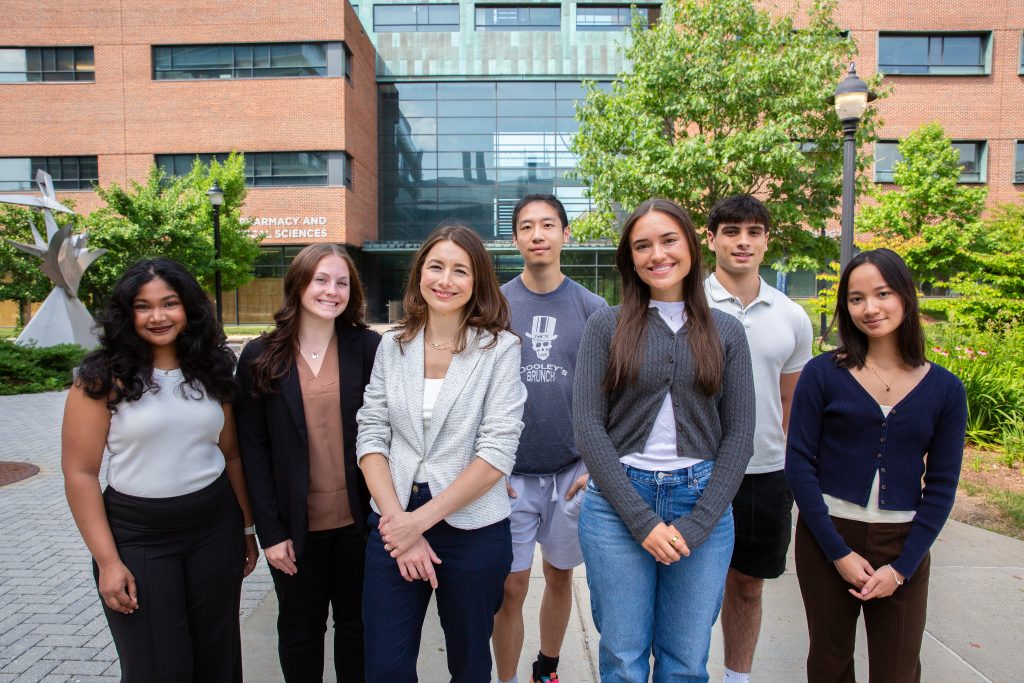
A group of people standing in the sunshine outside a UConn building
Members of the Sciolino Lab. From left: Sanjana Krishnakumar (Ph.D. student), Abigail McFarland (undergraduate student), Natale Sciolino (Assistant Professor), Qichen (Will) Fan (Ph.D. candidate), Anne Gaus (undergraduate student), Daniel Lopes (undergraduate student), Trang (Paula) To (Ph.D. student). (Bri Diaz/UConn Photo)

These changes matter because taste plays a central role in eating behavior. Whether someone is nine or 99 years old, they’ll be less likely to consume foods that don’t appeal to them, regardless of how nutritious those foods may be. Changes in taste can also affect appetite, nutrition, quality of life and, in some cases, a person’s overall health.

Researchers in Sciolino’s lab have received nearly $565,000 for the first year of their NIH R01 grant award to better understand how complex processes in the brain shape taste perception. Their work could eventually help people experiencing taste loss, including those affected by long COVID or neurological disease. As the basic science advances, it could also help clinicians track changes in patients’ palates over time, providing a useful biomarker of health and aging.

Sciolino’s lab focuses on norepinephrine, also known as noradrenaline. This neurotransmitter is produced largely in a small region of the brainstem called the locus coeruleus, or LC. The lab studies how norepinephrine influences motivated behaviors, including eating and the fight-or-flight response.

“Norepinephrine is a neuromodulator, which means it can change how neural circuits process information,” explains Will Fan, a Ph.D. candidate leading this research. “Rather than carrying one simple message from one neuron to another, neuromodulators can tune the activity of many neurons at once. In this project, we’re asking what happens when norepinephrine is released in the parts of the brain that process taste. Does it change neural activity? And if so, does that change how an animal perceives a taste and decides whether to consume it?”

“We felt it was super important to investigate this gap,” adds Sciolino. “How is norepinephrine regulating taste information in the brain, and ultimately, taste-guided behaviors – that is, do we like or dislike the food, and do we ultimately consume or reject it?”

Prior research in the field has shown that taste is linked to a mammal’s internal state, or level of behavioral arousal. For example, when an animal or human is in a low-arousal state (like boredom), it may be more likely to perceive taste along a broad dichotomy of “good” or “bad” rather than identifying individual tastes. Similar effects occur during sickness.

But, says Sciolino, “No one knows how those brain states switch. We think that norepinephrine can be that potential mediator.”
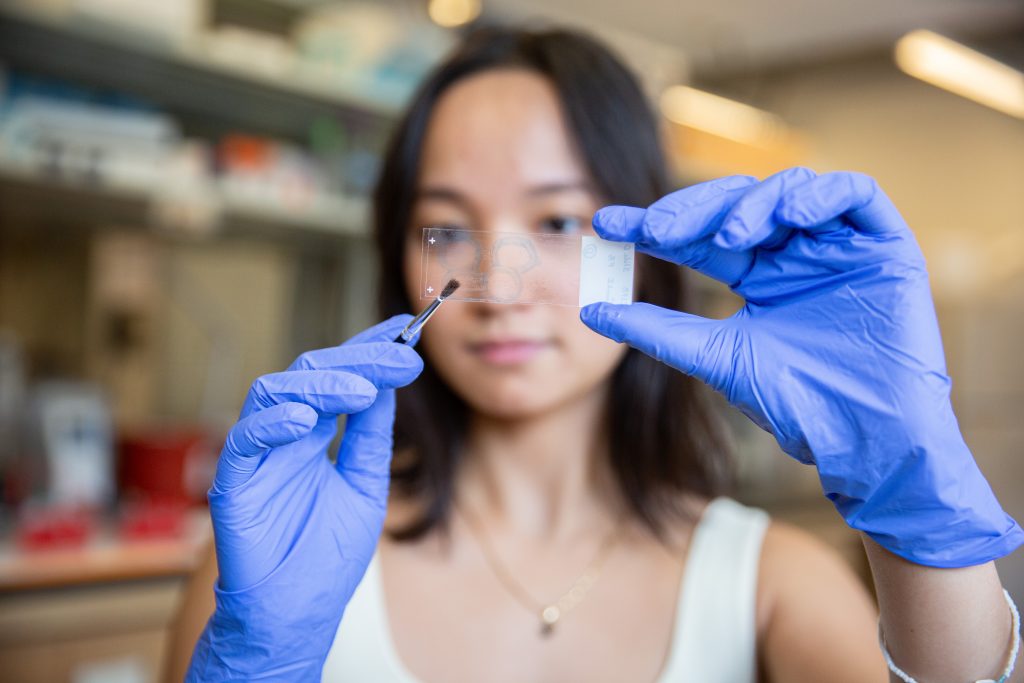
A researcher holds a transparent slide up to the camera
Trang (Paula) To, a Ph.D. student in the Sciolino Lab, examines histological sections of the mouse brain. (Bri Diaz/UConn Photo)

Sciolino believes findings from this research are “going to be very important for advancing the field of not only taste, but also the broader field of chemosensation,” which includes both taste and smell.

Scientists have previously studied how individual neurons in the LC respond to sensory stimuli. What makes this work different is its focus on how systems of neurons behave. With a more holistic view of how the brain is processing taste, the researchers hope to unlock a better understanding of how it computes and responds to different types of sensory input.

To test their hypotheses, the researchers stimulate the release of norepinephrine in the LC in mice as they are exposed to different tastes, using a method called optogenetics. Using miniature microscopes, they closely monitor its effects on the activity of the brain’s gustatory cortex to see how the mice perceive the tastes, a process known as palatability encoding. Mice provide a powerful model for this work because researchers can precisely study the brain circuits involved in taste perception while observing how changes in neural activity affect taste-guided behavior.

Research reported in this story was supported by the National Institute on Deafness and Other Communication Disorders of the NIH under Award Number R01DC023564. Related research in Sciolino’s lab has also received support from the Brain Research Foundation (BRF) Seed Grant under Award Number BRFSG2023-09. The content is solely the responsibility of the authors and does not necessarily represent the official views of the NIH or BRF.


Source link

Related Posts

Odisha cements its position as a chemical and petrochemical investment hotspot, ETChemicals

July 21, 2026

Pair of Kentucky chemical plants exempted from EPA rule meant to reduce harmful emissions

July 20, 2026

European chemical earnings to test demand recovery after conflict

July 20, 2026
Add A Comment
Leave A Reply Cancel Reply

Top Posts

China Scraps 12,000 Degrees in Biggest Academic Overhaul in Years

June 14, 2026

Chinese Wall may stem India tech flows for electronics and automobile

June 1, 2026

Abandoned malls, whispers of nuclear war and young foreigners detained. This is what’s REALLY going on in Dubai… and the chilling warning one taxi driver gave to the Mail’s IAN BIRRELL

April 11, 2026
Don't Miss

HK sustainable beverage startup tackles food waste problem with govt support

By IslaJuly 21, 2026

Craft beer made from recycling surplus bread marketed by Breer. (PROVIDED TO CHINA DAILY)Amid the…

Air India Selects New JFK Terminal 6 For Future Operations

July 21, 2026

UAE Expands Regulatory Oversight of Drone Communications with New TDRA Framework

July 21, 2026

EU lawmakers arrive in China for high-stakes talks to manage mounting tensions

July 21, 2026
SUBSCRIBE TO OUR NEWSLETTER

Get our latest downloads and information first. Complete the form below to subscribe to our weekly newsletter.


I consent to being contacted via telephone and/or email and I consent to my data being stored in accordance with European GDPR regulations and agree to the terms of use and privacy policy.

Stay In Touch
  • Facebook
  • YouTube
  • TikTok
  • WhatsApp
  • Twitter
  • Instagram
Top Trending

PTT Station powers people, not just vehicles, via this new Hakuhodo Bangkok campaign – Campaign Brief Asia

By IslaJuly 21, 2026

Guangzhou Tinci Materials Technology's Controlling Shareholder Proposes Interim Cash Dividend Plan – TradingView

By IslaJuly 21, 2026

Ant International Bags $1.2 Billion Ahead of Potential Hong Kong IPO

By IslaJuly 21, 2026
Most Popular

The G7 needs India more than India needs the G7

June 17, 2026

England v India – T20, Chester-le-Street: Dube hits 'majestic' six out of the ground – BBC

July 1, 2026

Russian Strike Damages Kyiv Pharmaceutical Plant During Attack

June 28, 2026
Our Picks

Diljit Dosanjh’s Controversial Film Pulled From India After One Day

July 5, 2026

Week Ahead: 4 May 2026

May 1, 2026

Jury & Fines Tour de France 2026 Update Stage 13

July 18, 2026
SUBSCRIBE TO OUR NEWSLETTER

Get our latest downloads and information first. Complete the form below to subscribe to our weekly newsletter.


I consent to being contacted via telephone and/or email and I consent to my data being stored in accordance with European GDPR regulations and agree to the terms of use and privacy policy.

© 2026 Simply Invest Asia.
  • Get In Touch
  • Cookie Policy
  • Privacy policy
  • Terms & Conditions

Type above and press Enter to search. Press Esc to cancel.

SUBSCRIBE TO OUR NEWSLETTER

Get our latest downloads and information first.

Complete the form below to subscribe to our weekly newsletter.


I consent to being contacted via telephone and/or email and I consent to my data being stored in accordance with European GDPR regulations and agree to the terms of use and privacy policy.