
The agreement aims to attract investment, accelerate technology transfer, and promote sustainable mineral processing as Indonesia pushes ahead with its downstream industrialization strategy.
Indonesia and Switzerland have signed a memorandum of understanding (MoU) to strengthen bilateral cooperation in the minerals and metals sector, marking a new step in Indonesia’s efforts to attract higher-value investment and accelerate downstream industrial development.
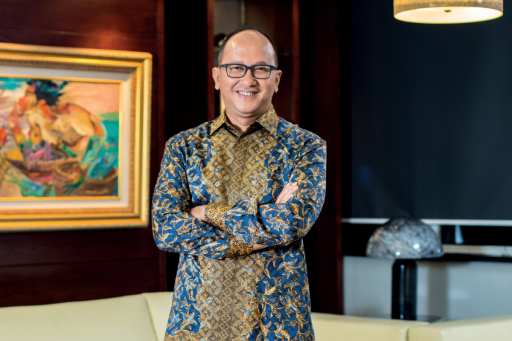
The agreement was signed on Thursday by Investment and Downstreaming Minister Rosan Roeslani at the Ministry of Investment in Jakarta and witnessed by Swiss Ambassador to Indonesia, Timor-Leste and ASEAN Olivier Zehnder.
The Swiss side had previously signed the agreement on June 23 during Swissmem Industry Day 2026 in Basel through Swiss Confederation President and Head of the Federal Department of Economic Affairs, Education and Research (EAER) Guy Parmelin.
Rosan said the partnership reflects Indonesia’s ambition to move beyond exporting raw materials by expanding domestic processing industries that generate greater economic value.
“Our ambition is not merely to export raw materials, but to create added value, generate quality employment, and strengthen Indonesia’s industrial competitiveness through downstream processing. Switzerland is an ideal partner because of its strengths in technology, innovation, sustainability, financing, logistics, and access to global markets,” Rosan said.
The MoU builds on an Expression of Interest signed by the two countries in September 2025 and establishes a framework for cooperation in investment promotion, minerals and metals supply chain development, technology and knowledge transfer, human resource development, environmental, social and governance (ESG) standards, and clean technology.
According to the Ministry of Investment and Downstreaming, Swiss investment in Indonesia totaled approximately US$1.33 billion (around Rp21.5 trillion) between 2021 and the first quarter of 2026. The largest investment recipients included food manufacturing, transportation and logistics, telecommunications, and the chemical and pharmaceutical industries.
Rosan said the success of the partnership would ultimately be measured by the realization of concrete investment projects rather than the signing of the agreement itself.
“We want to see more investment, technology partnerships, knowledge exchange, and business opportunities that generate tangible benefits for both countries. Indonesia is open, Indonesia is committed to reform, and Indonesia is ready to become a long-term partner,” he said.
Swiss Ambassador Olivier Zehnder noted that the agreement coincides with the 75th anniversary of diplomatic relations between Indonesia and Switzerland.
He said the partnership combines Indonesia’s abundant mineral resources with Swiss expertise in advanced technology, engineering, and financing to support sustainable industrial development.
“We hope this cooperation will further strengthen our economic partnership while creating sustainable benefits for the people of both Indonesia and Switzerland,” Zehnder said.
Downstream processing has become one of Indonesia’s flagship industrial policies, with the government seeking to attract greater foreign investment into mineral processing, battery materials, and other value-added industries instead of relying on raw commodity exports. To support this strategy, Indonesia has increasingly pursued partnerships with countries that possess advanced industrial capabilities and technologies.