
At India’s first Climate Week in Mumbai this February, I was invited by the National Stock Exchange of India to judge the finals of its flagship Innovation Challenge. The competition brought together climate start-ups from across the country, generating between $50,000 and $2.5 million in annual revenue, with the winners set to be incubated towards IPO readiness.
The initiative was designed to connect climate entrepreneurship with capital markets rather than philanthropy, which has typically funded climate innovation in India. If climate technologies are going to scale, they need access to mainstream capital.
The event revealed something much deeper about the state of climate innovation in the country and reveals a major opportunity that remains largely overlooked.
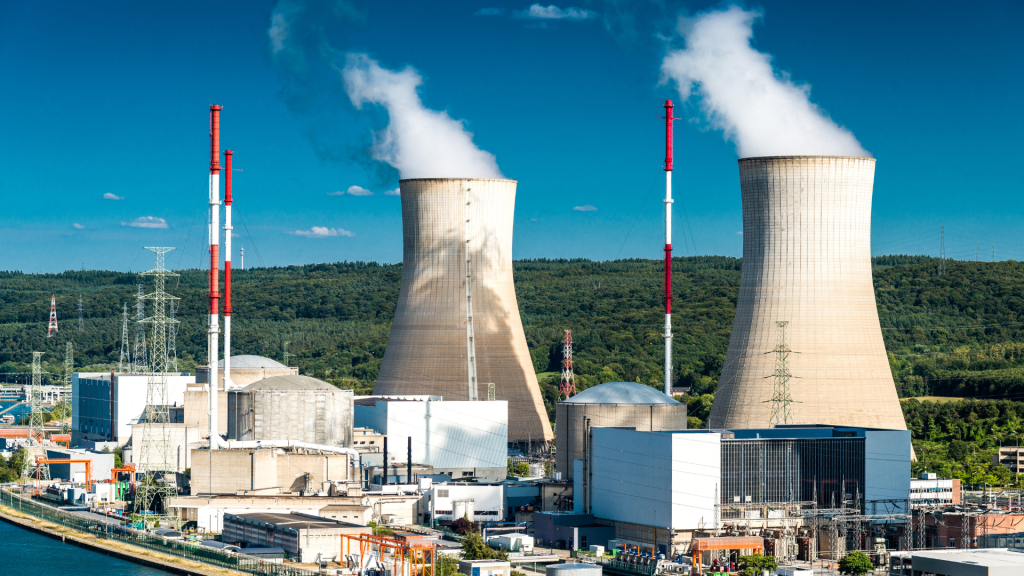
India is on the verge of creating one of the most important pieces of climate infrastructure in the world: a fleet of home-designed nuclear units that could one day provide affordable, clean power to the largest country on earth.
Surpassing Renewable Energy Targets
India has positioned itself as a global leader in renewable energy deployment. Solar capacity has expanded rapidly, and domestic solar manufacturing has become a strategic priority. Energy transition is now embedded in the country’s broader economic strategy.
During the Climate Week event, India’s Minister of Commerce and Industry, Piyush Goyal, expressed strong confidence in the country’s renewable trajectory. Government policy clearly aims to accelerate clean energy deployment while supporting industrial growth. But that ambition was not reflected in the start-ups themselves.
Climate Tech
The Climate Innovation ecosystem is dominated by agri-tech focused on crop yield optimisation and AI-driven SaaS platforms designed to simplify ESG reporting and corporate sustainability disclosures. Only a handful of companies are working on patent-heavy hardware technologies or breakthrough energy systems, when the need of the hour is much greater.
This pattern reflects a structural funding gap. First-of-a-kind energy technologies require large upfront capital investments and long development timelines. Venture investors tend to prefer asset-light business models with faster returns.
Innovation skews toward software platforms and incremental efficiency improvements rather than foundational changes in energy systems.
Private capital in Climate Finance
The deeper issue lies in the structure of climate finance itself.
In conversations with investors, funds labelled “climate” still avoid core energy generation technologies. Even within climate-focused portfolios, electricity production is often considered too capital-intensive and too exposed to regulatory risk.
Start-ups rely on government procurement contracts, concessional capital, or blended finance structures to make their business models viable. These tools play an important role in de-risking early deployment. But their prevalence also signals that private capital remains hesitant to finance energy infrastructure directly. Meanwhile, the scale of the energy challenge continues to grow.
India’s Energy Reality
During my time in Mumbai over the winter, the Air Quality Index regularly ranged between 200 and 300: classified as “very unhealthy.” Coal still provides roughly 75 percent of India’s electricity, and the country’s electricity demand is projected to double by 2040 as economic growth and electrification accelerate.
Nuclear power currently accounts for only about three percent of India’s electricity mix.
If India intends to simultaneously reduce air pollution, sustain economic development, and meet climate targets, its clean, firm generation capacity will need to expand dramatically. Renewable energy will play a critical role, but intermittent sources alone cannot provide the reliable power required by a rapidly industrialising economy.
That is where nuclear energy becomes essential.
India’s Nuclear Buildout
While much of the global climate conversation focuses on wind and solar deployment, India has quietly been scaling a domestic nuclear construction programme built around standardised reactor designs.
In February 2026, Rajasthan Atomic Power Project Unit 7 (a 700 MW pressurised heavy water reactor) reached full rated power for the first time. It is the third reactor in a planned fleet of sixteen identical units.
Standardisation matters.
When reactors are built repeatedly using the same design, construction timelines improve, supply chains mature, and costs fall significantly. Countries such as France and South Korea achieved rapid nuclear expansion through exactly this kind of programmatic build strategy.
India is now pursuing a similar approach.
Additional reactors are already under construction across multiple sites, including Kaiga in Karnataka, Gorakhpur in Haryana, Chutka in Madhya Pradesh, and Mahi Banswara in Rajasthan. By 2047, India’s long-term goal is to reach 100 gigawatts of nuclear capacity, the centenary of its independence.
The Cost Advantage
What makes this strategy particularly significant is the cost. Western nuclear projects in Europe and North America have often struggled with construction costs exceeding $8,000 to $12,000 per kilowatt. By contrast, India’s standardised PHWR units are significantly cheaper to build between $1,200 to $1,700 per kilowatt.
Lower labour costs play a role, but the more important factor is repetition. By building many identical reactors in sequence using domestic engineering and supply chains, India is beginning to capture the efficiencies that historically allowed nuclear energy to scale. If this cost advantage holds, its implications extend far beyond India’s borders.
A Global Opportunity
The developing world faces a dilemma: electricity demand is climbing fast, even as the pressure to move off fossil fuels mounts. For most of these countries, conventional Western nuclear plants are simply too expensive. Affordable reactor designs could change that calculation entirely, opening a path to clean, reliable baseload power and the industrial growth it enables across Africa, Southeast Asia, and the Middle East.
India’s Nuclear Power Corporation (NPCIL) that is creating smaller heavy-water reactors of 220 and 540 megawatts, can be used by countries that need modest, grid-appropriate units. The Bharat Small Modular Reactor programme goes further, with compact, factory-built units spanning a range of sizes that are produced in series, shipped, and assembled on site. Alongside them, sits a handful of startups designing smaller reactors fit for India, which could in turn be sold into other developing countries.
Two things have historically put nuclear power beyond the reach of most developing countries: the enormous upfront capital, and the decade-long construction timelines that push financing costs higher still. Factory-built reactors attack both. Standardised components and shorter build schedules compress the timeline, and the smaller per-unit price tag is one a national utility or an industrial buyer can plausibly finance.
The commercial scaffolding is taking shape. India has signed civil nuclear cooperation agreements with more than a dozen countries. In December 2025, India passed the SHANTI Act, which replaced the Atomic Energy Act, 1962 and the Civil Liability for Nuclear Damage Act, 2010, and opened the sector to greater private participation and, by removing suppliers’ open-ended liability, is seeking to draw in foreign vendors. As a technology partner, India brings its decade of nuclear expertise with a heavy emphasis on cost sensitivities, ideal for other developing countries.
The opportunity runs beyond finished reactors. Thirty-eight countries have now pledged to at least triple their nuclear capacity by 2050, which means that many reactors will be built this decade and next. Every one of them needs nuclear-certified components.
The supply chain is already strained. In the West, decades of eroding manufacturing capacity helped produce some of the most expensive nuclear projects ever built. India could fill that gap. It already has a healthy ecosystem of vendors supplying its domestic build-out, a deep pool of skilled engineering talent, and low production costs. It has the ingredients of a global manufacturing hub for nuclear components. Those suppliers would need to expand capacity and need international certification. But if India does, that industrial base could end up powering a sizable share of the world’s nuclear fleet.
Capital Is Missing the Bigger Opportunity
India’s nuclear buildout and its clean energy ambitions are not reflected in its start-up ecosystem. The energy system accounts for the largest share of India’s emissions, so the technologies capable of decarbonising electricity and industrial energy use remain central to climate action. Yet these technologies are more difficult to finance. The climate transition ultimately depends on energy infrastructure. And infrastructure requires patient capital willing to invest over decades rather than quarters.
India may already be demonstrating what that kind of investment can achieve. If the country succeeds in driving costs down further, it would model for the developing world the most difficult ingredients of the energy transition: affordable, reliable, clean power.
Gayatri Karnik is a Policy Analyst at Anthropocene Institute specialising in nuclear energy. She is an IAEA Marie Skłodowska-Curie Fellow and holds a master’s degree in law focused on clean energy financing. She serves as Vice President of Women in Nuclear Global Young Generation and chairs a task force under the OECD Nuclear Energy Agency’s High-Level Group on Gender Balance. She is also the creator of Climate Policy Practice, a climate education platform that has reached thousands of young people and climate professionals. Views expressed are personal.