
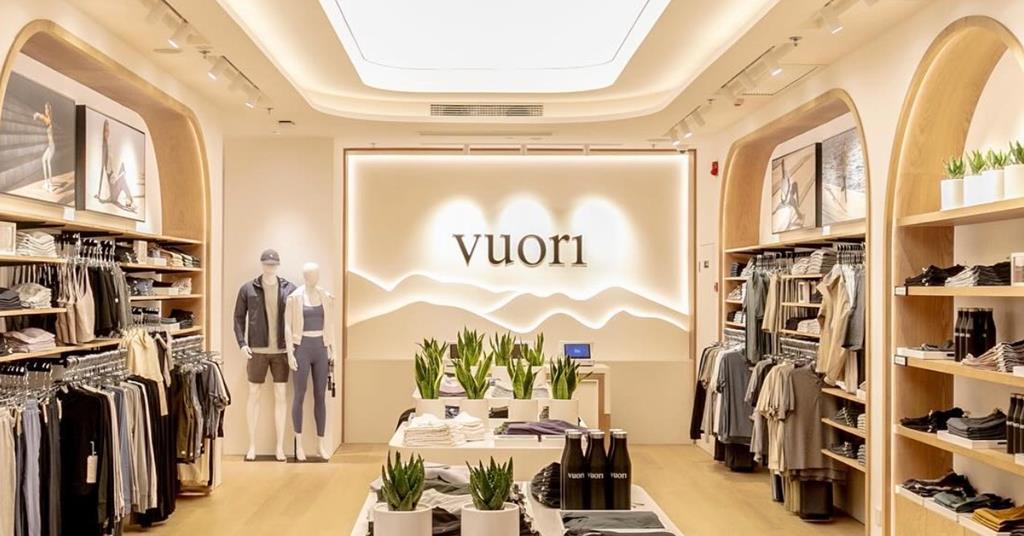
When Vuori president Ashley Kechter told the Wall Street Journal the brand is aiming for 20 stores in China by the end of 2027—up from eight today, primarily in Shanghai and Beijing—the number mattered less than what it implied: Vuori is moving from quiet market testing to active expansion in one of the world’s most competitive activewear arenas.
From eight stores to 20 in 18 months
Reaching 20 locations would more than double Vuori’s footprint in roughly 18 months. It also aligns with the company’s broader ambition to grow its global store network to more than 300 by 2030, from around 100 today. The near-term plan is to deepen density in Shanghai and Beijing first, then extend into secondary cities as brand awareness builds.
Alongside the physical build, Vuori is assembling a dedicated China team, working with local order fulfillment partners and mapping domestic Key Opinion Leader (KOL) and Key Opinion Consumer (KOC) ecosystems.
Andy Lawrence, SVP of International, said the brand expects China to become its largest international market over time, an ambition it first flagged publicly when it opened its Beijing Sanlitun location in October 2025. Vuori entered China via Tmall in October 2022 and opened its first permanent store at Shanghai’s Jing’an Kerry Centre in May 2024.
Why Vuori thinks it can win: men’s demand and a post-logo premium shift
Vuori’s China proposition rests on two structural observations that held during its incubation phase.
First, male consumers in the premium activewear space have historically been underserved: the brand’s China business has maintained a near 1:1 sales ratio between men’s and women’s apparel, capturing an audience that lululemon and Alo Yoga have not prioritized.
Second, consumer fatigue with logo heavy luxury has created an opening for tactile, fabric first messaging: the DreamKnit and BlissBlend materials that Xiaohongshu reviewers cite as the decisive factor behind purchase.
The “Asian fit” gap: Vuori’s localization blind spot
Both dynamics remain relevant. But moving from eight stores to 20 in 18 months introduces friction points the controlled rollout phase deliberately avoided. Fit localization, what the industry calls the Asian fit, remains an unresolved structural vulnerability. Maia Active, now owned by Anta Sports, has built momentum in exactly this area, engineering products around Chinese body proportions that Vuori’s globally standardized silhouettes do not match.
A crowded field where the foreign playbook keeps failing
The competitive context is unforgiving. Nike’s Greater China sales fell ten percent year over year in fiscal third quarter 2026, marking eight consecutive quarters of decline, as its centralized structure limited the responsiveness local consumers demanded. lululemon continues to grow in China, posting 23% constant currency sales gains and 13% comparable store growth in the first quarter, but a promotional event on the Great Wall featuring Japanese taiko drumming triggered cultural backlash that illustrated how quickly brand goodwill can erode in the market.
Vuori’s approach reflects lessons from both. The cluster first strategy, the dedicated local team and the China based KOC sourcing are all correctives to Nike’s centralization failure. The emphasis on tactile discovery and peer level validation over celebrity amplification addresses the authenticity gap that tripped lululemon.
Tariffs add friction to Vuori’s China store expansion economics
Kechter also disclosed to the WSJ that Vuori has already adjusted its sourcing vendor base for certain goods and increased prices on some products in response to US tariff changes.
The brand is privately held and does not publish financial disclosures; it was valued at $5.5 billion following an $825 million secondary tender offer led by General Atlantic and Stripes in late 2024, against estimated annual revenue of approximately $1 billion and reported gross margins of around 50%. The tariff adjustments add a cost variable to a China expansion that, at 20 stores, will require meaningful fixed investment in retail infrastructure, local staffing and marketing before the unit economics reach maturity.

Asia-Pacific insights for the sporting goods industry
Analysis, insights, and expert perspectives on the sporting goods industry across Asia-Pacific — covering market trends, manufacturing, retail, and brand strategy from China to Southeast Asia to Oceania. With Jakarta-based contributing editor Yohana Belinda.