
Hong Kong has kicked off the public consultation on its first five-year plan, which is to dovetail with the national 15th Five-Year Plan (2026-30). This is not a routine exercise. It is a significant departure from the city’s usual style of policymaking.
Five-year planning should be more than annual policy announcements in another form. It should set direction, organize priorities, coordinate action, and give society and the market a clearer sense of where public policy is heading.
The consultation document is therefore welcome. It brings together many areas that matter to Hong Kong’s future: the Northern Metropolis, finance, commodities, trade, innovation and technology (I&T), maritime and aviation, green transition, education, culture, and tourism. Yet many readers can be forgiven for thinking they have heard all this before. Much of the document resembles a collection of previously announced policies.
The domains are not unimportant, of course. Many are necessary. The problem is not the ingredients. The problem is that they remain ingredients. They are grouped under separate headings, but they are not yet shaped into a governing proposition.
A five-year plan should answer a larger question: What is Hong Kong trying to become by 2030, and how will public policy, private investment, and social effort be organized to get there?
The consultation document explains upfront that Hong Kong is preparing its first five-year plan to align with the national 15th Five-Year Plan, seize opportunities from national development, and identify Hong Kong’s unique positioning in the country’s overall development.
This is the right starting point. But alignment cannot mean simply borrowing Chinese mainland phrases. Words such as “high-quality development” and “green transition” are not decorative language. They carry a governing logic. The national planning tradition is about setting a development trajectory. Hong Kong should explain what these ideas mean under the “one country, two systems” principle and in Hong Kong’s own circumstances. This is where the consultation document needs more depth.
For years, Hong Kong has described itself as a superconnector. The phrase remains useful, but it is no longer sufficient. The world has changed. Connecting is no longer just about introducing one side to another. The consultation document refers to geopolitical risks, supply chain restructuring, digital transformation, regional competition, and the need for resilience. These are not background conditions. They define Hong Kong’s next stage.
In such a world, Hong Kong’s value lies not only in its connectivity; it lies in its ability to be trusted across systems. Hong Kong sits at the intersection of diverse legal, financial, commercial, technological, and regulatory systems. It is part of China but operates under common law. It is deeply connected to the mainland, but is also internationally open. It has free capital flow, global professional services, an independent Judiciary, deep financial markets, arbitration expertise, logistics capacity, and bilingual capability. It can work with renminbi and international capital, mainland enterprises and global investors, Chinese standards and international standards.
This suggests a stronger proposition: Hong Kong should see itself as a trusted multi-systems hub. That is more precise than superconnector. A trusted multi-systems hub does not merely connect people. It enables cross-jurisdictional activity. It helps capital, data, goods, services, technology, standards, contracts, talent, and ideas move across boundaries with confidence.
This is exactly the role Hong Kong can play for the country’s high-level opening up. It is also the role Hong Kong can play in supporting mainland enterprises going global, in facilitating international firms entering the mainland and Asian markets, and in fostering regional cooperation in finance, insurance, trade, maritime and aviation services, innovation, health, climate transition, and professional services.
Hong Kong’s first five-year plan matters because it will set the pattern for future plans. The city will not stop at the end of the 15th Five-Year Plan period. There will be the 16th, 17th, and beyond. The first exercise should therefore establish the habit of examining the underlying logic rather than merely assembling policy items
If this were the governing proposition, many items in the consultation document would begin to connect.
Finance would not be a separate sector. It would be part of Hong Kong’s role in trusted capital allocation and risk management. Maritime and aviation would not only be about port and airport competitiveness. It would be about the green transition, international standards, and a host of related services. I&T would not be a slogan. It would be a tool for solving problems in health, aging, climate resilience, supply chains, and urban systems.
The Northern Metropolis would be more than a spatial and technological project. It would become a place to demonstrate new models of industry, education, research, housing, transport, ecology, and cross-boundary collaboration. The green transition would move from the margins to the center. If Hong Kong is to be a trusted multi-systems hub, it must help define and finance the transition economy, from green finance and transition finance to new fuels and energy efficiency, maritime and aviation decarbonization, biodiversity, and climate resilience.
This is the kind of connection the final plan should make explicit. It should not only list what Hong Kong is already doing. It should explain how different policies reinforce each other.
The consultation document says the plan should be “forward-looking, strategic, and operable” — naturally. It says the formulation of the plan is a “vital step” in exercising “executive-led governance”, “deepening reforms”, and “enhancing governance efficacy” — of course. These are powerful words. They now need practical meaning.
The public should expect discussion forums, sectoral briefings, and opportunities for clarification before the plan is finalized later in the year. Officials should use these occasions not only to describe the document, but to explain the thinking behind it. What does high-quality development mean for Hong Kong? What does executive-led governance mean in a five-year planning context? How will bureaus and departments work across silos? What governance reforms may be needed? How will markets be created? What should be achieved by 2030? These are not unfriendly questions. They are the questions that make planning serious.
Hong Kong’s first five-year plan matters because it will set the pattern for future plans. The city will not stop at the end of the 15th Five-Year Plan period. There will be the 16th, 17th, and beyond. The first exercise should therefore establish the habit of examining the underlying logic rather than merely assembling policy items.
The mainland’s own planning system rests on deep policy research and a long-term trajectory. It has used planning to build industries, guide investment, and accelerate the green transition. Increasingly, technology and artificial intelligence are being used not as isolated tools, but as part of a broader industrial transformation to achieve ecological civilization — China’s development philosophy and pathway.
Hong Kong should draw that lesson carefully. The governing logic is not technology for technology’s sake. It is the transformation of the economy and society toward higher quality, greater resilience, and more sustainable growth. The final plan should not be judged by how many policy items it contains — these will come from policy addresses. It should be judged by whether it gives Hong Kong a clearer governing proposition, a stronger development logic, and a more effective way to organize implementation.
Hong Kong has many strengths. The task now is to join them up. A five-year plan should not be a catalog. It should be a story about what Hong Kong will become, along with a practical guide to getting there.
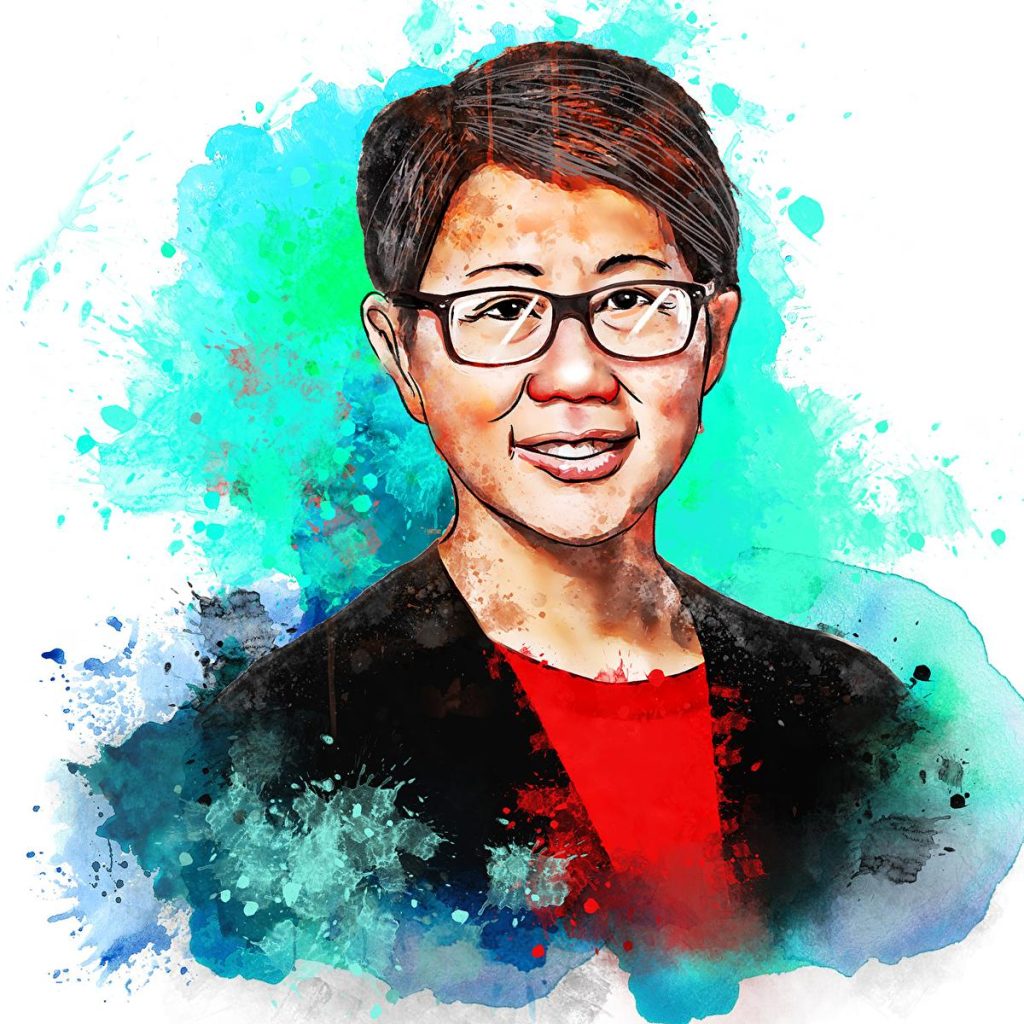
The author is the chief development strategist at the Hong Kong University of Science and Technology’s Institute for the Environment.
The views do not necessarily reflect those of China Daily.