
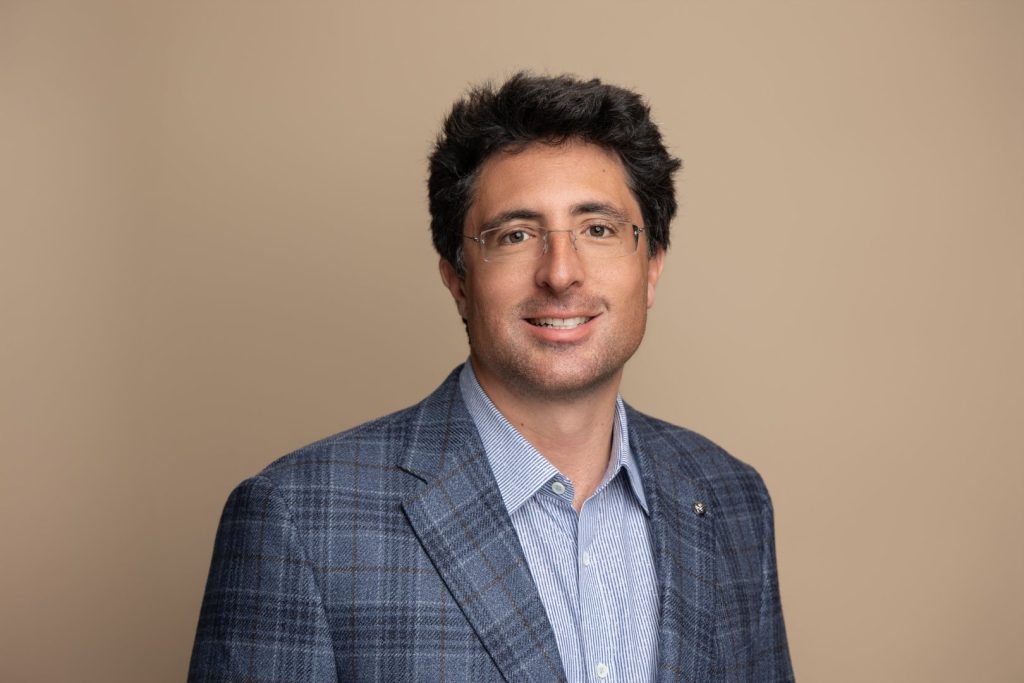
BAKU, Azerbaijan, June 16. Quantum technology
could help unlock new oil and gas discoveries in Azerbaijan, CEO
and Chairman of IonQ, world’s leading quantum platform company,
based in the U.S., Niccolo de Masi said in an exclusive video
interview with Trend.
De Masi said quantum computing has the potential to transform
multiple sectors of Azerbaijan’s economy, from energy and
transportation to agriculture, telecommunications and national
infrastructure, while creating new high-skilled jobs and supporting
long-term economic growth.
“IonQ is the largest quantum company in history. We’ve been
going for 30 years. We built the world’s first quantum logic gate
in 1995. We went public on the New York Stock Exchange in 2020.
Today we have about 1,500 employees, maybe 300 PhDs, 800 advanced
degrees, and we have about 1,200 patents. We are the leader not
only in quantum computing, but also quantum security and quantum
networking and quantum sensing. When I think about Azerbaijan’s
economy and economic opportunity, what I am excited about is that
not only is quantum computing going to create the jobs of the
future, it’s going to drive the economic growth of the future.
Quantum computing only creates jobs. It doesn’t disrupt jobs like
classical machine learning or what we now call GPU-based AI. It
also keeps humans in control. Problems that could take classical
supercomputers a century to a millennium to solve can be completed
by a quantum computer in days or even hours,” he said.
The CEO pointed out that in the Caspian Sea region, oil and gas
is of significant consequence to IonQ.
“We think that modeling reservoirs and well placement will be
done well with our quantum computers. In the quantum sensing sector
of our business, we can do subsurface terrain analysis, and provide
secure communications using our quantum networks.
Energy industry is interesting to IonQ, because it has
components of fundamental science through to exploration, refining,
transmission, and logistics, and ultimately storage. In oil and gas
in particular, our topological data analysis techniques will help
in the discovery of new reserves. Our quantum sensors and
satellites will also help to optimize not only how you transmit and
transfer physical energy, and ship it, and track where the
shipments are around the world, but it will help also in the
discovery of new oil well deposits by using subsurface terrain
analysis with our quantum sensors. We can also help make refineries
more efficient,” he said.
De Masi went on to add that large-scale GPU data centers with
quantum computers alongside them are something which energy-rich
nations are starting to invest in.
“Because if you already have GPU data centers, you want to have
quantum data centers, and you want to have both of those data
centers working together. The companies that will win first will be
the ones who figure out both the classical and quantum workflows
and how they can work together. I think that’s the opportunity for
Azerbaijan,” he added.
Powering the energy transition with quantum
computing
Moreover, as De Masi said, IonQ can help with energy storage,
better battery technologies and new materials that can help lead
energy transitions.
“Azerbaijan has approximately 30% target of renewable energy by
2030 so that you can export more of the oil and gas to other
nations and generate more income for the country. Quantum computers
can optimize smart grid distribution. We can also help shift the
load of renewable energy by moving it, storing it and turning it on
at different times. Lastly, we can simulate and discover next
generation materials, which means that not only can you have more
efficient solar, wind, and thermal, but you can store it for longer
and store it on a grander scale more efficiently,” he
explained.
Quantum technology could strengthen the Middle
Corridor
As for the Middle Corridor, the IonQ CEO said quantum computing
will help route and logistics optimizations.
“Our quantum satellites will help track ships, and our quantum
sensors will help with inertial navigation if GPS ever gets jammed
or fails. The bottlenecks on the Middle Corridor obviously affect
most of the world’s population. When you have so much scale,
quantum computers are helpful for looking at the problem through a
different lens and creating new insights. We can create new
insights in how you can route traffic, and build infrastructure to
alleviate those bottlenecks. We can also help track the Middle
Corridor using our quantum satellites and quantum sensors, and
supply better navigation and positioning, time solutions,
effectively next-generation GPS, so that all of the individual
constituent components of the Middle Corridor can keep track of
where they are at any given time. It would give a better command
and control infrastructure to the government of Azerbaijan, and
also make things more advantageous to take shipping routes that
benefit your nation,” he added.
He also highlighted immense opportunities for cooperation in the
agricultural sector.
“In the agricultural sector, our quantum satellites will enable
us to track high-resolution crop and water stress analysis. Quantum
chemistry simulations allow us to formulate customized
biofertilizers and pesticides,” noted De Masi.
Beyond sector-specific applications, he also highlighted IonQ’s
broader interest in engaging with Azerbaijan as a potential
long-term partner.
“Every aspect of your economy will be positively impacted by our
quantum computers. Azerbaijan is a great place to do business in.
We’re in the early stages of engaging. We are planning a trip to
Azerbaijan. We have followed Azerbaijan’s progress over the last
few years with a lot of interest. We have watched the flourishing
of the economy and its engagement with the global economy. We
intend to be spending a lot more time with you this year and in
coming years. We are very excited hopefully to be partnering with
Azerbaijan and also commercial companies in the country. AI and
GPUs will become the thing of the past pretty soon. I think it’s a
real opportunity for Azerbaijan to leapfrog other nations who are
not as visionary,” de Masi concluded.