
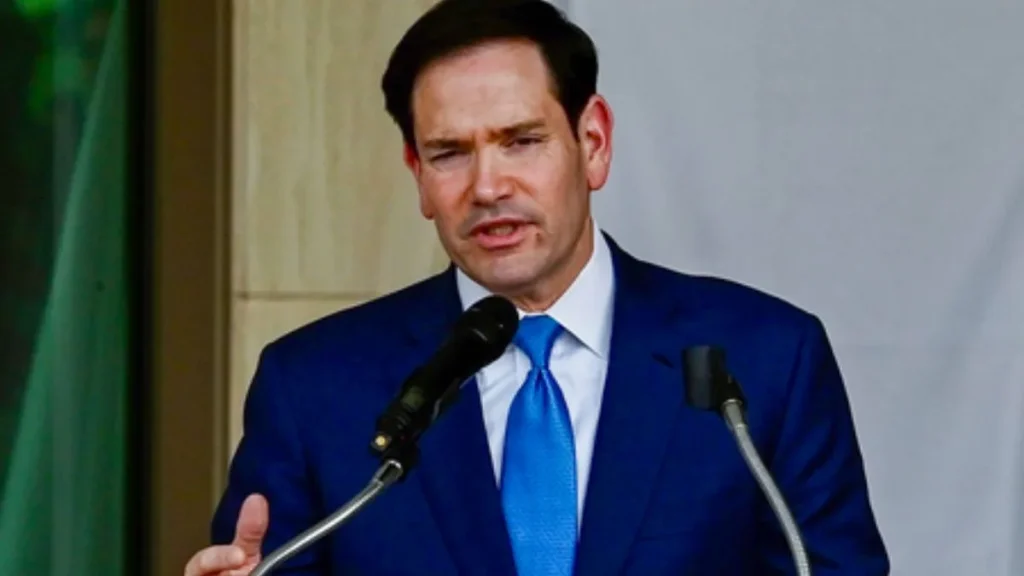
US Secretary of State Marco Rubio on Tuesday (local time) said Washington has found no evidence that China provided military assistance to Iran during the recent regional conflict, even as he urged Beijing to support international efforts to keep the Strait of Hormuz open to global shipping.
The remarks come at a time when concerns over maritime security, energy supplies and great-power competition are increasingly intersecting. While dismissing suggestions that China had intervened militarily on Iran’s behalf, Rubio also used congressional testimony to argue that Beijing’s influence continues to expand in other strategic regions, particularly Latin America.
Advertisement
Speaking before the House Appropriations Subcommittee, Rubio said the United States had closely monitored China’s engagement with Iran throughout the crisis.
“I would say that China has not provided any assistance to Iran in any way impeded our operations or ability to operate,” Rubio told lawmakers.
Rubio says battlefield dynamics remained unchanged
Acknowledging the longstanding relationship between Tehran and Beijing, Rubio noted that Iran possesses military equipment of Chinese origin. However, he said Washington had not observed any recent Chinese involvement that altered developments on the ground.
“We have seen no signs in the short term that, during this situation, anything they’ve been providing them has in any way changed the dynamic on the battlefield,” he said.
Rubio described China’s approach as largely cautious and suggested Beijing had sought to avoid direct entanglement in the conflict.
“I think they’ve been quite cautious about engaging themselves in it,” he added.
US urges China to back Strait of Hormuz efforts
Rubio also called on China to support efforts at the United Nations aimed at safeguarding navigation through the Strait of Hormuz, one of the world’s most critical energy transit routes.
According to him, Washington is backing a UN Security Council resolution addressing disruptions in the waterway and expects Beijing to take a constructive position.
“If, in fact, they are against the closure of the Straits, they should be endorsing this or, at a minimum, abstaining and not using a veto on it,” Rubio said.
He argued that China itself has strong economic reasons to support stability in the Gulf region because of its dependence on international trade and energy imports.
“As time goes on, the Chinese economy will begin to be negatively impacted by what the Iranians are doing,” Rubio said.
The Secretary further noted that prolonged disruptions to shipping routes could raise fuel costs and weaken demand in export markets that are crucial for China’s economy.
Rubio also revealed that a vessel heading to China had recently been struck during the crisis, highlighting the risks posed by continued instability in regional waters.
Washington sharpens focus on China’s influence in Latin America
During the same hearing, Rubio said the United States is stepping up efforts to counter China’s growing economic and strategic footprint across Latin America.
He argued that years of inadequate American engagement allowed Beijing to establish a significant presence in sectors such as telecommunications, ports, infrastructure, mining and critical minerals.
“The Chinese efforts in the region have done twofold,” Rubio said while outlining what he described as Beijing’s long-term strategy.
According to Rubio, Chinese companies have secured access to critical resources through long-term agreements while also financing major infrastructure projects across the region.
“They come in with infrastructure investments, key infrastructure like telecommunications, ports,” he told lawmakers.
Rubio says US must offer alternatives
Rubio acknowledged that many Latin American governments turned to Chinese financing because few other investment options were available.
“A country will come to us and say, we want to build X, or we want to expand Y, but the only people showing up are Chinese companies,” he said.
The Secretary said the administration is now focused on connecting countries in the region with American and allied alternatives to Chinese-backed projects.
“The challenge that we have is to identify and connect those US alternatives and not US, Western allied alternatives to what the Chinese are offering,” Rubio said.
He also pointed to Paraguay’s continued ties with the United States and Taiwan as an example of resistance to growing Chinese influence.
Rubio warned that Chinese investments often carry political expectations, including support in international institutions.
“They expect your vote at the United Nations and in international forums as leverage,” he said.
His comments underscore the Biden administration’s broader effort to compete with China across multiple fronts, from global trade routes and energy security to diplomatic influence and infrastructure investment.