
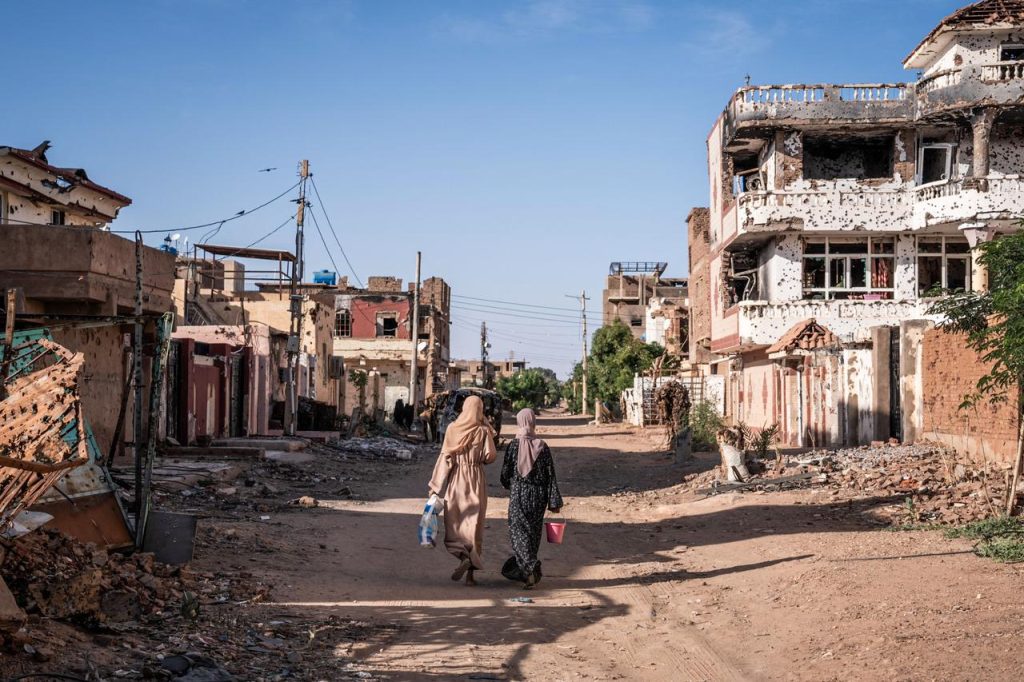
Sudan’s ambassador to Ankara said the war in Sudan would have ended within one or two months if the United Arab Emirates had not supported the Rapid Support Forces, or RSF.
Speaking at a conference in Istanbul organized by the Foundation for Political, Economic and Social Research, or SETA, Ambassador Nadir Yousif Eltayeb said the conflict that began on April 15, 2023, was a coup attempt and an attack against a sovereign state.
The conference, titled “From the Field to Policy: Rereading the Sudan Crisis,” addressed the course of the crisis as it enters its fourth year, its regional effects, international reflections and Türkiye-Sudan relations.
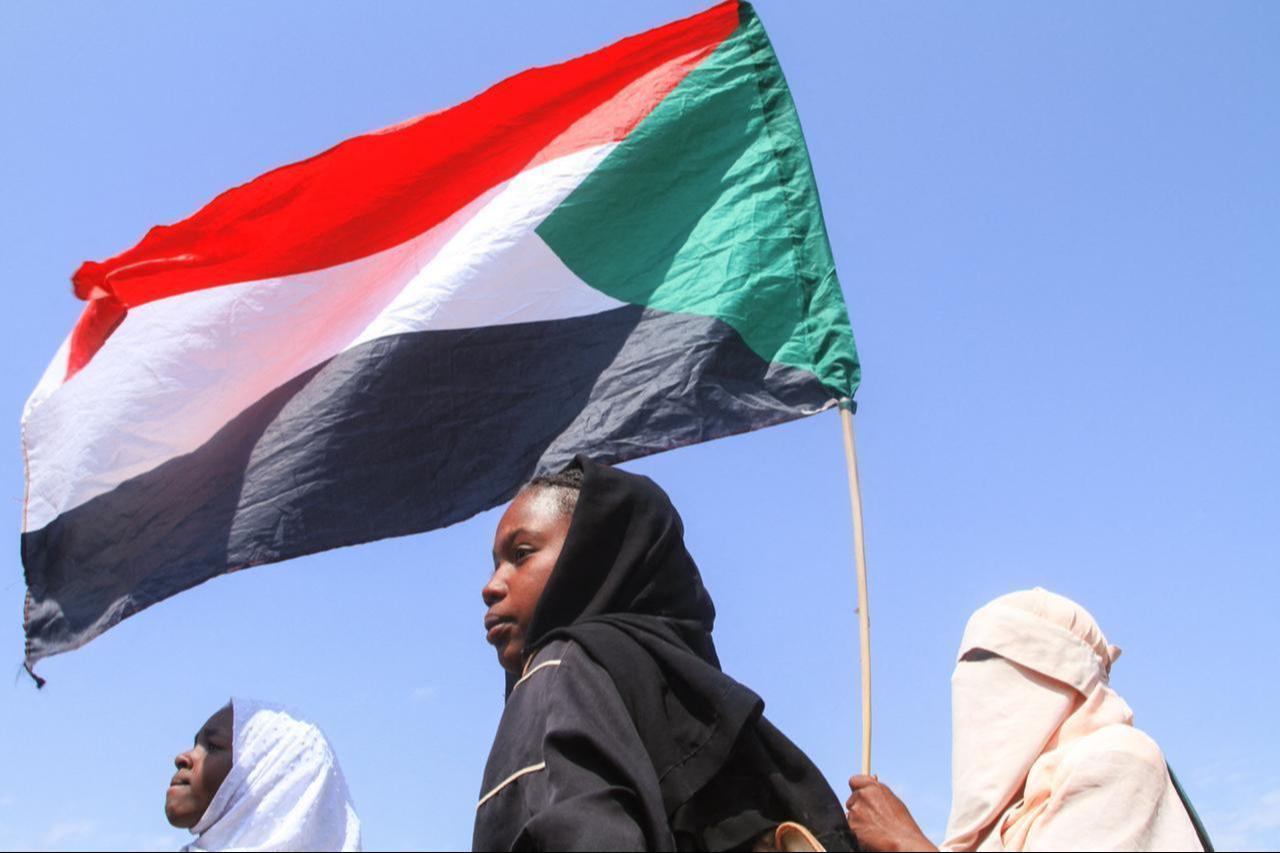

Sudanese students from schools in the East Nile region of the capital hold up the Sudan flag during a protest against violations committed by the RSF against the people of El- Fasher, in Khartoum, Sudan, November 3, 2025. (AFP Photo)
Envoy says RSF received foreign support
Eltayeb said the RSF had been strengthened by some countries through weapons, training and mercenary support.
He argued that the main reason for the war was UAE’s support for the RSF.
“If it were not for the UAE’s support, the war in the country would have ended within one or two months,” Eltayeb said.
He claimed the UAE had spent millions of dollars recruiting mercenaries from countries including Colombia, Libya, South Sudan and Syria.
Eltayeb also said the RSF previously did not have the capacity to operate unmanned aerial vehicles, adding that advanced drones used in recent attacks on Sudanese airports could not be operated without foreign support.
He said the Sudanese government has continued seeking a political solution since the beginning of the conflict and that the Jeddah Agreement, signed in May 2023 under Saudi Arabia and U.S. supervision, remains valid.
Khartoum security, Türkiye-Sudan ties discussed
Eltayeb said some senior RSF commanders had recently joined the army, adding that “the militia structure has begun to dissolve.”
He said security had largely been restored in Khartoum, international flights had resumed, and more than 1 million people had returned to the capital.
The ambassador praised Turkish civil society organizations and unions for their stance on Sudan, saying protests outside the UAE Embassy in Ankara helped raise awareness about the causes of the crisis.
He also said Turkish businesspeople were increasingly returning to Sudan, noting that the number of people traveling there for business in April was four times higher than in January.
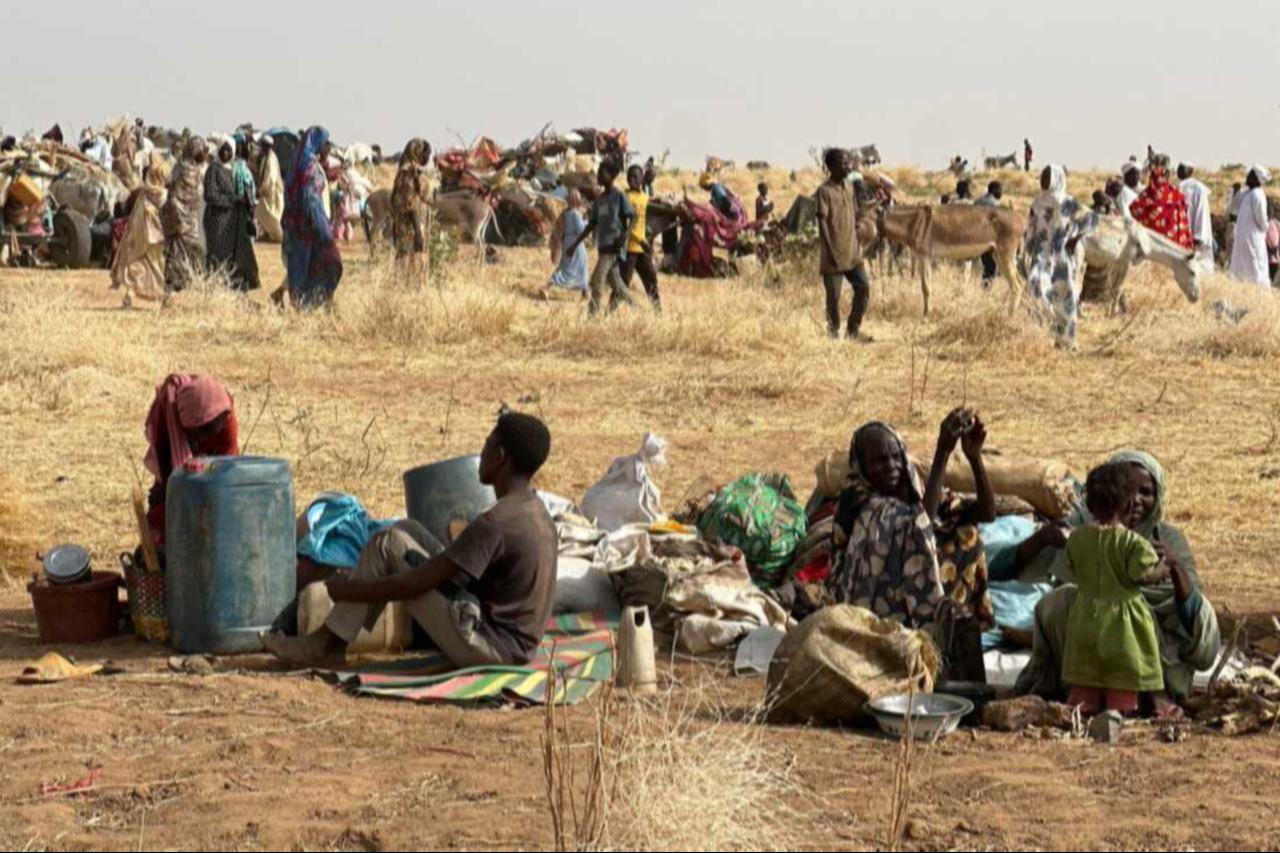
People who fled the Zamzam camp rest in a makeshift encampment in an open field near the town of Tawila in Darfur region, Sudan, April 13, 2025. (AFP Photo)
Sudan crisis seen as regional proxy war
Muhittin Ataman, a professor at Ankara Social Sciences University, said the Sudan crisis cannot be understood only through diplomatic statements, military developments or international media narratives.
He said the conflict had become a multilayered crisis affecting state institutions, society, economic resources, border security, media, diplomacy and regional security.
“The war in Sudan has now gone beyond Sudan’s borders,” Ataman said, adding that its effects extend from the Red Sea to the Sahel, the Horn of Africa, North Africa and indirectly to Mediterranean security.
Ataman said Sudan’s Red Sea ports, its position between the Horn of Africa and the Sahel, and its geographic connection between North Africa and Sub-Saharan Africa make it critical for regional balances.
He said foreign support networks, mercenaries, gold smugglers and cross-border flows of weapons and financing had helped prolong the conflict.
“The process is increasingly turning into a regional proxy war,” Ataman said, adding that Sudan has become part of a wider power competition extending from Libya to Chad, Ethiopia, the Red Sea and the Sahel.

May 14, 2026 06:35 AM GMT+03:00