
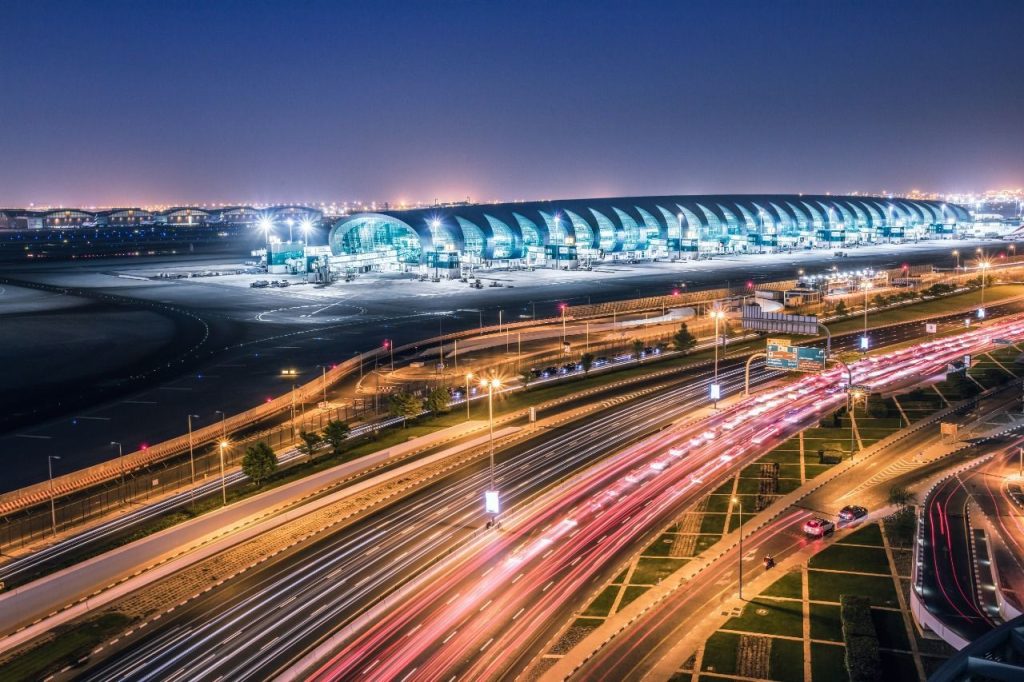
The UAE has restored full air operations after months of disruption caused by the US-Israel conflict with Iran, marking a major step towards recovery for regional travel and key hubs, including Dubai and Abu Dhabi.
The UAE’s Civil Aviation Authority says all air operations have returned to “normal status” across its airspace. “Following a comprehensive evaluation of operational and security conditions, we have officially lifted the temporary precautionary measures previously in place,” the General Civil Aviation Authority wrote on X, adding that it would continue monitoring the situation as and when it changes.
Dubai Airports onto next phase of recovery operations
Dubai International (DXB) said in an announcement, since the situation began on 28 February and intensified through March, Dubai’s airports remained operational despite constraints, supporting the safe movement of six million guests and over 32,000 aircraft movements as of 30 April.
Following the lifting of all precautionary restrictions on UAE airspace, Dubai Airports has entered the next phase of recovery operations, ramping up daily fight movements and enabling airlines to progressively restore schedules. This was supported by close collaboration across the oneDXB community, including international airlines led by home base carriers Emirates and flydubai, service partners and control authorities.
Emirates has restored 96% of its global network, marking a near-full return to operations as travel demand continues to rise.
Paul Griffiths, CEO of Dubai Airports, said: “The extraordinary events of the past few weeks are unprecedented for any major airport hub such as DXB. International transfer traffic through the Middle East region accounts for a major share of the global air travel market, with 22.4 million annual passenger journeys flowing through DXB, representing one third of the transfer traffic across the region’s hubs.”
Dubai’s role as a global hub is closely linked to the international transfer market. Of the 99.3 million transferring passengers whose journeys could route through the Middle East, the region captures around 70%, with DXB handling 32% of that traffic. As conditions stabilise, this segment is expected to recover quickly, supported by demand that cannot be readily absorbed elsewhere.
Looking ahead, Dubai Airports is well positioned to accommodate further growth in the months ahead. At the same time, long-term expansion plans at Dubai World Central – Al Maktoum International (DWC) continue to progress, supporting Dubai’s future growth as a global aviation hub.
Q1 2026 Traffic Overview
DXB welcomed 18.6 million guests in Q1 of 2026, down 20.6% year on year, reflecting the impact of regional airspace disruptions that intensified through March. Passenger traffic in March stood at 2.5 million, down 65.7% year on year.
India was DXB’s largest country market again with 2.5 million guests, followed by the Kingdom of Saudi Arabia at 1.3 million, the United Kingdom at 1.2 million, and Pakistan at 918,000. London remained DXB’s busiest city destination with 752,000 guests, followed by Mumbai at 520,000, and Jeddah at 505,000 guests.
Aircraft movements totalled 88,000, a 20.8% decline compared to the same period last year.