
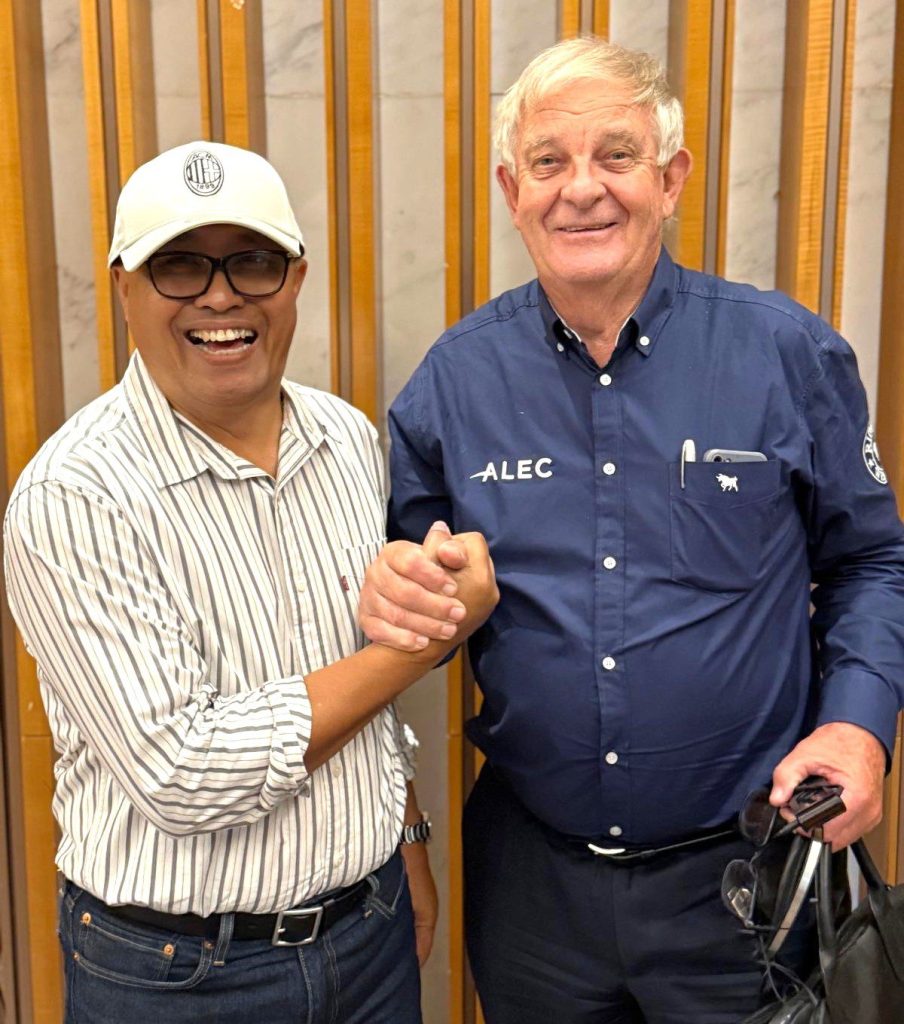
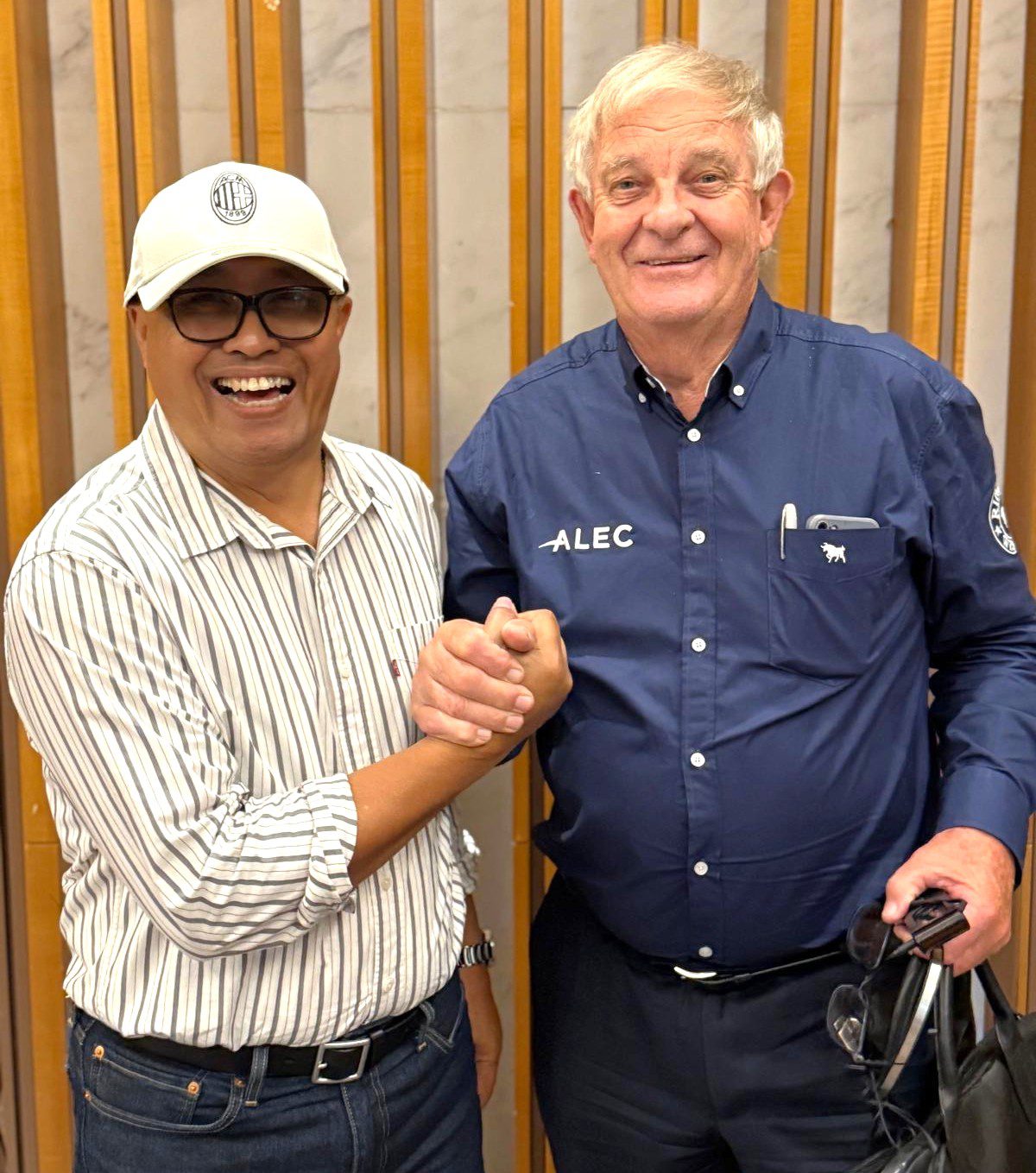
Pak Didiek Purwanto and ALEC chair Dr Chris Back.
LEADERS from the Australian and Indonesian livestock industries gathered in Jakarta this week to strengthen their long-standing partnership on food security, economic development and animal welfare.
Held annually, the Importer–Exporter meeting helps bolster commercial ties, address shared challenges and identify opportunities to support the long-term sustainability of the trade.
This year’s meeting was attended by representatives from across the supply chain including MLA Managing Director Michael Crowley, MLA Director Russel Lethbridge, Australian Livestock Exporters’ Council (ALEC) Chair Dr Chris Back, LiveCorp Chair Troy Setter, MLA General Manager International Markets Andrew Cox, Agforce Cattle Board President Lloyd Hick, Northern Territory Cattlemen’s Association Director Don White, Kimberley Pilbara Cattlemen’s Director Justin Morrisey, representatives from the Indonesian Beef Cattle Industry Association, GAPUSPINDO as well as leading Australian exporters and Indonesian importers.
The agenda included updates on the MLA-LiveCorp Live Export Program (LEP), Indonesia – Australia joint Government & Industry Quarantine taskforce, ESCAS program and the Indonesian Government’s Nutritious Meals Program.
Worth more than $450 million in 2025, Australia’s livestock export trade to Indonesia plays a vital role in supporting the country’s food security objectives by providing a consistent and reliable supply of high-quality cattle to meet growing demand for protein.
At the same time, the trade underpins jobs, investment and wealth creation across northern Australia, where regional communities depend on access to international markets.
ALEC CEO Mark Harvey Sutton said this week’s discussions were focused not only on maintaining this critical supply chain, but on building its resilience and sustainability in an increasingly complex global environment.
“A central theme of the meetings is the shared commitment to continuous improvement in animal welfare,” he said.
“Industry representatives are working together to strengthen standards, share best practice and support on-the-ground outcomes through training, infrastructure investment and supply chain assurance systems.
“Biosecurity is also high on the agenda, with both countries recognising the importance of safeguarding animal health to protect their respective industries.
“Collaborative approaches to disease prevention, preparedness and response are key pillars of our partnership.”
Industry leaders have emphasised that the success of the Australia–Indonesia livestock trade is built on mutual trust, long-term relationships and a shared understanding of the benefits it delivers to both nations.
“The Jakarta meetings represent an important opportunity to reinforce these foundations as well as collaborating on practical actions to support Indonesia’s food security needs, drive economic growth in northern Australia and deliver strong, transparent outcomes in animal welfare and biosecurity,” Mr Harvey-Sutton said.
Source: ALEC