
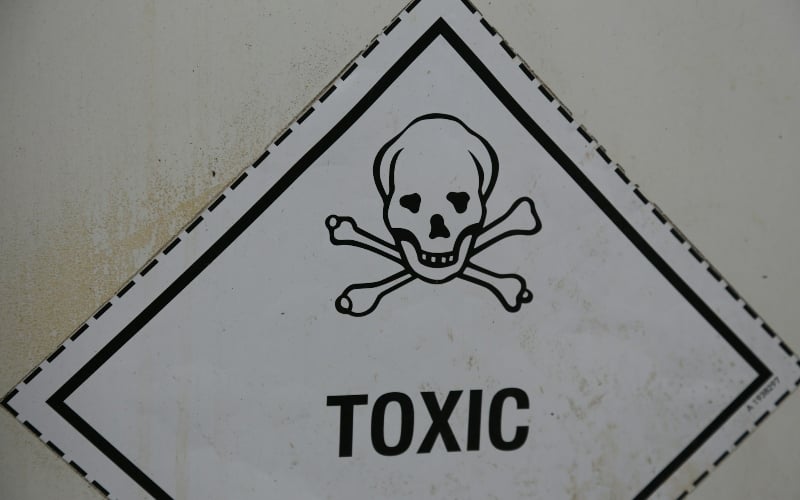


- Everyday household items very likely contain synthetic chemicals that were never tested for long-term safety. And even when one chemical is proven harmful, manufacturers often quickly replace it with a similar substitute that in time is often found to be equally dangerous, a cycle scientists call “regrettable substitution” or the “toxic treadmill.”
- In response, some scientists and health advocates are pushing for a “Six Classes” framework that evaluates entire groups of chemicals, or chemically related subgroups, together, flagging them for scrutiny before harm is documented rather than after.
- The framework targets six broad categories of chemicals that share many common traits: PFAS (per- and polyfluoroalkyl substances), flame retardants, phthalates and bisphenols, antimicrobials, certain solvents, and certain metals.
- The chemical industry argues that grouping diverse chemicals oversimplifies the science and isn’t a workable system, but proponents say the framework is not meant to result in blanket bans but to create a more effective screening tool that better protects consumers.
Look around your home. A food wrapper, a shampoo bottle, a couch cushion and many other items very likely contain synthetic chemicals that were never tested for long-term safety before reaching store shelves. In most countries, chemicals are assumed safe until proven harmful, and companies don’t have to demonstrate their products are safe before selling them.
Instead, the responsibility falls on regulators to prove the harmfulness after chemicals are already in widespread use, a process that is expensive and slow. In many cases, regulators spend years building a case against one harmful chemical, only for manufacturers to then swap it for a structurally similar substitute that starts the process over.
This pattern has a name: “regrettable substitution,” or the “toxic treadmill,” a cycle in which one harmful chemical is replaced by a structurally similar one that turns out to be equally problematic, requiring years of new research to prove.
For example, when bisphenol A (BPAs), a synthetic compound used to make plastic, was found to interact with the human endocrine system, product manufacturers began to remove it from their products and replace it with BPS, a similar set of compounds that have also been linked to endocrine and estrogen disruption.
“As a consumer we think, these people are taking care of me, they say it’s BPA-free. And then at the end of the day, it has BPS, a very similar chemical that’s going to potentially expose me to hormone-disrupting chemicals as well,” Anna Reade, director of PFAS science and policy at the international nonprofit Natural Resources Defense Council (NRDC), told Mongabay.
Another example relates to flame retardants in furniture. When California banned a flame retardant called pentaBDE from home furnishing products beginning in 2003, after it was found to contribute to “developmental deficits, including low intelligence and learning disabilities,” and had “the potential to cause cancer,” furniture makers rapidly switched to related chemicals — TCEP and TDCIPP. These also turned out to be harmful. Both are now classified as carcinogens under California’s Proposition 65.
“We have a history of having scientists catch up with a particular chemical of concern and [saying], ‘Hey, looks like this chemical is causing hormone disruption, we shouldn’t be using this,’” Reade said. “The alarm gets raised, a whole bunch of work goes into studying that chemical and understanding what’s happening. And then they’ve already switched to a very similar chemical cousin.”
These case studies aren’t limited to humans and show how widely toxins can spread after being banned and replaced. A 2017 study found PFAS forever chemicals in North Atlantic pilot whales thousands of miles from any factory. A 2026 follow-up study found that banned PFAS levels in those whales declined by more than 60%, but that replacement PFAS levels were still rising, a pattern researchers described as “regrettable substitution” in action.
Changing the rules of the game: Evaluate chemicals by class
In response to this chemical whack-a-mole scenario, some scientists and health advocates are pushing for a different strategy, one that evaluates entire classes of chemicals together (such as flame retardants or PFAS), flagging them for closer scrutiny before harm is documented rather than after. The approach faces resistance from the chemical industry, but is gaining traction.
“We’re exposing the U.S. population to many of these compounds without having a good idea of their potential toxicity,” Deborah Bennett, a professor of environmental health at the University of California, Davis, said in a 2024 article in Environmental Health Perspectives. “That’s problematic, and I definitely support the idea of regulating these compounds by class.”
One example of this innovative methodology is the “Six Classes” approach, developed by the Green Science Policy Institute (GSPI) based in Berkeley, California. GSPI says this approach is a research, education and voluntary purchasing framework, not a regulatory ban mechanism.
It targets six broad categories of chemicals that share many common traits: PFAS (per- and polyfluoroalkyl substances), flame retardants, phthalates and bisphenols, antimicrobials, certain solvents, and certain metals.
These chemicals were chosen because they don’t break down naturally, accumulate in the human body and in wildlife, and are linked to health problems.
“Studying the tens of thousands of chemicals on the market today one at a time is just not feasible, but evaluating six groups of chemicals of concern is much more manageable,” Arlene Blum, a chemist and GSPI executive director, told Mongabay.
In 2020, scientists created the first-ever global inventory of chemicals registered for commercial production, and the list demonstrates the daunting challenges researchers and regulators face. The total: 350,000 chemicals and mixtures, and counting. This flood of synthetic chemicals into consumer products began after World War II, when manufacturers adapted many rapidly developed wartime innovations for civilian use.
Over time, scientists found that some of these chemicals disrupt hormones, interfere with child development, cause cancer and/or damage reproduction. But proving those links, in many cases, took decades, as many chemicals are invisible and odorless, and health effects develop slowly, sometimes over generations. Ultimately, research and regulation can’t keep pace with invention.
The logic for grouping thousands of chemicals into classes, advocates say, is straightforward: Manufacturers switch within the same chemical class because similar structures often serve the same industrial functions, and often cause the same harm.
PFAS compounds, for example, show striking overlap in their toxicological profiles: Immune suppression, cancer risk, liver and kidney damage, and reproductive effects appear across multiple compounds.
Importantly, the Six Classes approach does not treat every chemical within a class identically, Rebecca Fuoco, GSPI’s director of science communications, noted. GPSI asks three questions before recommending action: Is the chemical necessary? Is the function worth the risk? Are there safer alternatives?
For example, some chemicals within these six classes serve critical functions, such as personal protective equipment, so should be limited in their use rather than banned. Others, like antimicrobials added to household hand soap (shown to be no more effective than plain soap), have no justification for widespread use based on this type of analysis.
The stated aim of the approach is to help businesses, scientists and policymakers understand the properties of these chemical groups, where they are used, and how they can be avoided.
“Let’s tackle the areas where [toxic chemicals] are not needed. Can we try to find a safer alternative? We have the ability to invent,” Reade said. “That’s how PFAS came out in the first place. Let’s invent something better.”
The debate: Does grouping chemicals oversimplify the science?
Not everyone agrees that broad class-based evaluation is the right approach to assuring consumer safety. The American Chemistry Council (ACC), a trade association representing chemical manufacturers, argues that grouping chemically diverse substances together oversimplifies the science and could undermine both safety and innovation.
“Independent scientific bodies consistently find that chemicals grouped into a broad class do not share uniform hazard, exposure, or risk characteristics,” the ACC said in a statement to Mongabay. “Differentiating among substances or sub-categories within a class is essential for accurate scientific and regulatory evaluation.”
The ACC cited several authoritative bodies in support of their view. It noted that the U.S. National Academies of Sciences, Engineering, and Medicine (NASEM) concluded that flame retardants “cannot be evaluated as a single class.” It also cited the Vermont Department of Environmental Conservation, which, after more than a year of reviewing the peer-reviewed literature, determined it was “not feasible to regulate PFAS as a Class” at this time. (ACC’s full response to Mongabay can be found here.)
“While there may be opportunities to review subgroups within a class based on similar characteristics, a pure ‘one-size-fits-all’ approach to chemical evaluation and regulation is inconsistent with the findings of leading authorities,” the ACC said.
GSPI’s Fuoco countered ACC’s critique, saying its framing mischaracterizes the Six Classes approach. The methodology would not result in a blanket ban on all chemicals within a group, she said, but rather a framework for prioritizing scrutiny, directing research and encouraging avoidance where warranted — with regulatory action tailored by subclass, product category and use.
“The Six Classes framework is a screening and prevention tool that flags groups of chemicals with shared structures, mechanisms, and hazard patterns for early scrutiny,” Fuoco said. It also asks the question, before substituting one chemical for another: “Is a chemical needed at all for this use, or are safer design changes available?”
In the case of flame retardants, for example, the NASEM committee did not reject a class approach to flame retardants; it recommended one, while advising that subclasses be formed when chemicals within the broader class are too diverse to assess together.
“Forming and evaluating broad subclasses is still a class approach,” said the authors of a 2019 NASEM report. “A class approach will likely result in increases in efficiency and decreases in cost compared with the traditional approach of evaluating individual chemicals. Although the challenges to a class approach might appear daunting, the alternative — individual assessments of hundreds of chemicals — is unrealistic.”
The class-based approach in action
PFAS forever chemicals have become something of a test case for the class-based approach, drawing the most regulatory and scientific attention of any of the six classes. California passed legislation in 2022 to phase out PFAS from textiles and personal care products. That same year, the European Commission announced plans to ban all flame retardants, all PFAS and all bisphenols.
Some companies moved ahead of regulation entirely. IKEA and Keen Shoes, for example, voluntarily phased out PFAS from textiles before state laws required it. “They didn’t want to go from one thing to the next and end up not really having made any difference,” Reade said.
As more consumers demand safer products, she added, the class evaluation approach simply makes business sense. “Their bottom line is about providing a product people want.”
Some early evidence shows the effectiveness of using a class approach for protecting human health. California’s 2013 update to furniture fire safety rules eliminated the requirement for flame retardant chemicals altogether. The federal government adopted the same standard in 2020. (The new standards push manufacturers to choose fabrics that are harder to ignite and to add simple barrier layers between the fabric and foam, rather than loading the foam itself with high levels of flame retardants.)
A 2026 study measured the direct results of flame retardant regulation. Participants who replaced old furniture saw flame retardant levels in their bodies drop by half in about 1.4 years, compared to 2.6 to 5.2 years for people who kept old couches.
“This is the first study proving that updating safety standards directly improves human health,” GSPI’s Blum said. “We can make safer products without giving up fire protection.”
Whether the class-based approach will be adopted more broadly by regulators worldwide remains an open question, particularly in the U.S., where the current federal administration has signaled a strong preference for scaling back chemical regulations.
“These games and this lack of transparency make it incredibly difficult to make smart [buying] choices, even if you’re educated on the subject,” Reade said, adding that the goal of the Six Classes approach is to protect consumers and prevent them from having to navigate hundreds of thousands of chemicals alone.
“The point is for people to not have to figure out how to buy safer products,” Reade said. “They’re just safer.”
Liz Kimbrough is a staff writer for Mongabay and holds a Ph.D. in ecology and evolutionary biology from Tulane University, where she studied the microbiomes of trees. View more of her reporting here.
Citations:
Hafezi, S. A., & Abdel-Rahman, W. M. (2019). The endocrine disruptor bisphenol A (BPA) exerts a wide range of effects in carcinogenesis and response to therapy. Current molecular pharmacology,12(3), 230-238. doi:10.2174/1874467212666190306164507
Ma, M., Guo, D., Wang, R., Wang, P., & Su, X. (2023). Hormone effects of eighteen bisphenol analogues and their effects on cellular homeostasis and the typical signal pathways.Environmental Pollution, 338, 122688. doi:10.1016/j.envpol.2023.122688
Dassuncao, C., Hu, X. C., Zhang, X., Bossi, R., Dam, M., Mikkelsen, B., & Sunderland, E. M. (2017). Temporal shifts in poly- and perfluoroalkyl substances (PFASs) in North Atlantic pilot whales. Environmental Science & Technology, 51(8), 4512–4521. doi:10.1021/acs.est.7b00293
Sun, J. M., Kim, E., Pickard, H. M., & Sunderland, E. M. (2026). Large declines in organofluorine contamination indicated by subarctic marine mammal tissues. PNAS, 123(5), e2524513123. doi:10.1073/pnas.2524513123
Wang, Z., Walker, G. W., Muir, D. C. G., & Nagatani-Yoshida, K. (2020). Toward a global understanding of chemical pollution. Environmental Science & Technology, 54(5), 2575–2584. doi:10.1021/acs.est.9b06379
Gore, A. C., Chappell, V. A., Fenton, S. E., Flaws, J. A., Nadal, A., … Zoeller, R. T. (2015). EDC-2: The Endocrine Society’s Second Scientific Statement on Endocrine-Disrupting Chemicals. Endocrine Reviews, 36(6), E1–E150. doi:10.1210/er.2015-1010
Braun, J. M. (2017). Early-life exposure to EDCs and childhood obesity and neurodevelopment. Nature Reviews Endocrinology, 13(3), 161–173. doi:10.1038/nrendo.2016.186
Rodprasert, W., Toppari, J., & Virtanen, H. E. (2021). Endocrine disrupting chemicals and reproductive health in boys and men. Frontiers in Endocrinology, 12, 706532. doi:10.3389/fendo.2021.706532
Schreder, E., Zheng, G., Sathyanarayana, S., Gunaje, N., Hu, M., & Salamova, A. (2023). Brominated flame retardants in breast milk from the United States: First detection of bromophenols in US breast milk. Environmental Pollution, 334, 122028. doi:10.1016/j.envpol.2023.122028
Wise, J. (2015). Ordinary soap is as effective as antibacterial soap for handwashing, study finds. BMJ, 351. doi:10.1136/bmj.h4944
National Academies of Sciences, Engineering, and Medicine. (2019). A Class Approach to Hazard Assessment of Organohalogen Flame Retardants. National Academies Press. doi:10.17226/25412
Attfield, K. R., Berger, K., Dodson, R. E., Bennett, D. H., Rodgers, K. M., … Wu, N. (2025). Flame retardant biomarker changes with furniture replacement after flammability standard update. Environmental Pollution, 330, 127326. doi:10.1016/j.envpol.2025.127326
FEEDBACK: Use this form to send a message directly to the author of this post. If you want to post a public comment, you can do that at the bottom of the page.
—
Previously Published on news.mongabay with Creative Commons Attribution
***


Join The Good Men Project as a Premium Member today.
All Premium Members get to view The Good Men Project with NO ADS. A complete list of benefits is here.
On Substack? Connect with us there.
—
Photo credit: unsplash