
Close Menu
Simply Invest Asia
  • Home
  • About us
  • Explore industries/sectors
    • Automobile
    • Aviation
    • Banking
    • Biotechnology
    • Chemical & Fertilizer
    • Entertainment and Media
    • Food Processing
    • Healthcare
    • Iron and Steel
    • Leather
    • Mining
    • Oil and Gas
    • Pharmaceutical
  • Explore by countries
    • China
    • Dubai / UAE
    • Hong Kong
    • India
    • Indonesia
    • Japan
    • Malaysia
  • Explore cities
    • Bangkok
    • Beijing
    • Chongqing
    • Delhi
    • Dubai
    • Guangzhou
    • Jakarta
    • Kuala Lumpur
  • Why Asia
Facebook X (Twitter) Instagram Threads
Trending:
  • Japanese champion sumo wrestler receives Freedom of the City of London
  • Double Leather Is The New Double Denim In Menswear
  • A Mysterious Fire and the Plot To Silence China’s Critics
  • BYD, CATL Unveil 6-Minute Charging, Steering-Wheel-Free Vehicles – 조선일보
  • Anna Caplice: From Hong Kong to Clermont – Nancy McGillivray ready to play central role as Ireland dare to dream
  • A mysterious underwater find in India could rewrite ancient human history
  • ‘Pillar of national strength’: Pakistan envoy in Dubai hails diaspora as key to remittance flows
  • Indonesia refuses to join joint mission to secure navigation in Strait of Hormuz
  • Oakmount and Partners MD on Intergroup Mining IPO plans, bonds & growth strategy
  • Delhi HC sets aside suspension of Professor Rasal Singh of Ramanujan College
  • ITV Brings ITVX to In-Car Entertainment through partnership with Xperi
  • Wonder Dean ‘Moving As Well’ as He Did in Dubai – Video –
  • SKKU photoactivatable oligoelectrolytes engendering pyroptotic vesicles
  • War shakes Dubai’s image as a Middle East safe haven
  • Hong Kong considers tougher penalties for fire-safety violations
  • How The Global Indian Diaspora Partners India In Progress
  • Former Italian PM highly praises China’s inclusive education system
  • Green Fresh Biotechnology Sets June 2026 AGM to Approve Dividend, Board Mandates and Share Buyback
Friday, April 24
Facebook X (Twitter) Instagram
Simply Invest Asia
  • Home
  • About us
  • Explore industries/sectors
    • Automobile
    • Aviation
    • Banking
    • Biotechnology
    • Chemical & Fertilizer
    • Entertainment and Media
    • Food Processing
    • Healthcare
    • Iron and Steel
    • Leather
    • Mining
    • Oil and Gas
    • Pharmaceutical
  • Explore by countries
    • China
    • Dubai / UAE
    • Hong Kong
    • India
    • Indonesia
    • Japan
    • Malaysia
  • Explore cities
    • Bangkok
    • Beijing
    • Chongqing
    • Delhi
    • Dubai
    • Guangzhou
    • Jakarta
    • Kuala Lumpur
  • Why Asia
Simply Invest Asia
Home»Explore by countries»Japan»In 2026, Japan will launch the first commercial engine that generates electricity by burning a mixture containing up to 30% hydrogen, with a warranty and upgrade option, after 11 months of testing in Kobe and with the promise of decarbonization without changing the pipes
Japan

In 2026, Japan will launch the first commercial engine that generates electricity by burning a mixture containing up to 30% hydrogen, with a warranty and upgrade option, after 11 months of testing in Kobe and with the promise of decarbonization without changing the pipes

By IslaApril 24, 20266 Mins Read
Share
Facebook Twitter Pinterest Threads Bluesky Copy Link


For many households and factories, the energy transition often feels distant until the electric bill jumps or the lights flicker on a hot summer evening. Now Japan is putting a very tangible tool into that transition, unveiling the world’s first commercial large gas engine that can generate electricity using a fuel mix with 30% hydrogen by volume blended into natural gas.

In late 2025, Kawasaki Heavy Industries quietly opened the order book for this hydrogen ready model. The unit sits in the eight megawatt class for distributed power plants and is built on the company’s KG series platform.

Sales began only after an eleven month operational trial at the Kobe works that started in October 2024 and checked how the system behaved under real-world conditions, not just in a lab.

On paper, the idea sounds straightforward. Add hydrogen to the fuel, keep the same pipes and tanks, and trim carbon dioxide emissions from each kilowatt hour. In practice, the design reflects a transition mindset that tries to give plant operators a cleaner option without forcing them to scrap equipment that still works.

How a 30% blend fits existing gas grids

The new engine can burn fuel that contains up to 30% hydrogen by volume, with the balance supplied by natural gas. Engineers chose that level because it can usually move through existing distribution networks with only limited adjustments instead of a complete rebuild of pipelines and storage tanks.

Earlier KG series engines have already logged more than 240 orders worldwide since 2011. Kawasaki’s tests and public materials confirm that many of those units can be upgraded to the same hydrogen co-firing specification.

In practical terms, a plant that was designed a decade ago for pure natural gas can extend its life while cutting emissions instead of waiting for a brand new fleet to arrive.

Safety is the side of this story that rarely shows up in marketing but matters a lot in the control room. Hydrogen molecules are extremely small, can seep through seals that easily contain methane, and ignite across a wider range of fuel and air mixtures.
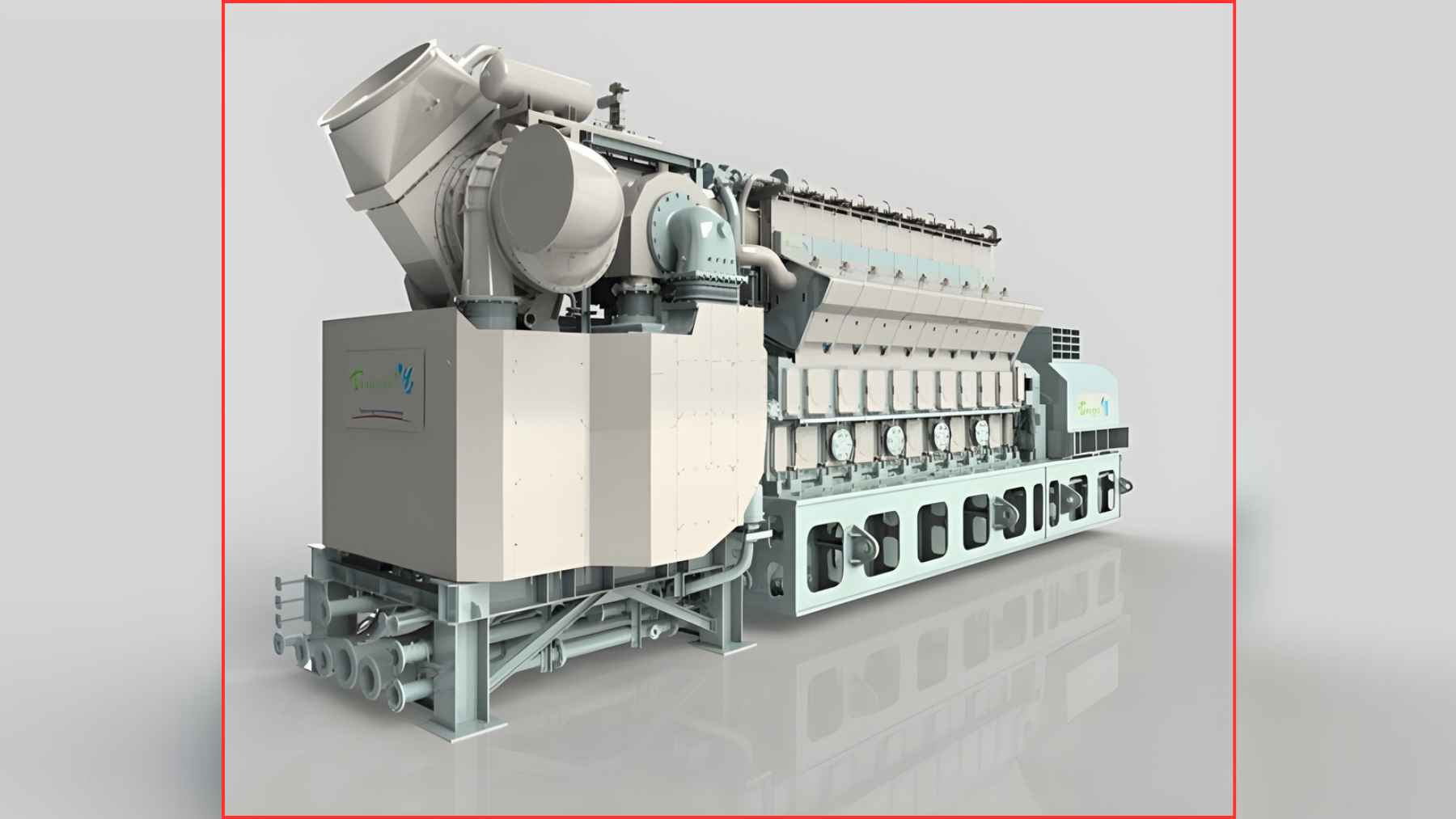
Hydrogen-ready gas engine for commercial power generation, illustrating Japan’s new system designed to run on fuel blends with up to 30% hydrogen.
A hydrogen-ready gas engine is shown in a product image, reflecting Japan’s new commercial system built to generate electricity with fuel blends containing up to 30% hydrogen.

During the verification campaign, engineers spent significant time testing hydrogen leak detection, purging routines, and the way the entire fuel system responds if something fails.

The commercial engine now includes hydrogen sensors distributed along the fuel path and nitrogen purging that can flush lines during startup, shutdown, or a fault, adding another layer of protection for operators and nearby communities.

From power plants to ports

In Japan this work on stationary power coincides with a similar push at sea. Around the same time the KG engine went on sale, a consortium of Japanese manufacturers, including Kawasaki, Yanmar Power Solutions and Japan Engine Corporation, announced they had completed what they describe as the first land-based operation of marine hydrogen engines. The trial used a newly developed liquefied hydrogen fuel supply system at Japan Engine’s factory site.

Those tests confirmed that medium-speed, four-stroke engines could run on hydrogen at rated output. A separate low-speed, two-stroke model, aimed at driving the main propeller on large cargo ships, is scheduled to enter trials in the spring of 2026.

All three engine types share a dual fuel architecture, so crews can run on hydrogen where bunkering is available and switch to marine diesel on routes that still lack hydrogen refueling.

Green Innovation Fund and who pays for the risk

Both the power plant engine and the ship engines sit inside a much bigger climate policy experiment. Their development is backed by New Energy and Industrial Technology Development Organization (NEDO) through the Green Innovation Fund, which the Ministry of Economy, Trade and Industry (METI) capitalized with about two trillion yen to help Japan reach carbon neutrality by 2050.

That kind of public backing lets companies tackle problems that are hard to finance through normal market channels, such as long-term durability of hydrogen valves or training crews to handle extremely cold fuel safely at sea. It also buys time for technologies that cut emissions but may not yet compete on cost with conventional fuels.

The missing fuel network

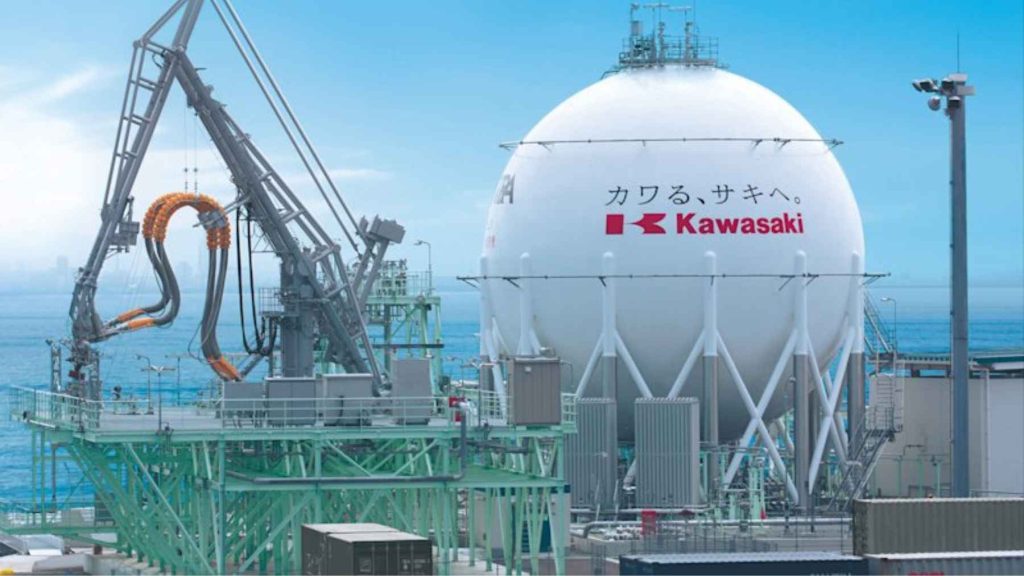
There is a catch. Engines can be ready long before the fuel is. Japan still imports nearly all of its primary energy, and large-scale hydrogen logistics are only now coming into focus. To a large extent, the centerpiece of that effort is the Kawasaki LH2 Terminal rising on Ogishima in Kawasaki City.

The facility is described as the country’s first commercial-scale liquid hydrogen import base, centered on a cryogenic tank that can hold about fifty thousand cubic meters of liquefied hydrogen, together with systems for ship handling, liquefaction, gas supply, and truck dispatch. Commercial operations are planned around 2030.

In parallel, Kawasaki is working with Japan Suiso Energy on a new liquefied hydrogen carrier with a capacity of roughly forty thousand cubic meters. That vessel represents a major step up from the earlier Suiso Frontier demonstrator that carried the first test shipment of liquefied hydrogen from Australia to Japan a few years ago.

Together, the ship and terminal are intended to anchor an international hydrogen supply chain that can eventually feed both coastal bunkering facilities and inland power plants.

What this means for emissions today

For people breathing the air near busy ports or watching their monthly utility bill, the obvious question is whether these projects lower emissions in the short run. The answer, for the most part, is that they can.

A gas plant that switches from pure natural gas to a 30% hydrogen blend lowers its direct carbon dioxide output per unit of electricity, especially if the hydrogen comes from low-carbon production. Hydrogen capable ship engines offer similar potential along heavily trafficked sea routes once fuel is available.

At the same time, experts warn that none of this removes the need to build a genuinely clean hydrogen industry. Until import terminals, carriers, and electrolyzers are running at scale, many early buyers of the KG engine will either pay a premium for limited local hydrogen, operate mainly on natural gas, or hold back and wait.

The benefit, to a large extent, is that existing plants and vessels can adapt instead of becoming stranded assets when cleaner fuels begin to flow.

In short, Japan is betting that making today’s equipment flexible is one of the quickest ways to open the door to tomorrow’s fuel. 

The press release was published by Kawasaki Heavy Industries.


Source link

Related Posts

Japanese champion sumo wrestler receives Freedom of the City of London

April 24, 2026

Japan blocks MBK’s $1.7 bn bid for Makino over security concerns

April 24, 2026

Rocket Lab Completes 2nd Dedicated Launch for Japan Aerospac

April 24, 2026
Add A Comment
Leave A Reply Cancel Reply

Top Posts

Abandoned malls, whispers of nuclear war and young foreigners detained. This is what’s REALLY going on in Dubai… and the chilling warning one taxi driver gave to the Mail’s IAN BIRRELL

April 11, 2026

US trade chief says tech restrictions to block Chinese autos

April 10, 2026

Leather MIG Welding Gloves – Heat Fire Resistant for Welding/Grilling/BBQ(Black/Brown/Blue)

April 9, 2026
Don't Miss

Japanese champion sumo wrestler receives Freedom of the City of London

By IslaApril 24, 2026

·       City pays tribute to revered Japanese professional sumo wrestler and six-time appointed Chairman of…

Double Leather Is The New Double Denim In Menswear

April 24, 2026

A Mysterious Fire and the Plot To Silence China’s Critics

April 24, 2026

BYD, CATL Unveil 6-Minute Charging, Steering-Wheel-Free Vehicles – 조선일보

April 24, 2026
SUBSCRIBE TO OUR NEWSLETTER

Get our latest downloads and information first. Complete the form below to subscribe to our weekly newsletter.


I consent to being contacted via telephone and/or email and I consent to my data being stored in accordance with European GDPR regulations and agree to the terms of use and privacy policy.

Stay In Touch
  • Facebook
  • YouTube
  • TikTok
  • WhatsApp
  • Twitter
  • Instagram
Top Trending

SKKU photoactivatable oligoelectrolytes engendering pyroptotic vesicles

By IslaApril 24, 2026

War shakes Dubai’s image as a Middle East safe haven

By IslaApril 24, 2026

Hong Kong considers tougher penalties for fire-safety violations

By IslaApril 24, 2026
Most Popular

‘An artist should stay connected, not exposed’: Dubai-based Pakistani actress Halima Sadia Khan

April 13, 2026

Guangzhou Image Triennial 2025 Review: The Case for Sensitivity

April 20, 2026

Tether Buys 8.2% Stake in Bitcoin Mining Lender Antalpha

April 20, 2026
Our Picks

BMKG Forecasts Rainy Friday for Most of Jakarta

April 10, 2026

‘An artist should stay connected, not exposed’: Dubai-based Pakistani actress Halima Sadia Khan

April 13, 2026

Indian refiners purchase Iranian oil, pay in yuan

April 18, 2026
SUBSCRIBE TO OUR NEWSLETTER

Get our latest downloads and information first. Complete the form below to subscribe to our weekly newsletter.


I consent to being contacted via telephone and/or email and I consent to my data being stored in accordance with European GDPR regulations and agree to the terms of use and privacy policy.

© 2026 Simply Invest Asia.
  • Get In Touch
  • Cookie Policy
  • Privacy policy
  • Terms & Conditions

Type above and press Enter to search. Press Esc to cancel.

SUBSCRIBE TO OUR NEWSLETTER

Get our latest downloads and information first.

Complete the form below to subscribe to our weekly newsletter.


I consent to being contacted via telephone and/or email and I consent to my data being stored in accordance with European GDPR regulations and agree to the terms of use and privacy policy.