
Artificial intelligence (AI) has moved from the margins of classroom debate to the center of education policy. For Hong Kong, the question is no longer whether schools should engage with AI, but how they should do so in a way that strengthens learning, protects standards, and builds confidence among teachers, parents and students. The Education Bureau (EB) funding program for AI in learning and teaching shows that the city has already recognized this shift, with a stated direction toward “AI for all subjects”.
 That marks a transition from isolated digital pilot programs to a broader vision, in which AI becomes a cross-disciplinary resource and part of everyday teaching and learning, with students using generative tools to summarize texts, draft responses, translate content and revise assignments, while teachers are exploring AI for content creation, assessment support and differentiated instruction.
The real challenge, then, is not how to keep AI out of schools, but how to ensure that schools use it responsibly and for educational purposes. That requires moving beyond a narrow focus on restriction and detection toward a broader framework of guidance, literacy and accountability. Students need to understand when AI can support learning and when it can weaken their own thinking. Teachers need clarity on how AI can be integrated into pedagogy without undermining academic integrity. Schools need shared standards that balance innovation with responsibility.
International research supports this approach. The Organization for Economic Cooperation and Development’s Digital Education Outlook 2026 emphasizes that generative AI can support learning when guided by clear pedagogical principles, but can also pose risks when introduced without structure. The report highlights AI’s potential as a tutor, partner and assistant, while stressing that human judgment, feedback and oversight must remain central.
Hong Kong’s current AI policy direction contains several strengths. The EB has allowed schools flexibility in how they deploy AI funding, recognizing differences in digital readiness, resources and school culture. That is sensible in a city where schools vary widely in capacity and approach. A rigid top-down model would be difficult to apply. Yet flexibility alone is not enough. Without a shared framework, implementation can easily become uneven. Some schools may move quickly, while others may hesitate. The result could be a patchwork system in which students have very different experiences of AI in education. That is why the next phase must focus on clarity and capability. Schools need practical guidance on what counts as meaningful AI use, how to design assignments that incorporate AI responsibly, and how to assess student work in an AI-enabled environment. Teacher training must also go beyond introductory workshops and become sustained professional development that builds both technical understanding and pedagogical confidence.
Hong Kong has already taken an important step by acknowledging that AI is integral to the future of education. The policy foundation is visible, and the direction is broadly aligned with international thinking. What remains is the harder task of implementation: translating vision into classroom practice. The next logical step is to establish clear standards, coherent support systems and shared expectations so that schools can adopt AI with confidence.
In this regard, Hong Kong can take a leaf from the book of Singapore and other education systems grappling with the same challenge. Singapore stands out because of its discipline. Over many years, it has built an education system in which curriculum planning, teacher development, digital infrastructure and policy execution are tightly aligned. In educational technology, that alignment matters as much as the technology itself. Schools are not left to improvise on their own. They operate within a framework that links national priorities to classroom practice, giving teachers clearer guidance and students a more consistent experience.
That approach offers an important lesson. AI adoption in education cannot succeed if it is treated as a series of disconnected short-term experiments. It requires an ecosystem in which policy, training and implementation reinforce one another. Singapore’s model shows the value of coordination: When the system is coherent, schools can move with greater confidence, and innovation becomes easier to scale.
But Hong Kong should not confuse learning with imitation. The city’s own education system has a different structure and a different tradition. Hong Kong schools enjoy more autonomy, and that flexibility has long been one of the system’s strengths. It allows schools to respond to local needs, experiment with new approaches, and adapt more quickly to changing circumstances. In the context of AI, this can be an advantage, especially because the technology is evolving so rapidly that rigid rules may quickly become outdated.
Hong Kong does not need to start from scratch. It already has effective schools, experienced educators and a policy environment that recognizes the importance of innovation. What it needs now is a shift in focus — from launching initiatives to connecting them. That is the real test ahead. AI in education should not remain a series of separate efforts or a passing policy trend. If Hong Kong can align policy, practice and public understanding, it can turn AI into a long-term educational advantage. If it cannot, the city risks leaving its schools with more activity, but less direction
The challenge, however, is that flexibility without a common framework can produce inconsistency. One school may develop a clear AI policy and a strong set of classroom practices, while another may remain uncertain about what is acceptable. A third may adopt AI tools enthusiastically, but without sufficient attention to pedagogy, ethics or assessment. The result is not innovation, but fragmentation. Students then encounter uneven standards, and teachers are left to interpret expectations on their own.
This is why Hong Kong must look not only to Singapore but to global experience more broadly. Across education systems, the strongest responses to AI are those that combine clear direction with room for local adaptation. Some jurisdictions have focused on national guidance and teacher training. Others have emphasized digital literacy, ethical literacy, or student agency (that is, students taking more control of their learning). Still others have built systems that allow schools to test and refine new practices while remaining anchored to shared principles. The lesson is not that one model is universally superior. It is that successful AI integration depends on balance.
That balance matters for Hong Kong because AI is already changing the daily reality of schooling. Students are using generative tools to summarize texts, draft content and translate materials. Teachers are exploring AI to support lesson preparation, feedback and differentiated instruction. These shifts are happening now, and unevenly. The longer the system waits to establish a clearer framework, the greater the risk that AI adoption will remain patchy rather than purposeful.
Singapore therefore offers Hong Kong a useful point of comparison, but it should not be treated as the destination. It is a reference point — one that demonstrates how coordination can strengthen implementation. Beyond Singapore, the wider world offers further examples of how education systems are trying to balance innovation with responsibility. Together, these examples point to a common conclusion: AI in education works best when it is guided by a shared educational purpose.
For Hong Kong, that means the next step is not to replicate another city’s system. It is to build a stronger common framework of its own — one that gives schools enough clarity to act while preserving enough flexibility to adapt. Such a framework should cover principles for responsible use, teacher support, assessment expectations and school governance. It should help schools understand not only which AI tools may be used, but also how those tools should support learning.
If Hong Kong is to move from recognition to implementation, the next challenge is not simply to do more, but to connect what is already being done. At present, AI-related efforts in education take several forms: funding programs, pilot projects, teacher training initiatives, and school-based experimentation. These are all useful. But without stronger coordination, they risk remaining separate pieces rather than part of a single direction. That is why the city’s next step should be to turn AI policy into real alignment. The issue is not the absence of activity. It is the lack of a fully connected policy architecture that links curriculum, teacher development, assessment, school governance, and public communication into a single coherent framework.
Curriculum integration should come first. AI should not be treated as an external tool that appears only in special projects or technology lessons. It should be embedded into learning objectives in ways that reflect each subject’s needs. In science, it may support data analysis. In languages, it may aid drafting and translation. In the arts, it may open up new forms of creation and interpretation. The point is not to make every subject technical, but to ensure that AI is used purposefully in support of learning.
Teacher development is equally important. No education reform succeeds without teachers who understand both the promise and the limits of the change. Short workshops are not enough. What Hong Kong needs is sustained professional development that combines technical skills with pedagogical judgment. Teachers should know how to design AI-supported lessons, evaluate AI-generated outputs, and guide students in responsible use.
Assessment is another area that requires attention. AI challenges traditional models of homework. If assessment is to remain meaningful, it must evolve. That may mean greater use of in-class tasks, oral presentations, project-based learning or reflective assignments that ask students to explain how they used AI. Clear expectations are necessary if academic integrity is to be preserved.
Parent and public communication cannot be ignored. AI in education raises understandable questions about overreliance, privacy and standards. If families are to support the change, they must understand its purpose. Schools and policymakers need to explain how AI is being used, what safeguards are in place and how it supports learning rather than replacing it. Public trust is not a side issue; it is part of the policy itself.
Governance should also be strengthened. Schools need flexibility, but they also need a common framework that defines expectations and provides shared reference points. That framework should include ethical principles, recommended standards for tools and clear channels for sharing best practices. It should allow the system to learn from experience while maintaining consistency in direction.
Taken together, these elements form the basis of a policy architecture that connects different parts of the education system instead of leaving them to operate in isolation. This is what sustainable AI adoption looks like.
Hong Kong does not need to start from scratch. It already has effective schools, experienced educators and a policy environment that recognizes the importance of innovation. What it needs now is a shift in focus — from launching initiatives to connecting them. That is the real test ahead. AI in education should not remain a series of separate efforts or a passing policy trend. If Hong Kong can align policy, practice and public understanding, it can turn AI into a long-term educational advantage. If it cannot, the city risks leaving its schools with more activity, but less direction.
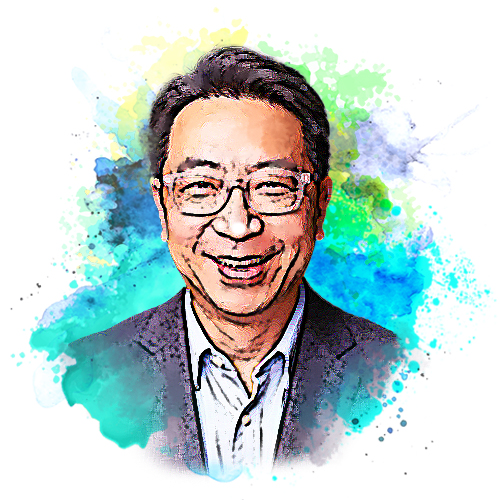
The author is vice-chairman of the Hong Kong Association of Interactive Marketing and an adviser to the Film and TV School at the Hong Kong Academy for Performing Arts.
The views do not necessarily reflect those of China Daily.