
In many respects, despite three years of “orthodox” treatment, Turkey’s economy remains a basket case. But worse than that, from the point of view of the international investor, is that after 23 years of the Erdogan regime, no one trusts the Turkish courts. Make a major investment in Turkey and you do so in the full knowledge that the rule of law, most pertinently in property rights, might be for you today, but against tomorrow.
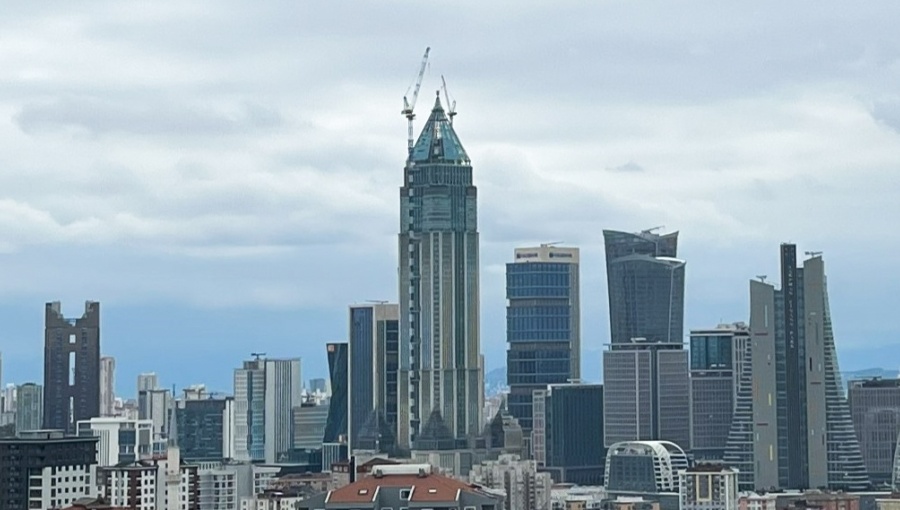
The past few weeks have brought plenty of excitable talk over Turkey becoming the “new Dubai”. Wouldn’t many investors in the Gulf, given the destabilising fright of their lives by the Middle East conflict, gladly seek to relocate to a new regional safe haven such as Istanbul Financial Center (IFC)? So the conjecture goes.
A major difficulty with such thinking is that under Recep Tayyip Erdogan, Turkey very much works to the authoritarian president’s personal agenda. Not only does Erdogan’s chief political rival Ekrem Imamoglu find himself jailed and facing hearings on trumped-up corruption charges for having the impertinence to become a clear and present danger to continued Erdogan rule, the state’s deposit insurance fund TMSF is liable to seize private businesses at a moment’s notice. Indeed, TMSF is now the country’s largest conglomerate, number one player in fintech and a top owner of Turkish media.
Two weeks into the Iran war, a drone hits Dubai Airport. Foreign investors put on a brave face.
Nevertheless the Trump-Netanyahu earthquake has rocked the Middle East and there are many who, when it comes to Turkey, see not just great peril, but also tempting opportunity, ahead. And, as IntelliNews reported in late March, voices arguing that Erdogan should ease up on his authoritarianism, in the patriotic interests of strengthening the home front with unity in the face of the regional crisis, have grown louder.
Erdogan himself last week attempted to capitalise on the “Turkey as a safe alternative” argument, talking of the “crisis, tension and conflict in our region intensifying” and “Turkey’s emergence as a safe haven”.
Arabian Gulf Business Insight (AGBI), meanwhile, on April 14 reported on how Turkish treasury and finance minister and ex-Wall St banker Mehmet Simsek was introducing a package of incentives for foreign investors as part of Turkey’s “ambitious pitch” for Gulf business.
Ahmet Erdem, CEO of IFC, Turkey’s dedicated banking and fund management district, was cited by local media as saying there was growing interest in the country from companies in the Gulf and East Asia. Reuters reported Erdem as stating that Iran war-rattled companies in the sharia-compliant, insurance and financial technology segments were looking at taking up space at the IFC, a unit of Turkey’s TVF sovereign wealth fund.
“We are working seriously to make Turkey, and especially the IFC, a hub where global resources are managed,” Simsek was quoted by the news agency as saying.
But how seductive can Simsek really make Turkey? Not all are convinced that Turkey will manage to seduce fund managers away from the Gulf, said AGBI, after speaking to Hikmet Baydar, an economist at 3.goz Consultancy. In Baydar’s eyes, “the biggest obstacle is Turkey’s credit rating, which is unfortunately three levels below investable grade. That is an issue for investors, and this raises question marks in my mind on whether the money in Dubai would want to come.”
The Gulf media outlet also encountered a sceptic in Burak Arzova, an economist at Turkey’s Marmara University, who said that he does not believe Istanbul could challenge Dubai as a financial centre.
“Istanbul cannot compete with Dubai without trust in legislation, taxation advantages and exchange rate stability,” he said.
Dubai and Abu Dhabi (pictured) rank first and second on the Global Financial Centres Index for the Middle East and Africa. And Istanbul? 101st (Credit: Wadiia, cc-by-sa 4.0).
While Dubai and Abu Dhabi still hold down the first and second places on the latest Global Financial Centres Index rankings for the Middle East and Africa, Istanbul is rated 101st, added Arzova.
Oil and gas poor Turkey, each year presented with a massive energy import bill as it relies on foreign suppliers to meet around 90% of its energy needs, could take an economic pounding from impacts of the Iran war, especially if it reignites and become prolonged.
As Umud Shokri, a Washington DC-based energy strategist and foreign policy advisor, wrote for Middle East Forum on April 7, the conflict “has exposed Turkey’s energy Achilles’ heel with unusual clarity. It has forced immediate price adjustments while highlighting long-standing imbalances. The lira’s depreciation and inflation signal declining confidence. Without structural reform, Turkey will remain exposed to external shocks, managed but not resolved by reactive policymaking”.
All the same, despite the pronounced disadvantages that nag at investors considering opening up in Turkey, the Erdogan administration has launched a new push to lure in major foreign investors that, unsettled by the instability now besetting the region, might now shy away from the Gulf.
Earlier this month, Erdogan hosted 40 global CEOs in Istanbul at a meeting organised by the World Economic Forum (WEF). Erdogan has in fact not attended the WEF’s Davos summit since 2009, when he publicly clashed with then-Israeli President Shimon Peres over the killing of Palestinians in Gaza.
Larry Fink, chair of the WEF’s board of trustees and CEO at BlackRock, the world’s largest asset manager, helped make the Istanbul meeting happen.
Turkey analyst Ceren Kenar told Middle East Eye (MEE) that the WEF was seeking to break the ice between Erdogan and Davos by arranging the event.
“This should be interpreted, in a sense, as a demonstration of confidence in the Turkish economy, despite its vulnerabilities,” Kenar said. “Beyond this, it is important to understand the significance of the rational and strategic role that Turkey, under the leadership of Erdogan, plays in the global arena.”
Yet it is the words of Guney Yildiz, a senior adviser on geopolitics and strategic insights at Anthesis Group, who has lately worked at the Abu Dhabi International Financial Centre (ADGM), that might offer more insight to investors who would consider a relocation to Turkey. In his remarks quoted by MEE, Yildiz advised that while Turkey’s IFC might offer banks various tax advantages that are even better than similar benefits in Dubai, he does not believe, for instance, that Gulf banks are focused primarily on the tax comparison between Istanbul and Dubai or Abu Dhabi.
“They are more worried about lira depreciation, inflation risk and Turkey’s relatively low sovereign rating,” he concluded. While, the current Turkish economic management team is running a credible programme, “the tide can turn in favour of the IFC only if Turkey’s macroeconomic performance improves”.