
image:
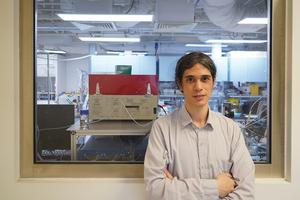
Assoc Prof Andrew Wong says the research could open new ways to make fuel without oil or oil refining.
Credit: College of Design and Engineering, NUS
The stranglehold on the Strait of Hormuz in the past few weeks has choked off roughly a fifth of the world’s oil supply, triggering the worst global energy crisis since the 1970s. Beyond the immediate shock, the disruption has underscored how tightly the global economy remains tethered to fossil hydrocarbons — and how urgently alternatives are needed. One of the most promising routes for diversifying fuel production from crude oil is using renewable electricity for electrochemical conversion of carbon dioxide (CO2) into high-value products such as ethylene that today come almost exclusively from petroleum refining.
A team led by Assistant Professor Andrew Barnabas Wong from the Department of Materials Science and Engineering at the College of Design and Engineering, National University of Singapore (NUS CDE), has now demonstrated a simple way to make that conversion far more efficient and greener. By coating copper catalysts with films just two to five nanometres thick of biopolymers sourced from seafood shells, wood and other biological waste, the researchers achieved 90% selectivity for multicarbon products at an industrially relevant current density of 1.6 amperes per square centimetre (A/cm2) and maintained 83% selectivity at an even higher current density of 2.2 A/cm2.
These are among the highest figures reported for copper-based CO2 conversion. The biopolymers can also fully replace Nafion and other fluorinated per- and polyfluoroalkyl substances (PFAS) in the catalyst electrode, offering a pathway to cost-effective climate technology with fewer PFAS-containing components. This is pertinent at a time when regulatory phase-outs of forever chemicals are gathering steam worldwide.
The study was published in Nature Energy on 17 April 2026 as an open-access article.
How biowaste reshapes the reaction
In electrochemical CO₂ conversion, electricity drives a reaction that breaks apart CO₂ and water molecules and reassembles them into carbon-rich fuels and chemicals like ethanol and ethylene. Copper is the most common and effective catalyst for the conversion. However, coaxing the element to produce the most useful multicarbon products — rather than simple hydrogen gas — requires fine-tuning the chemical conditions right at the catalyst’s surface. That role had traditionally belonged to Nafion and similar fluorinated materials. However, they are very expensive and classified as PFAS, the persistent pollutants linked to various health issues, from decreasing our immunity to increasing our risk for certain types of cancer.
Asst Prof Wong’s team showed that a nanometre-thin biopolymer coating achieves the same result through a fundamentally different route. Using advanced spectroscopy and computational modelling, they found that the coatings concentrate CO₂ near the catalyst, restrict water movement to suppress unwanted side reactions and help shuttle ions more effectively. All of these factors favour the production of ethylene, ethanol and other high-value products instead of hydrogen.
“Our work shows new ways to improve electrochemical CO₂ conversion, which can be used to make fuels without oil or oil refining in the future,” said Asst Prof Wong. “We have also shown that the forever chemicals upon which these technologies rely could potentially be replaced with cellulose, chitin and chitosan, which are materials derived from seafood shells, insect exoskeletons, wood or dead leaves.”
A cheaper, greener electrode
When the coated copper nanoparticles were paired with silver nanoparticles in a tandem system designed to maximise multicarbon output, 90% of the electrical current went towards producing useful multicarbon products at a current density of 1.6 A/cm2. Pushing the current higher forces the reaction to run faster, entailing fewer reactors for the same level of productivity, but typically causes selectivity to drop as unwanted hydrogen gas would be generated at higher rates. In the team’s study, the selectivity held at 83% even at 2.2 A/cm2, suggesting the biopolymer coatings keep the reaction on track under industrially demanding conditions.
The biopolymers also proved capable of fully replacing Nafion as the glue-like binder that holds the catalyst layer together. Cellulose-coated copper bound with chitin achieved 95% multicarbon selectivity, matching or exceeding the performance of Nafion-bound electrodes. At roughly US$50 per kilogram, high-quality chitosan costs around one-thousandth as much as Nafion by weight, pointing to substantial savings if the approach scales.
Towards oil-free fuels and chemicals
Electrochemical CO₂ conversion is part of an expanding suite of climate technologies designed to produce fuels and chemical feedstocks using renewable electricity rather than petroleum, potentially offering a carbon-negative alternative to conventional refining. While the technology is still in its early stages, the team’s biopolymer technology achieves two goals at once: it boosts catalyst performance and opens a route to replace costly, environmentally persistent forever chemicals with abundant, biodegradable alternatives sourced from waste streams.
“Our biopolymer coating approach offers a simple and widely adoptable method to enhance CO₂ reduction selectivity,” said Asst Prof Wong. “Prior to this work, it was believed that materials like Nafion or other water-repelling materials were essential to selectively making ethanol and ethylene from CO2. The materials in this work totally depart from that conventional wisdom as they have very strong attractive interactions with water. This means that there is much new exciting space to explore for improving electrochemical CO₂ conversion to fuels and chemicals.”
Future research includes expanding on these discoveries to adjust the ratio of ethanol to ethylene and to enhance the long-term stability, so that this process can proceed for longer periods without intervention. According to Asst Prof Wong, “Along these lines, other promising developments are in the pipeline.”
Method of Research
Experimental study
Subject of Research
Not applicable
Article Title
A scalable, biopolymer-based microenvironment for electrochemical CO2 conversion to multicarbon products with current densities over 2 A cm−2
Article Publication Date
17-Apr-2026
Disclaimer: AAAS and EurekAlert! are not responsible for the accuracy of news releases posted to EurekAlert! by contributing institutions or for the use of any information through the EurekAlert system.