
The energy crisis may pose a challenge for the government in pursuing its fiscal plan, which aims to reduce the fiscal deficit to no more than 3% of GDP, increase revenue through a higher value-added tax (VAT), and keep public debt below 70% of GDP, according to the Finance Ministry.
A source from the Finance Ministry, who requested anonymity, said the ongoing energy crisis may force the government to revise its medium-term fiscal plan for 2027-2030, as higher energy prices are affecting economic forecasts.
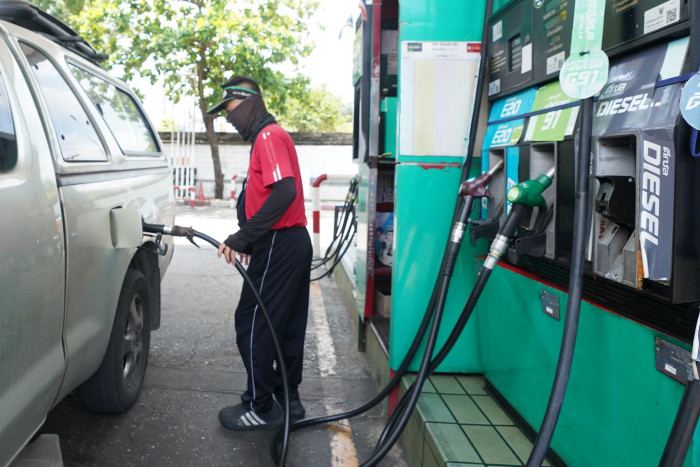
At the same time, the government may face a higher public debt burden because the Finance Ministry may need to guarantee 150 billion baht in loans for the Oil Fuel Fund to help stabilise domestic retail oil prices under a managed floating mechanism in line with market forces.
As a result of the current energy crisis, this year’s GDP growth may fail to meet the target projected by the National Economic and Social Development Council (NESDC), which had forecast expansion of 2%.
Meanwhile, the public debt burden arising from the loan guarantee for the Oil Fuel Fund is expected to raise public debt by about 1 percentage point of GDP if the fund fully utilises the 150-billion-baht guarantee facility.
Under the medium-term fiscal plan, which was drafted before the global energy crisis emerged, public debt for the fiscal year 2026 was projected at 68.1% of GDP. The debt ratio is expected to peak in fiscal year 2028 at 69.7% before declining to 68.2% in the final year of the plan, 2030, remaining below the 70% ceiling.
In addition, the source said the current energy crisis, which has triggered broader economic difficulties, may force the government to increase spending to support the economy, making it more difficult to achieve the target of reducing the budget deficit to below 3%. In fiscal year 2026, the deficit is projected at around 4% of GDP.
Under the plan, the deficit will be reduced to 3.9% in fiscal year 2027, and from 2029 onwards the budget deficit is expected to fall below 3% of GDP, declining to 2.7%. In the final year of the plan, 2030, the deficit will stand at 2.1%.
If the economy is still unable to recover, the government’s revenue-raising plan through a VAT increase may become even more difficult to implement. Under the fiscal plan, VAT is scheduled to rise from 7% to 8.5% in 2028, and then to the full legal ceiling of 10% in 2030.
Economic volatility and uncertainty, political risks, geopolitical tensions, and climate change are all sending warning signals about Thailand’s fiscal position, reflected in the steady decline in the ratio of government revenue to GDP over the past 20 years. Revenue stood at 17% of GDP in 1993, but is projected at 14.9% in 2025.
The formulation of the medium-term fiscal plan is required under the State Financial and Fiscal Discipline Act of 2018. The law was introduced following concerns over the government’s fiscal position after previous administrations had implemented populist policies on a large scale, along with extensive quasi-fiscal measures. Under this framework, the medium-term fiscal plan must be submitted to the cabinet for approval.