
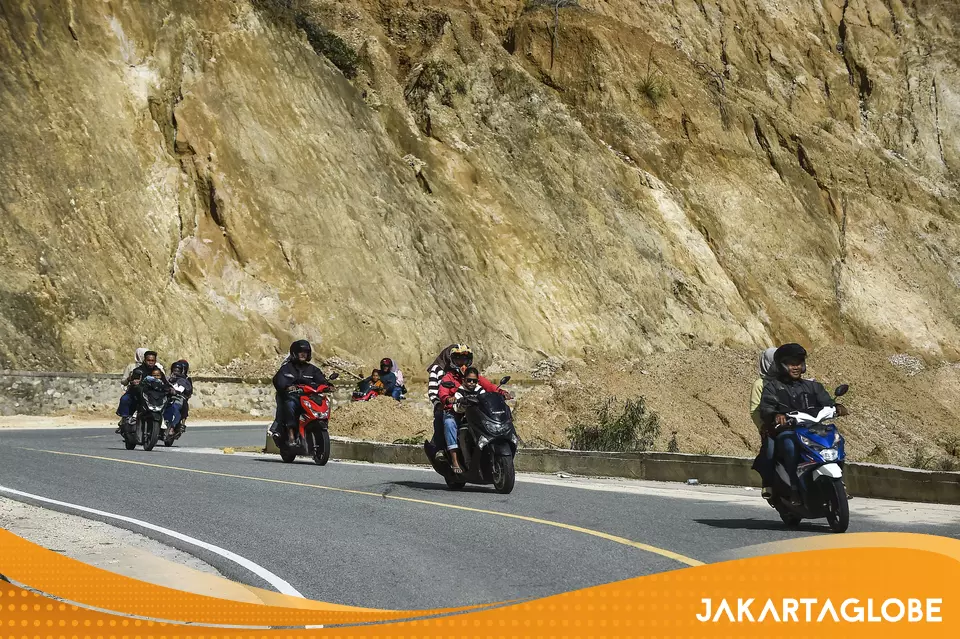
Jakarta. Indonesia is considering a gradual end to gasoline-powered motorcycle sales and their replacement with electric models, a move that could transform one of the world’s largest two-wheeler markets and challenge an industry structure long dominated by Japanese manufacturers.
The proposal, announced last week by Industry Minister Agus Gumiwang Kartasasmita, would mark one of the country’s most ambitious transport transitions to date. If implemented, it could disrupt a market where Honda and Yamaha have controlled sales for decades.
Indonesia sold 6.58 million new motorcycles in 2025 alone, making it one of the largest motorcycle markets globally. Honda accounted for 76.2% of sales, while Yamaha held 19.4%. The remainder was split among smaller players, including Kawasaki, Suzuki, and TVS.
A forced shift to electric motorcycles could weaken that dominance. Neither Honda nor Yamaha has announced plans for large-scale commercial EV motorcycle sales in Indonesia, despite showcasing prototypes and pilot models. Meanwhile, at least 17 electric motorcycle brands — including domestic manufacturers — have entered the market and formed their own industry association.
ADVERTISEMENT
EV Cars Surge, Electric Motorcycles Lag
Indonesia’s broader electric vehicle transition has been uneven. Electric car adoption has accelerated sharply over the past three years, but electric motorcycles have struggled to gain traction with consumers.
Wholesale electric car sales jumped 141% year-on-year in 2025 to 103,931 units, according to data from the Indonesian Automotive Industry Association (Gaikindo). By contrast, electric motorcycle sales fell 28.6% to 55,059 units in 2025 from 77,078 units the previous year, based on Transportation Ministry approval data.
Electric cars represented around 12.5% of all new car sales in Indonesia last year, while electric motorcycles remained only a small fraction of the country’s vast two-wheeler market.
Industry executives say demand for electric motorcycles has depended heavily on subsidies. A Rp 7 million ($408) state incentive offered in 2024 for qualifying locally sourced models helped drive sales, but momentum faded afterward.
“Without subsidies, electric motorcycle sales would stagnate or even decline,” Budi Setiyadi, chairman of the Indonesian Electric Motorcycle Industry Association (Aismoli), said.
Industry Split Over Proposed Phaseout
Without doubt, Aismoli supports the government’s proposal that heavily favors the EV bike market.
“In principle, we strongly support the government’s push to reinforce the domestic EV market. A strong local market is essential to building a sustainable industry — from scaling up production and advancing technology to creating jobs,” Budi told the Jakarta Globe.

The Indonesian Motorcycle Industry Association (AISI), whose members include Honda and Yamaha, has not taken a formal position. Secretary General Hari Setiyono said the group was still awaiting policy details.
“We’ll wait and see what the official policy looks like,” he said.
Representatives of Honda Astra Motor and Yamaha Indonesia Motor Manufacturing did not respond to requests for comment.
Consumer Resistance and Infrastructure Gaps
Analysts warn that the plan faces major obstacles, especially consumer preferences, pricing, and infrastructure readiness.
Automotive observer Bebin Djuana said Indonesian riders remain strongly loyal to established Japanese brands, while existing electric offerings have yet to convince mass-market buyers.
“Yamaha has showcased electric models several times but has yet to sell them commercially. Honda has introduced electric models, but prices remain high and range is limited, making them less attractive,” he said.
He added that manufacturers may have the capacity to produce millions of motorcycles annually, but it remains unclear whether they have affordable EV models ready for mass production.
The government is also pursuing another highly ambitious target: converting 120 million existing gasoline motorcycles into electric vehicles within five years.

Fahmy Radhi, an energy analyst at Gadjah Mada University, said that goal is unrealistic under current conditions. Conversion workshops remain limited, charging infrastructure is sparse outside major urban centers, and many consumers still prefer gasoline motorcycles for their stronger resale value.
He also noted that around 56% of Indonesia’s electricity generation still comes from coal, reducing the environmental gains from vehicle electrification.
“We should set targets that reflect our actual capacity. Overly ambitious goals risk missing the mark,” he said.
Tags:
Keywords: