
Jakarta is betting its investment-grade future on a US$900 billion (S$1.14 trillion) “black box”. As global oil prices squeeze Indonesia’s fiscal ceiling, President Prabowo Subianto has accelerated a strategy of “State Capitalism 2.0”. At its heart is Danantara, a “superholding” designed to consolidate strategic assets, equivalent to roughly 60 per cent of the country’s gross domestic product (GDP), into a single engine of national survival.
The sovereign wealth fund now owns and supervises state-owned enterprises in fields ranging from banking to telecommunications and oil and gas with total assets under management exceeding US$900 billion.
Danantara was launched in February 2025. Yet, as the April 2026 filing season passes without a consolidated financial statement, this leviathan is increasingly looking like a source of sovereign risk rather than wealth.
The silence regarding Danantara’s actual health is a symbol of deeper governance malaise. While its constituent companies have met regulatory obligations, the master agency remains a transparency vacuum. In the absence of hard data, the administration has retreated into the “Danantara Diaries”, an official series that swaps balance sheets for folklore to explain complex state-led industrialisation.
The international market is already pricing in this “governance discount”. In February 2026, Moody’s Ratings shifted Indonesia’s sovereign outlook to negative, citing a “weakening of institutional strength” fuelled by Danantara’s opaque mandate.
Danantara’s rapid “mission creep” into disparate sectors, from poultry farming to waste-to-energy, suggests a fund less focused on strategic industrialisation than on becoming a catch-all financier for political mandates. By vertically integrating supply chains for programmes like the free nutritious meal initiative, Danantara crowds out private producers who lack preferential access to state capital.
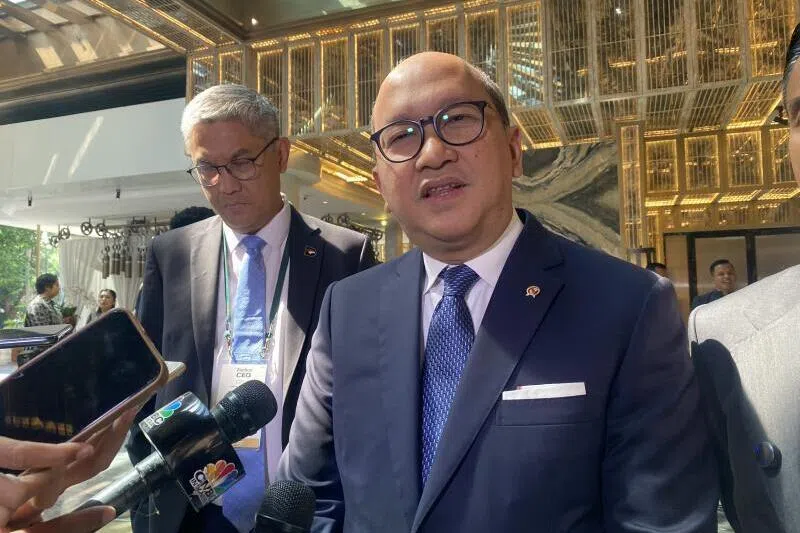
This is compounded by Mr Rosan Roeslani’s “dual-hat” role as Minister of Investment and Danantara chief executive officer, a regulator-competitor overlap that chills foreign direct investment. Meanwhile, functional power rests with chief operating officer Dony Oskaria, who manages the state’s “superpower” veto shares. This convoluted structure creates a recursive loop where officials juggle conflicting regulatory and commercial mandates, further obscuring accountability.
The risks of this opaqueness are already distorting market mechanics. During MSCI rebalancing volatility in early 2026, Danantara reportedly stepped in as a “stabiliser,” purchasing shares to prevent a downward spiral in state-owned equities. When the state acts as the buyer of last resort for its own champions, true price discovery dies. More critically, it raises alarms about potential insider trading: the line between “market defence” and manipulation blurs when one entity wields both regulatory foreknowledge and the capital to move indices.
This extends to financing: the 50 trillion rupiah (S$3.7 billion) Patriot Bonds issued at a submarket 2 per cent coupon (far below the 6.5 per cent sovereign benchmark) act as a “mandatory loyalty test.” In other words, the business elite who placed their money on these bonds, were doing so not for financial returns but on the implicit promise of political goodwill. By siphoning liquidity via private placements, Danantara isn’t just funding political mandates; it is engaging in financial repression that crowds out private enterprise and signals to rating agencies that Indonesia’s fiscal transparency is retreating into a “black box”.
Indonesia’s credit rating cannot survive a US$900 billion mystery. Persistent lack of disclosure and strategic clarity – starkly contrasted by ceremonial project announcements – reinforces the “black box” perception regarding the agency’s health.
To become a credible engine of growth, Danantara must transition from a black box into a glass box.
-
Dipo Satria Ramli is a researcher at the Center of Reform on Economics (CORE) Indonesia and a doctoral candidate at Universitas Indonesia. A former investment bank director, he specialises in macroeconomics, financial markets, and institutional quality.