
Close Menu
Simply Invest Asia
  • Home
  • About us
  • Explore industries/sectors
    • Automobile
    • Aviation
    • Banking
    • Biotechnology
    • Chemical & Fertilizer
    • Entertainment and Media
    • Food Processing
    • Healthcare
    • Iron and Steel
    • Leather
    • Mining
    • Oil and Gas
    • Pharmaceutical
  • Explore by countries
    • China
    • Dubai / UAE
    • Hong Kong
    • India
    • Indonesia
    • Japan
    • Malaysia
  • Explore cities
    • Bangkok
    • Beijing
    • Chongqing
    • Delhi
    • Dubai
    • Guangzhou
    • Jakarta
    • Kuala Lumpur
  • Why Asia
Facebook X (Twitter) Instagram Threads
Trending:
  • Hong Kong Fire Inquiry Blames Contractor Negligence, Regulatory Failures for 168 Deaths
  • Infocomm Asia: Digital Signage Impressions Kuala Lumpur
  • UAE’s EDGE Group to acquire Grupo Akaer in Brazil
  • UIN Jakarta Goes to NUS as Graduate Researchers Defend AI Model Analyses of Classical Sufi Texts Frontline at the Asia Research Institute
  • Accenture (ACN) Secures Defense Contract for Pharmaceutical Solu
  • In East India, a Marian shrine draws in Christian, Hindu and Muslim pilgrims
  • China signals possible return of U.S. trade privileges for Hong Kong : NPR
  • Miss Cosmo 2025 Queens Yolina Lindquist and Chelsea Fernandez Set for Guangzhou Visit
  • China suggested that the US has restored privileges for Hong Kong that Trump revoked in 2020, describing the move as an important step toward improving ties
  • “Trying To Survive”: Indians, Others Hit As Iran War Triggers Dubai Job Crisis
  • Tories silent as key North Sea jobs claim undermined by oil giant
  • Indonesia to stop diesel imports by July 2026 on B50 success: Prabowo
  • Gold demand in China at decade low in June, WGC says
  • Japan revises imperial succession but still excludes women
  • Princess Anne Meets Thailand’s Queen Suthida in Bangkok
  • Segun Lawson, partners’ Thor stakes climb after Q2 gold haul
  • Zimbabwean Students Selected For  Prestigious  India’s Scholarship Programme
  • Hong Kong special status: US lets executive order lapse, China welcomes policy shift
Friday, July 17
Facebook X (Twitter) Instagram
Simply Invest Asia
  • Home
  • About us
  • Explore industries/sectors
    • Automobile
    • Aviation
    • Banking
    • Biotechnology
    • Chemical & Fertilizer
    • Entertainment and Media
    • Food Processing
    • Healthcare
    • Iron and Steel
    • Leather
    • Mining
    • Oil and Gas
    • Pharmaceutical
  • Explore by countries
    • China
    • Dubai / UAE
    • Hong Kong
    • India
    • Indonesia
    • Japan
    • Malaysia
  • Explore cities
    • Bangkok
    • Beijing
    • Chongqing
    • Delhi
    • Dubai
    • Guangzhou
    • Jakarta
    • Kuala Lumpur
  • Why Asia
Simply Invest Asia
Home»Explore by countries»India»Can India and Pakistan seize this moment?
India

Can India and Pakistan seize this moment?

By IslaApril 14, 20264 Mins Read
Share
Facebook Twitter Pinterest Threads Bluesky Copy Link


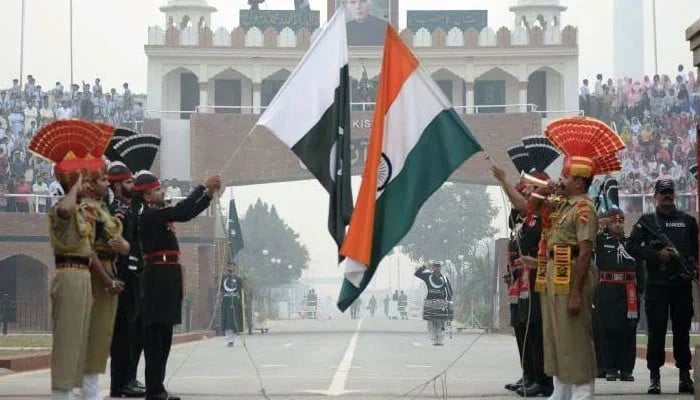
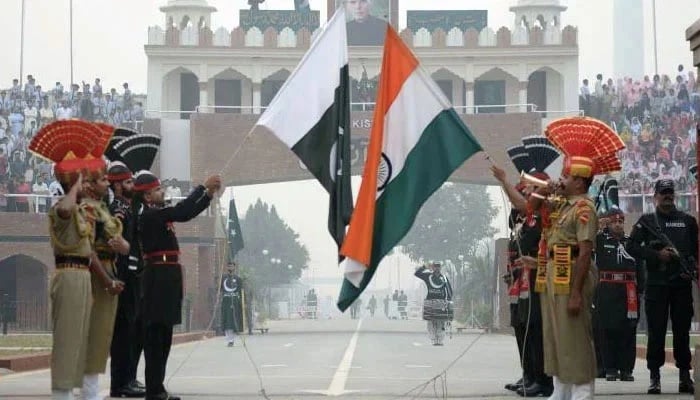
Pakistani and Indian soldiers take part in the flag-lowering ceremony at the Pak-India Wagah Border. — AFP/File

The war on Iran brings into focus a hard strategic truth: rivalries do not stay frozen. They don’t quietly fade into the background. They accumulate pressure, absorb grievances and harden over time. And eventually – through nationalism, miscalculation or sheer resource stress – they snap.

For India and Pakistan, this is not a distant lesson. It is uncomfortably close. Occupied Jammu and Kashmir is a live fault line. It carries years of accumulated tension – ceasefire violations, doctrinal signaling and increasingly toxic domestic narratives. The most dangerous assumption in South Asia today is that this uneasy equilibrium can hold indefinitely. It cannot.

And when it breaks, the trigger may not be territory alone. It is just as likely to be water.

The Indus basin, it must be remembered, is not merely a river system; it is Pakistan’s lifeline. India’s upstream position creates a form of leverage that is rarely stated openly but always present. The Indus Waters Treaty now shows visible strain. A sustained disruption would not just hurt Pakistan; it would shake it at its core. Agriculture would falter, power generation would stumble, and food security could quickly spiral into crisis.

Here, comparisons with the Middle East begin to break down. In the Iran theatre, damaged infrastructure can eventually be rebuilt – ports repaired, refineries restored, capital re-injected. South Asia offers far less room for recovery. Even a limited conflict between India and Pakistan would not remain contained for long. It would strike densely populated areas, disrupt energy systems, and choke economic arteries almost immediately. And with both sides nuclear-armed, the margin for error is dangerously thin. This is not a region that can afford to ‘learn by doing’.

There have been moments of restraint before. The Cuban Missile Crisis forced two superpowers to step back from the brink and put safeguards in place. Closer to home, the Lahore Declaration briefly showed that even entrenched adversaries can shift course. But symbolism, however powerful, rarely lasts on its own. What endures is quieter, sustained engagement that gradually builds mutual stakes.

Paradoxically, the Iran conflict itself creates a narrow opening for South Asia. India’s strategic investment in Iran’s Chabahar Port, designed to bypass Pakistan and reach Central Asia, is now caught in regional instability. That disruption creates space, if Islamabad is willing to think beyond familiar patterns.

Pakistan could step forward with a clear, interest-based proposition: offer India guaranteed, secure land access to Afghanistan and Central Asia through its territory – reliable, tariff-light transit corridors that serve India’s trade and energy ambitions. In return, India would be required to ease its tight administrative grip over Kashmir, opening space for civil liberties, political expression and meaningful engagement. This would not resolve the dispute overnight, but it could begin to shift it from a rigid zero-sum contest to a more managed, de-escalatory process.

This is not concessionary diplomacy. It is strategic tradecraft. When both sides have something tangible to gain – and something real to lose – the logic of perpetual confrontation begins to weaken.

Water, meanwhile, needs to move to the centre of the conversation. A modernised Indus framework is no longer optional. Real-time data sharing, satellite monitoring and neutral technical arbitration must replace ambiguity and suspicion. Joint flood forecasting, shared hydroelectric projects, and coordinated climate responses can serve as practical starting points. The glaciers feeding the Indus are retreating faster than negotiations move and that gap is becoming dangerous.

For any of this to hold, diplomacy has to work on multiple levels at once. Formal talks must address core disputes. Quiet backchannels must remain active when politics intervenes. When one channel stalls, others must carry the load. That is how fragile progress survives.

The lesson from Iran is not just that wars are destructive. It is that unresolved rivalries have a way of resurfacing at the worst possible moment – when trust is low, tempers are high, and options are limited. South Asia is edging towards that space.

The choice is immediate. Continue managing hostility until it breaks or reshape the relationship before it does. Restraint is not weakness; dialogue is not surrender and delay is

not neutrality.

India and Pakistan still have time – but not much – to act with purpose and imagination. If they fail, the next thaw in their long-frozen rivalry will not bring relief. It will bring fire.


The writer is an Islamabad-based researcher with a special interest in India, Pakistan and regional affairs. He can be reached at: [email protected]


Source link

Related Posts

In East India, a Marian shrine draws in Christian, Hindu and Muslim pilgrims

July 17, 2026

Zimbabwean Students Selected For  Prestigious  India’s Scholarship Programme

July 17, 2026

India's First Hydrogen-Powered Passenger Train – Fuel Cells Works

July 17, 2026
Add A Comment
Leave A Reply Cancel Reply

Top Posts

China Scraps 12,000 Degrees in Biggest Academic Overhaul in Years

June 14, 2026

Chinese Wall may stem India tech flows for electronics and automobile

June 1, 2026

Abandoned malls, whispers of nuclear war and young foreigners detained. This is what’s REALLY going on in Dubai… and the chilling warning one taxi driver gave to the Mail’s IAN BIRRELL

April 11, 2026
Don't Miss

Hong Kong Fire Inquiry Blames Contractor Negligence, Regulatory Failures for 168 Deaths

By IslaJuly 17, 2026

A building facade blackened by fire at Wang Fuk Court in Tai Po, Hong Kong,…

Infocomm Asia: Digital Signage Impressions Kuala Lumpur

July 17, 2026

UAE’s EDGE Group to acquire Grupo Akaer in Brazil

July 17, 2026

UIN Jakarta Goes to NUS as Graduate Researchers Defend AI Model Analyses of Classical Sufi Texts Frontline at the Asia Research Institute

July 17, 2026
SUBSCRIBE TO OUR NEWSLETTER

Get our latest downloads and information first. Complete the form below to subscribe to our weekly newsletter.


I consent to being contacted via telephone and/or email and I consent to my data being stored in accordance with European GDPR regulations and agree to the terms of use and privacy policy.

Stay In Touch
  • Facebook
  • YouTube
  • TikTok
  • WhatsApp
  • Twitter
  • Instagram
Top Trending

Gold demand in China at decade low in June, WGC says

By IslaJuly 17, 2026

Japan revises imperial succession but still excludes women

By IslaJuly 17, 2026

Princess Anne Meets Thailand’s Queen Suthida in Bangkok

By IslaJuly 17, 2026
Most Popular

Malaysia: 2026 LIAM priorities will include balancing healthcare access and affordability – News

April 30, 2026

Bearish block trade of CHONGQING M&E(02722) 2M shares at $2.53, $5.06M turnoverAA Market Move

June 5, 2026

Business.Scoop » Recent School Chemical Incident Sparks Rise In Disposal Enquiries

July 2, 2026
Our Picks

Türkiye’s iron and steel export value reached $2.45 billion in the January–March period

May 1, 2026

UAE exports record oil volumes after OPEC exit, ship-tracking data shows

June 30, 2026

Chemical Synthesizer Market Growth to Accelerate by 2035 Amid Automation and Drug Discovery Demand – News and Statistics

April 25, 2026
SUBSCRIBE TO OUR NEWSLETTER

Get our latest downloads and information first. Complete the form below to subscribe to our weekly newsletter.


I consent to being contacted via telephone and/or email and I consent to my data being stored in accordance with European GDPR regulations and agree to the terms of use and privacy policy.

© 2026 Simply Invest Asia.
  • Get In Touch
  • Cookie Policy
  • Privacy policy
  • Terms & Conditions

Type above and press Enter to search. Press Esc to cancel.

SUBSCRIBE TO OUR NEWSLETTER

Get our latest downloads and information first.

Complete the form below to subscribe to our weekly newsletter.


I consent to being contacted via telephone and/or email and I consent to my data being stored in accordance with European GDPR regulations and agree to the terms of use and privacy policy.