
Canada’s mining past is immense and tangible, encompassing thousands of hectares of tailings and waste rock alongside extensive infrastructure that once served bustling operations. Long treated as environmental liabilities, these sites are being reconsidered as strategic assets. Surging critical minerals demand, evolving provincial mine-closure and mineral-recovery regimes, and rapid clean energy innovation are creating pathways for value-extraction from waste and repurposing former mines for energy generation and storage. The upshot is clear and significant: through careful legal navigation and strong partnerships, many sites can evolve from cost-creators to value-generators.
Policy winds have shifted in Canada and abroad. Ontario has modernized its Mining Act, introducing a dedicated recovery-of-minerals regime and updated closure-planning architecture. This framework provides efficiencies through strengthened qualified-person certifications and phased financial assurance, among other revisions aimed at reducing timelines and challenges of mine closure. Paired with provincial critical mineral strategies, these changes signal openness to circular mining approaches that recover strategic elements from residues. Internationally, the E.U.’s Critical Raw Materials Act elevates mobilization of secondary raw materials, while the U.S. has launched a “Good Samaritan Remediation” pilot to facilitate cleanup and incidental reprocessing at abandoned mine sites.
Canada has not adopted a federal liability shield, but the policy direction is evident: unlock recovery while managing risk. The legal architecture for second-life projects is clear but demanding. Federally, the Fisheries Act and Metal and Diamond Mining Effluent Regulations impose strict water-quality rules for discharging into fish-bearing waters from both new extraction and tailings reprocessing projects. Provincially, modern closure-planning regimes enable operators to amend plans to rehandle tailings, retain safe infrastructure for new industrial or energy uses, and stage financial assurance to match construction and risk profiles. Success under these frameworks hinges on integrating metallurgy, water management, and permitting from the outset, with performance monitoring throughout second-use lifespans.
Indigenous partnership is central to durable project design. Beyond the duty to consult, evolving practice standards emphasize early engagement, shared oversight of environmental monitoring, benefit agreements reflecting local priorities, and, increasingly, equity participation. Second-life projects are particularly well-suited to this model where they reduce long-term environmental risks while creating local employment in remediation, operations, and monitoring.
Investment initiatives have followed the tailwinds of these regulatory shifts. Emissions Reduction Alberta’s Tailings Technology Challenge invested in creative solutions for managing environmental risks in the oil sands, demonstrating how external investment can redefine risk-profiles, motivate innovation, and encourage community and research institution partnerships.
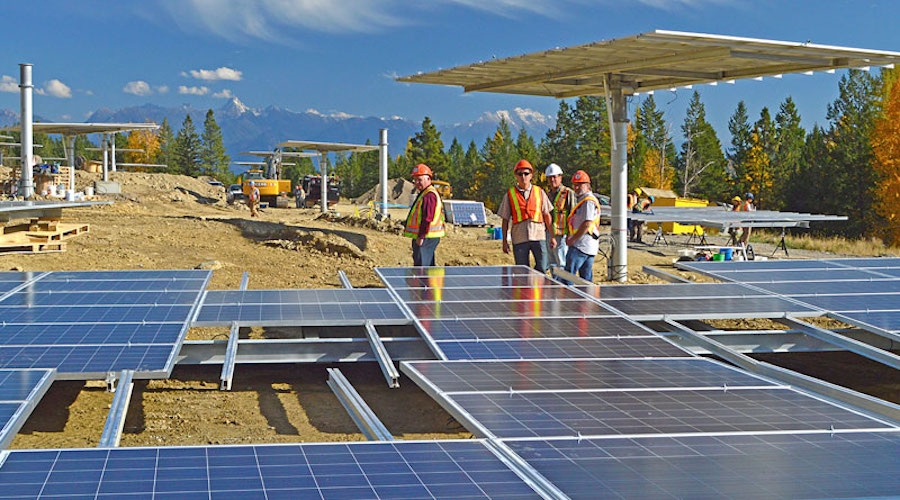
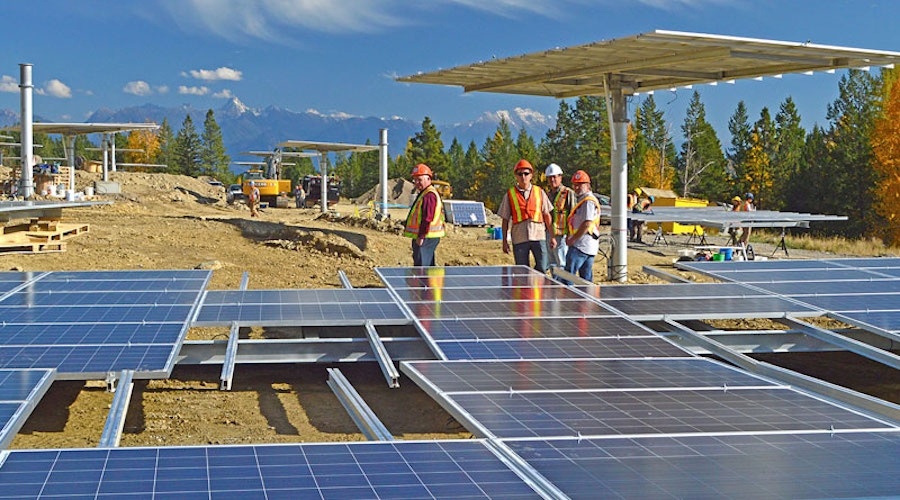
Existing projects illustrate the possibilities. In Kimberley, B.C., the Sun mine project transformed closed mine lands into a solar facility, proving that reclaimed mining areas can host productive renewable generation. In Devon, Alberta, CVW Royalties deployed hydrocarbon recovery technologies to reprocess froth treatment tailings, accomplishing progressive remediation and critical mineral recapture. In Springhill, N.S., a mine water geothermal system provides heating from flooded coal workings, transforming legacy liabilities into a community energy solution. In Goderich, Ont., Hydrostor developed emission-free compressed-air energy storage in a deserted solution mine salt cavern to supply long-term grid flexibility. In Sorel-Tracy, Que., Rio Tinto produces scandium from waste streams at its titanium processing complex, achieving recovery of critical minerals at commercial scale without new pits. Abroad, Australia’s Kidston project converts open pits into pumped-storage hydro facilities, offering an energy-storage template for Canadian pit lakes.
Mine-waste reprocessing may move from promise to practice where three elements align. First, proponents need robust metallurgical pathways with bankable recoveries and secure offtake. Second, amended closure plans must reflect new work, risks, and end-states, with qualified-person certifications, clear performance criteria, and appropriate financial assurance. Third, water and tailings management must be engineered for compliance, recognizing that water quality can worsen before improving as materials are disturbed. Projects that credibly reduce long-term contamination, improve site geochemistry, and leave lands in comparable or better condition are most promising.
Energy reuse will scale with disciplined site selection and clear risk allocation. Each form of energy generation and storage demands rigorous assessments alongside post-closure determinations to maintain specific infrastructure. Insurance, bonding, and O&M responsibilities should be aligned with residual environmental duties. Ownership or access arrangements must reflect surface, subsurface, and mineral rights.
Canada’s mining legacies will always require stewardship but may also host new generations of mineral supply and clean energy. The prize is a portfolio of projects that shrink liabilities, strengthen Indigenous partnerships, and advance domestic energy diversity. The path is demanding, but open — and increasingly well-mapped.
Martin Ignasiak, KC is a partner and head of Energy Regulatory Practice at Bennett Jones in Calgary. Gatlin Smeijers is a partner at Bennett Jones in Toronto.