
Every time a war breaks out far away, or another major global event sends shockwaves through the international economy, many Fijian families feel the impact at home.
We feel it at the supermarket. We feel it at the fuel pump. We feel it when shipping costs rise, when imported food becomes more expensive, and when the price of everyday goods begins to climb.
The reality is that Fiji relies heavily on imports. When global markets move, we move with them.
That is why food security can no longer be treated as a slogan. It must be treated as a national priority.
The Russia-Ukraine war showed us this very clearly. Together, those two countries have historically accounted for around 30 per cent of global wheat exports. When the conflict disrupted supply chains, food prices increased across many parts of the world. The lesson was simple. Countries that rely heavily on imported food are vulnerable to events beyond their control.
TODAY, instability in the Middle East continues to remind us of the same reality. When fuel prices rise, the cost of transporting, processing and selling food rises with it. For Fiji, this is not an abstract economic discussion. It affects real families and real household budgets.
This is why I believe the work of Grace Road Group deserves serious recognition.
Much has been said about Grace Road over the years, both positive and negative. However, amid the debate, one question deserves greater attention: What role is the company playing in strengthening Fiji’s food security?
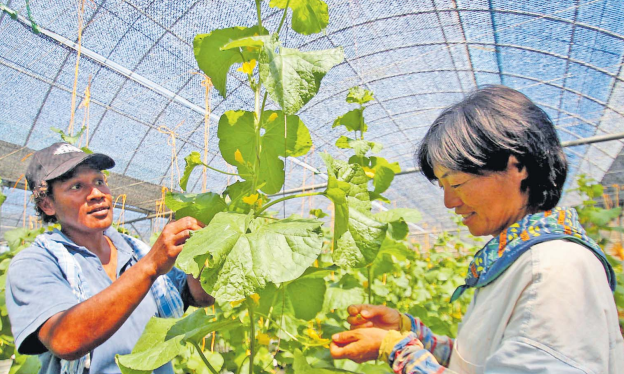
Whether one supports Grace Road or not, it is difficult to ignore the scale of its investment in agriculture, food production and local processing. In a relatively short period of time, the company has developed farming, food manufacturing and distribution operations on a scale rarely seen in modern Fiji.
More importantly, it has helped strengthen local production capacity at a time when many countries are rethinking their dependence on imported food.
For decades, Fiji has spoken about import substitution. We have spoken about growing more food locally, processing more products locally and creating stronger domestic supply chains. Grace Road has invested heavily in turning these ideas into reality.
Its investments in rice farming, food processing, supermarkets, restaurants and local supply chains help keep more value within Fiji. When food is grown and processed locally, farmers benefit. Workers benefit. Consumers benefit. The wider economy benefits.
Grace Road president Daniel Kim has argued that many products currently imported into Fiji can be produced locally. He has also spoken about expanding food processing and creating new opportunities to add value to local agricultural produce. Whether every project succeeds or not, the broader principle is an important one. Fiji cannot reduce its dependence on imports without investing in the capacity to replace them.
This is where Grace Road’s contribution becomes important to national resilience.
If Fiji can produce more rice, vegetables, processed foods and value-added products locally, then the next global crisis will not affect us as severely. We may not be able to stop wars overseas or control global commodity prices, but we can improve our ability to withstand these shocks.
Grace Road’s contribution is not limited to food security. Many of the company’s facilities and outlets are now powered, at least in part, by solar energy. This is significant because food and energy are closely connected. Every stage of the food supply chain depends on reliable and affordable energy.
When fuel prices increase, farming becomes more expensive.
Transport becomes more expensive. Refrigeration becomes more expensive. By reducing dependence on imported fuel and investing in renewable energy, businesses strengthen their long-term resilience while helping to lower costs over time.
In a world where wars, fuel shocks, climate change and supply chain disruptions are becoming increasingly common, Fiji needs businesses that are willing to invest in local agriculture, local manufacturing and local innovation.
That is why Grace Road matters.
It is not because the company is perfect. No company is. It is because its investments address one of Fiji’s greatest long-term challenges: How to become more self-sufficient in an increasingly uncertain world.
Food security is national security. And through its investments in local production and renewable energy, Grace Road is helping Fiji move in that direction.
It is difficult to imagine where Fiji’s food production sector would be today without Grace Road.
A Fiji without Grace Road would almost certainly be more dependent on imported food, less prepared for global shocks and poorer in terms of productive capacity.
Perhaps most importantly, the company has consistently reinvested in Fiji rather than simply extracting value from it. Until next week, take care and be safe.
ARNOLD CHANEL is an investor and business executive with years of tech expertise. He can be contacted on ceo@vanguardtech.pro. The views expressed in this article are his and not of this newspaper.