
Understanding Systemic Food System Vulnerabilities
The looming global food crisis represents one of the most pressing challenges facing humanity today, as modern agricultural systems have evolved into complex networks of interdependent supply chains, creating unprecedented vulnerabilities that extend far beyond traditional farming risks. These interconnected systems mean that disruptions in one component can cascade rapidly across global food networks, affecting billions of people through mechanisms that most observers fail to fully comprehend.
The architecture of contemporary food production depends heavily on fossil fuel inputs at every stage, from fertilizer synthesis to transportation networks. This dependency creates what agricultural economists term “energy-agriculture coupling,” where volatility in energy markets translates directly into food system instability. Understanding these transmission mechanisms becomes critical for investors, policymakers, and communities seeking to navigate an increasingly uncertain food security landscape.
Furthermore, energy-security dynamics intensify these vulnerabilities, particularly as geopolitical tensions affect critical supply chains. Moreover, tariff market impacts create additional layers of complexity within these already fragile systems.
When big ASX news breaks, our subscribers know first
Current Scale of Global Food Insecurity
Quantifying Acute Hunger Across Regions
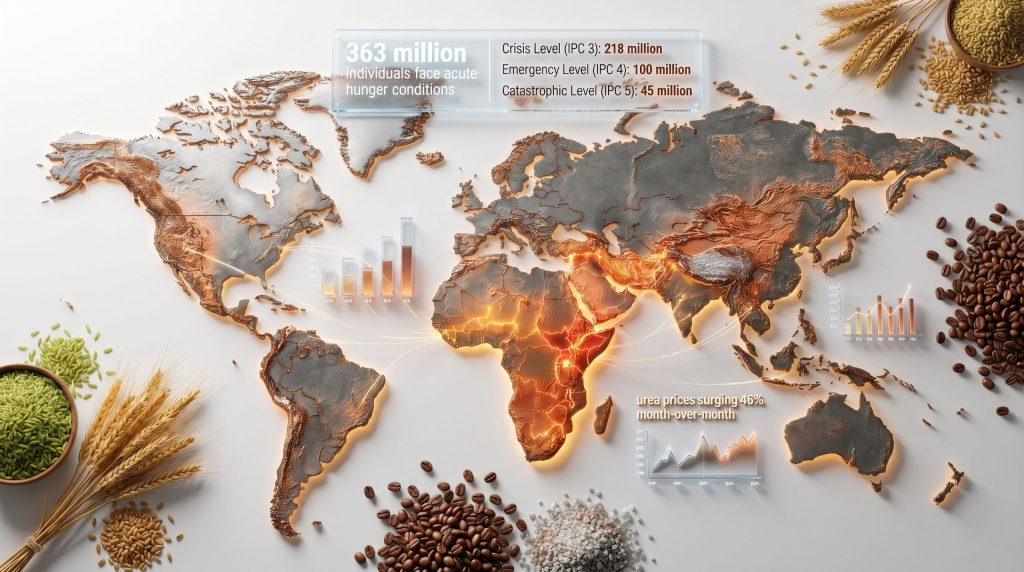
The World Food Programme’s latest assessments reveal that approximately 363 million people currently face acute food insecurity, representing the highest level of humanitarian need since the organization began comprehensive tracking. This figure encompasses populations requiring immediate assistance to prevent malnutrition, asset depletion, and potential famine conditions.
According to the UN’s latest findings, these numbers reflect a significant deterioration in global food security. Consequently, regional distribution patterns show concerning concentrations of vulnerability across multiple continents.
Regional Distribution of Food Insecurity (2026)
| Region | Acute Insecurity Level | Primary Risk Factors |
|---|---|---|
| East/Southern Africa | 87 million | Climate shocks, conflict spillovers |
| West/Central Africa | 52 million | Economic pressures, seasonal variations |
| Middle East/North Africa | 43 million | Ongoing conflicts, energy dependencies |
| South Asia | 38 million | Import vulnerabilities, economic stress |
The Integrated Food Security Phase Classification system provides standardised severity measurements across these regions. Phase 3 (Crisis) conditions affect approximately 218 million people, indicating households face significant food consumption gaps and asset depletion.
Phase 4 (Emergency) encompasses 100 million individuals experiencing extreme hardship, while Phase 5 (Catastrophic) represents 45 million people in areas where starvation and societal collapse become imminent threats. Additionally, the World Bank’s food security updates highlight the deteriorating conditions across these classifications.
Historical Context and Trajectory Analysis
Current food insecurity levels exceed previous humanitarian crises due to the simultaneous occurrence of multiple stress factors. Unlike historical food emergencies that typically stemmed from isolated droughts or regional conflicts, the looming global food crisis emerges from interconnected global disruptions affecting energy, climate, and economic systems simultaneously.
The trajectory suggests continued deterioration through 2026, with seasonal factors likely to exacerbate conditions during traditional “lean seasons” when household food stocks diminish before new harvests become available. This cyclical vulnerability compounds with ongoing structural pressures to create particularly severe risks for vulnerable populations.
Energy-Food System Integration Mechanisms
The Hormuz-to-Harvest Transmission Effect
Contemporary agricultural systems exhibit extraordinary sensitivity to energy price volatility through multiple interconnected pathways. Nitrogen fertiliser production represents the most direct transmission channel, as ammonia synthesis via the Haber-Bosch process requires approximately 1.5-2.0 tonnes of natural gas equivalent per tonne of ammonia produced.
When natural gas prices increase, this dependency creates immediate cost pressures that flow through to urea pricing. Recent commodity market analysis shows urea prices experiencing month-over-month increases of 46% between February and March 2026, representing one of the most dramatic input cost spikes in modern agricultural history.
Critical Agricultural Energy Dependencies:
- Fertiliser synthesis requiring natural gas feedstock
- Farm machinery operations consuming diesel fuel
- Grain storage and processing demanding consistent energy supplies
- Cold chain logistics maintaining temperature-controlled environments
- Transportation networks moving inputs and outputs globally
Input Cost Transmission to Farm-Level Decisions
Rising input costs force farmers into impossible decision matrices that ultimately reduce food production capacity. When fertiliser costs increase dramatically, farmers face three primary options: reduce planted acreage to maintain input intensity per hectare, maintain acreage while reducing input applications per hectare, or exit farming operations entirely.
Each pathway leads to reduced food production. Acreage reduction creates immediate supply constraints, while reduced input intensity typically decreases yields per hectare. Farm exits represent permanent production capacity loss that requires years to restore even when economic conditions improve.
In addition, inflation and debt pressures compound these challenges, making agricultural financing increasingly difficult to secure.
Conflict-Agriculture Nexus Analysis
Understanding Conflict Zone Food Insecurity
Current data indicates that approximately 70% of all acutely food-insecure populations reside in conflict-affected areas, highlighting the devastating impact of armed conflict on food systems. This relationship operates through multiple simultaneous mechanisms that compound to create humanitarian catastrophes.
Direct agricultural destruction includes crop burning, livestock slaughter, and infrastructure targeting that eliminates local food production capacity. Population displacement removes farming communities from productive land while simultaneously concentrating vulnerable populations in areas with limited food access.
Conflict Impact Transmission Channels:
- Production Disruption: Direct destruction of crops, livestock, and agricultural infrastructure
- Supply Chain Severing: Interruption of input deliveries and output transportation
- Market Dysfunction: Price volatility from uncertainty and reduced trade flows
- Investment Collapse: Withdrawal of agricultural financing and development programs
Trade Corridor Vulnerability Assessment
Global food systems depend on specific transportation routes for moving both agricultural inputs and food products. Conflicts affecting these corridors create cascading impacts that extend far beyond immediate conflict zones.
Critical chokepoints include port facilities serving major grain-exporting regions, shipping lanes used for fertiliser transport, and overland routes connecting production areas to processing facilities. Disruption of any single major corridor can affect global commodity prices and food availability across multiple continents.
Furthermore, global trade disruptions exacerbate these vulnerabilities, particularly when major trading partners implement restrictive policies during crisis periods.
Population Vulnerability Stratification
Economic Resilience and Food Access
Food price increases impact different populations based on their economic resilience and food budget allocations. In developed economies, food typically represents 5-15% of household expenditures, meaning price increases manifest primarily as inflation pressure rather than nutrition threats.
Middle-income countries typically allocate 20-40% of household budgets to food purchases, creating balance of payments pressures when import costs increase. For low-income populations, food represents 50-70% or more of total spending, meaning price increases directly threaten nutrition and survival.
Vulnerability Framework by Income Level:
| Income Category | Food Budget Share | Impact Type | Response Mechanisms |
|---|---|---|---|
| High Income | 5-15% | Inflation pressure | Dietary quality adjustment |
| Middle Income | 20-40% | Economic stress | Asset sales, debt accumulation |
| Low Income | 50-70%+ | Survival threat | Reduced consumption, malnutrition |
Geographic and Social Protection Factors
Geographic vulnerability depends on import dependency, climate exposure, and infrastructure resilience. Regions with high food import ratios face immediate risks when global prices increase or trade routes become disrupted.
Social protection systems determine whether vulnerable populations receive assistance during crises. Countries with robust safety nets can cushion food price impacts through targeted transfers, while populations without such protection face direct exposure to food insecurity.
Agricultural Investment and Production Capacity Implications
Farm-Level Investment Collapse Scenarios
Current input cost pressures are creating feedback loops that could permanently reduce global food production capacity. When farmers face bankruptcy due to fertiliser and fuel cost spikes, resulting land abandonment and infrastructure decay can persist for years even after economic conditions improve.
Production Capacity Impact Modelling:
- Optimistic Scenario: 5-8% global production decline lasting 2-3 years
- Moderate Scenario: 12-15% production reduction with 4-6 year recovery period
- Pessimistic Scenario: 20%+ production loss with permanent structural changes
These scenarios assume different levels of farmer resilience, government intervention effectiveness, and global coordination in addressing input cost pressures. The pessimistic scenario reflects outcomes where significant numbers of farmers exit agriculture permanently.
Infrastructure and Knowledge Base Erosion
Agricultural production capacity depends not only on land availability but also on infrastructure systems and farming knowledge. When experienced farmers exit agriculture due to economic pressures, their accumulated knowledge about local growing conditions, soil management, and crop selection often disappears permanently.
Infrastructure degradation occurs when processing facilities, storage systems, and transportation networks fall into disrepair due to reduced agricultural investment. Rebuilding these systems requires substantial capital investment and time, creating barriers to production recovery.
The next major ASX story will hit our subscribers first
Investment Positioning for Food Security Themes
Strategic Asset Class Opportunities
Food security concerns create investment opportunities across multiple asset classes, from direct agricultural real assets to technology solutions addressing production efficiency. Understanding these opportunities requires analysing both immediate crisis responses and long-term structural changes.
Agricultural Real Assets:
- Farmland in water-secure, politically stable regions with favourable climate projections
- Food processing and storage infrastructure in strategic locations
- Fertiliser production facilities and distribution networks
- Transportation assets serving agricultural supply chains
Technology and Innovation:
- Precision agriculture systems reducing input requirements
- Alternative protein production methods decreasing land dependency
- Climate-resilient crop varieties and farming techniques
- Supply chain optimisation and tracking technologies
Risk Management in Food Security Investing
Food security investments face multiple risk categories that require careful evaluation. Regulatory risks include potential government intervention in food markets, land use restrictions, and export controls during crisis periods.
Climate risks affect both production capacity and investment values, as extreme weather events can destroy agricultural assets and alter regional comparative advantages. Social licence risks emerge when food production investments conflict with community needs or environmental concerns.
However, oil price volatility adds another layer of complexity, as energy costs directly impact agricultural input prices and transportation expenses.
Investment Risk Framework:
- Regulatory Risk: Government intervention in food markets and trade
- Climate Risk: Weather disruption and long-term environmental changes
- Market Risk: Commodity price volatility and demand fluctuations
- Operational Risk: Infrastructure damage and labour shortages
- Social Risk: Community opposition and ESG compliance requirements
Policy Coordination Requirements
Multi-Domain Response Framework
Effective food crisis response requires coordinated action across trade, energy, monetary, and diplomatic policy domains. Isolated agricultural interventions typically fail to address the systemic nature of modern food security challenges.
Trade policy coordination involves maintaining open markets for food and fertiliser products while preventing beggar-thy-neighbour export restrictions. Energy policy must address input cost pressures through strategic reserve releases or production incentives that stabilise fertiliser markets.
Essential Policy Coordination Areas:
- Trade Policy: Maintaining agricultural market openness and preventing export restrictions
- Energy Policy: Stabilising fertiliser input costs through strategic interventions
- Monetary Policy: Supporting agricultural financing during input cost spikes
- Diplomatic Initiatives: Protecting humanitarian corridors in conflict zones
Emergency Versus Structural Interventions
Short-term emergency responses focus on immediate hunger alleviation through food assistance, strategic reserve releases, and humanitarian corridor establishment. These interventions address acute needs but do not resolve underlying vulnerabilities.
Structural interventions require longer timeframes but address root causes of food insecurity. These include agricultural investment programmes, climate resilience infrastructure, regional trade integration, and early warning system development.
Intervention Timeline Framework:
| Timeframe | Intervention Type | Primary Focus | Expected Outcomes |
|---|---|---|---|
| 0-6 months | Emergency response | Immediate hunger relief | Prevented famine, stabilised acute conditions |
| 6-24 months | Medium-term reforms | Production capacity restoration | Increased agricultural output, improved resilience |
| 2-10 years | Structural transformation | System redesign | Enhanced food security, reduced vulnerability |
Geopolitical Realignment Pressures
Food Nationalism and Trade Relationships
Food security crises historically accelerate shifts toward agricultural protectionism as nations prioritise domestic food security over trade efficiency. This “food nationalism” trend could fundamentally reshape global trade relationships and strategic alliances.
Countries with large agricultural sectors may leverage food exports as geopolitical tools, while import-dependent nations seek to diversify suppliers or develop domestic production capacity. These shifts create both investment opportunities and supply chain risks for global food systems.
Alliance Structures and Resource Access
Access to agricultural inputs, particularly fertilisers and agricultural technology, increasingly influences diplomatic relationships. Countries controlling fertiliser production capacity or agricultural technology may find themselves in stronger negotiating positions.
Regional food security partnerships may emerge as countries seek to reduce dependence on distant suppliers. These arrangements could include agricultural investment agreements, technology sharing partnerships, and coordinated strategic reserve management.
Market Psychology and Investment Sentiment
Understanding Investor Behaviour During Food Crises
Food security concerns create complex market psychology dynamics as investors balance immediate crisis responses against long-term structural changes. Agricultural commodity markets often exhibit heightened volatility during food security crises, creating both opportunities and risks for investors.
Investor Psychology Patterns:
- Flight to Real Assets: Increased interest in farmland and agricultural infrastructure
- Technology Premium: Higher valuations for agricultural innovation companies
- Supply Chain Focus: Emphasis on logistics and storage capabilities
- Geographic Arbitrage: Seeking stable production regions with favourable policies
Consumer sentiment also affects food security investments through demand patterns and regulatory pressures. Public concern about food prices often translates into political pressure for market intervention, affecting investment returns.
Climate-Food Security Interactions
Weather Pattern Disruption Analysis
Climate change amplifies food security risks through increasingly unpredictable weather patterns that disrupt traditional farming cycles. Extended droughts, unseasonal flooding, and temperature extremes reduce agricultural productivity while increasing production costs.
These climate impacts interact with existing vulnerabilities to create compound risks. Regions already experiencing conflict or economic stress face additional pressures when climate shocks reduce local food production or increase import dependency.
Climate Risk Transmission Pathways:
- Direct Production Loss: Crop and livestock destruction from extreme weather
- Infrastructure Damage: Processing and storage facility destruction
- Water Resource Stress: Irrigation system disruption and aquifer depletion
- Pest and Disease Pressure: Changing conditions favouring agricultural threats
Adaptation Investment Requirements
Building climate resilience in food systems requires substantial infrastructure investment in water management, crop storage, and transportation networks capable of functioning under extreme weather conditions.
Technology development focuses on drought-resistant crops, precision irrigation systems, and climate-controlled storage facilities that maintain food quality under challenging conditions. These investments often require long payback periods but provide essential resilience benefits.
Frequently Asked Questions About Global Food Security
How does the looming global food crisis compare to previous food emergencies?
Current food insecurity combines multiple simultaneous stressors including conflict, climate disruption, and economic pressures in ways that distinguish it from previous food crises. While absolute numbers affected are severe, the systemic interconnectedness of current vulnerabilities creates particularly complex challenges.
Previous food emergencies typically emerged from isolated causes such as regional droughts or specific conflict zones. Today’s crisis reflects global supply chain integration that amplifies local disruptions into worldwide impacts.
What timeline is realistic for meaningful improvement?
Recovery timelines depend heavily on resolution of underlying energy market instability and conflict reduction. Agricultural systems typically require 2-3 growing seasons to fully respond to improved economic conditions, meaning sustained policy coordination is essential.
Short-term improvements can occur within months if input costs stabilise and trade routes reopen. However, rebuilding production capacity lost due to farmer exits or infrastructure damage requires years of sustained investment and favourable conditions.
Which investment approaches show the most promise?
Diversified exposure across the entire food value chain typically provides better risk-adjusted returns than concentration in single sectors. Combining real assets with technology investments allows participation in both immediate supply constraints and long-term efficiency improvements.
Geographic diversification across multiple production regions reduces exposure to localised climate or political risks while maintaining upside potential from global food demand growth.
Strategic Portfolio Considerations
Balancing Immediate and Long-Term Opportunities
Food security investing requires balancing immediate crisis-driven opportunities against long-term structural changes in global agriculture. Short-term positions may benefit from supply constraints and price volatility, while long-term holdings focus on companies building sustainable competitive advantages.
Investment Horizon Framework:
- Short-term (0-2 years): Commodity exposure and crisis-response companies
- Medium-term (2-5 years): Infrastructure and technology adoption themes
- Long-term (5+ years): Structural transformation and sustainability leaders
ESG Integration in Food Security Themes
Environmental, social, and governance considerations increasingly influence food security investments as stakeholders demand sustainable approaches to addressing hunger and agricultural development.
Successful strategies must balance financial returns with positive environmental outcomes and social impact. This requires careful evaluation of land use practices, water consumption, labour conditions, and community relationships in agricultural investments.
Disclaimer: This analysis is for educational purposes only and does not constitute investment advice. Food security investments involve significant risks including commodity price volatility, regulatory changes, climate impacts, and geopolitical uncertainties. Investors should conduct thorough due diligence and consider their risk tolerance before making investment decisions. Past performance does not guarantee future results, and all investments carry the risk of loss.
Looking to Capitalise on Agricultural Investment Opportunities?
Discovery Alert’s proprietary Discovery IQ model delivers real-time notifications about significant ASX mineral discoveries that often support critical agricultural technologies and infrastructure development. By identifying key discoveries in fertiliser minerals, rare earth elements, and energy commodities, subscribers gain actionable insights that position them ahead of broader market movements in the agricultural investment space. Begin your 14-day free trial today to secure your market-leading advantage.